Dog Surgery Recovery at Home
The first days after surgery are mostly about rest, the cone and watching the incision. What a healing incision looks like, how much activity is too much, how to spot pain, and when to call the vet.
On this page
At home after surgery, your dog’s job is to rest and your job is to watch. Check the incision at least twice a day, keep the cone or recovery suit on all the time, keep the incision dry, give pain medication exactly as prescribed and keep activity to leash-only potty breaks for 7–14 days, or several weeks after major surgery. A healing incision looks clean, with edges touching and slightly pink skin, according to VCA Animal Hospitals. Swelling, heat, a bad smell, discharge or an opened incision mean a call to your vet.
Many dogs perk up quickly, and that’s the risk: feeling better isn’t the same as healed.
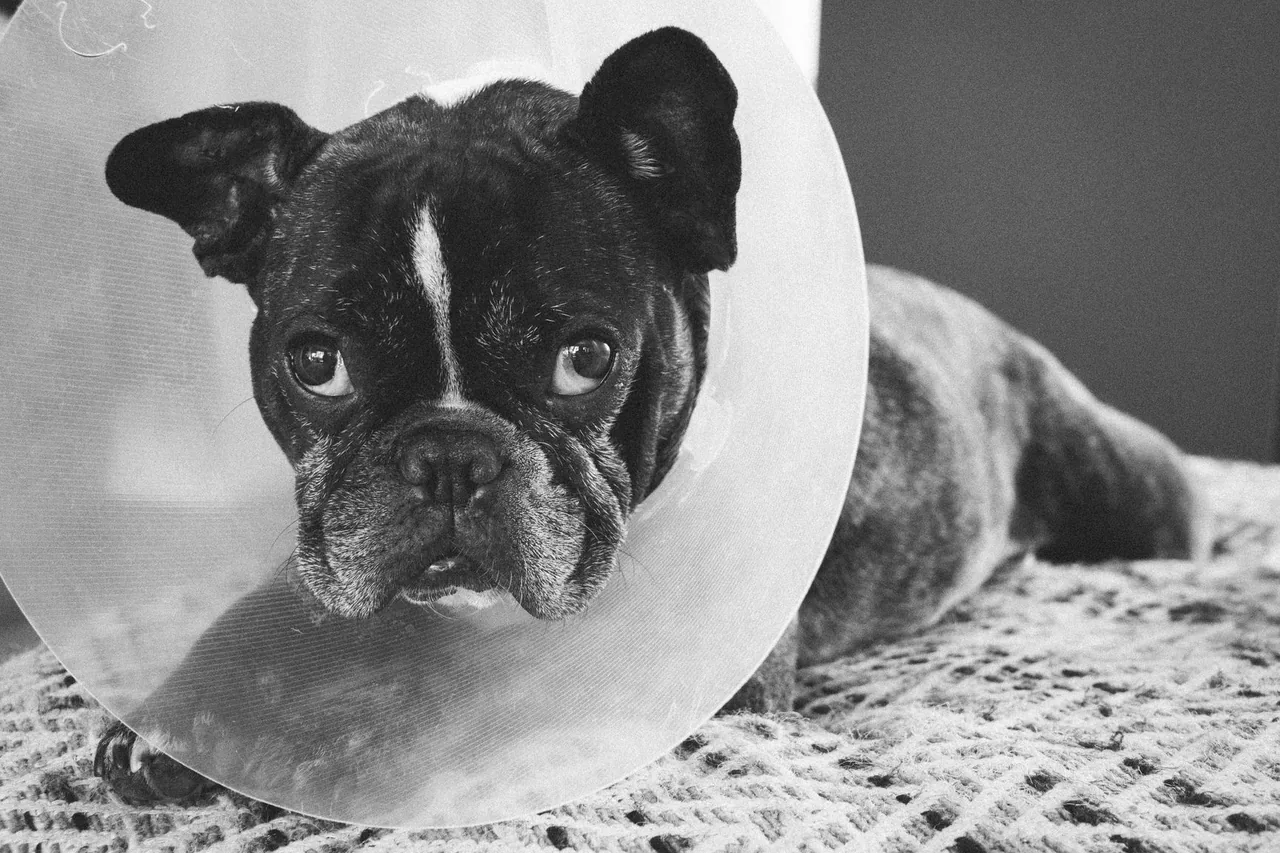
The first night home
VCA suggests a quiet, warm room, around 68–75°F, for the first night. Expect your dog to be drowsy for about a day, returning to normal over 24–48 hours. A mild cough from the breathing tube is common and improves over a few days.
First meal: VCA suggests offering about half a normal meal a few hours after you get home, and the rest an hour later if it stays down. Don’t restrict water unless your vet tells you to. The American College of Veterinary Surgeons (ACVS) notes it’s common for a dog to skip a meal in the first 24 hours, and for the first stool to be a day or two late.
Checking the incision
Look at it at least twice a day, and take a photo each time; VCA and the ACVS both suggest this, because comparing photos makes small changes easy to see.
Normal: clean, edges touching, slightly pink. Bruising may appear a few days later. A small amount of intermittent seepage in the first 24 hours can be normal (VCA).
Don’t: clean it with hydrogen peroxide or alcohol, or put creams on it unless your vet says to (VCA). No baths or swimming until your vet clears it; keep it dry (VCA; ACVS).
The free post-surgery recovery checklist has a twice-daily incision log, a medication log and the warning signs on one page.
The cone
VCA says the cone or recovery suit should stay on constantly. Licking and chewing can remove stitches or open the incision, which is one of the warning signs below. If your dog can reach the incision with the cone on, call your vet about a different size or style.
Activity
VCA suggests restricting activity for 7–14 days after routine surgery, with leash-only potty trips, and for several weeks after major surgery. That means no running, jumping, rough play or stairs where you can avoid them. Non-dissolving stitches or staples usually come out after about 10–14 days; VCA’s pages give 7–14 days, so follow your vet’s date.
Recognizing pain
Dogs hide pain, the ACVS warns, so give pain medication exactly as directed rather than waiting for obvious signs. Cornell’s Riney Canine Health Center lists the signs to watch for: restlessness, panting at rest, a hunched posture, reluctance to move, licking one spot, whimpering, eating less and irritability.
Never give human pain relievers without your vet’s direction. The FDA lists the warning signs of a reaction to pet pain relievers (NSAIDs): vomiting, diarrhea, black or bloody stool, eating less, low energy, and yellow gums or eyes. If you see any, stop the medication and call your vet. The free medication log helps you keep doses straight.
When to call your vet
From VCA and the ACVS, call if you see:
- Dripping or seepage that continues after the first 24 hours.
- Swelling, heavy redness, heat, a bad smell, pus or discharge.
- An incision that has opened, or stitches your dog has removed.
- Lethargy or pain that gets worse instead of better, or crying out.
- Trouble urinating, straining, constipation for several days, or blood in urine or stool.
- A cough that doesn’t improve, or a bandage that slips, gets wet or makes the toes swell.
When in doubt, a photo and a phone call to the clinic is always better than waiting to see.
Frequently asked questions
- What should a dog’s incision look like while it heals?
- VCA describes a healing incision as clean, with the edges touching and the skin slightly pink. Bruising can appear a few days later, and a little intermittent seepage in the first 24 hours can be normal.
- How long should my dog rest after surgery?
- VCA suggests restricting activity for 7–14 days for routine surgery, with leash-only potty trips, and several weeks after major surgery. Your vet’s instructions for your dog’s procedure come first.
- Can I give my dog something from my medicine cabinet for pain?
- No. The FDA warns never to give human pain relievers to pets without your vet’s direction. Give the pain medication your vet prescribed exactly as directed, and call if you see vomiting, diarrhea, black or bloody stool, eating less, low energy or yellow gums or eyes.
- My dog hasn’t eaten or pooped since surgery. Is that normal?
- Often, yes. The American College of Veterinary Surgeons notes that skipping a meal in the first 24 hours is common, and a delay of a day or two before the first stool is common too. Call your vet if your dog is straining, can’t urinate, or is still not eating after that.
Educational content only — not veterinary or professional behavior advice. Consult your vet, or a certified trainer or behaviorist, for your pet. Read the full disclaimer →