Train your own service dog: the law, the tasks, the timeline
What the ADA actually requires (no registration, two questions, no minimum hours), how to pick a candidate, and how to build each task with rewards. These are owner-trainer guides for people doing the real work, with calm, positive methods. New to this? Start with the owner-trainer guide, then choose the path that fits your needs below.
The law, in plain English
A service dog is a dog individually trained to do work or perform tasks for a person's disability; a dog that simply comforts by being near you is not, in legal terms, a service dog. Everything below traces to the ADA's own guidance.
- No registration or certification is required. The ADA requires no papers, ID card, or vest, and sites selling them carry no legal weight. What the ADA says about "registration" →
- You can train your own dog. No professional program is required, and the ADA sets no minimum hours or curriculum. How owner-training works →
- Businesses may ask only two questions. Is the dog required because of a disability, and what task is it trained to do — nothing more. The two questions, explained →
- Service dog ≠ ESA ≠ therapy dog. Emotional-support and therapy dogs have no public-access right; psychiatric service dogs, which are task-trained, do. The differences that matter →
- Public access has rules on both sides. Your dog may go where the public goes if it's housebroken and under control. Where your dog can and can't go →
My guides are training tools, not credentials. They never register, certify, or "qualify" a dog, and for medical-alert work, alerting is individual and never guaranteed.
Medical alert, response, hearing & mobility
For diabetes, seizures, cardiac/POTS events, hearing (sound alerts), and mobility support: task training with real limits.

Diabetic Alert Dog Guide
Scent-alert task curriculum on a realistic owner-trainer path — guide + planner.
$19.97 · Guide + planner
Get it on Etsy ↗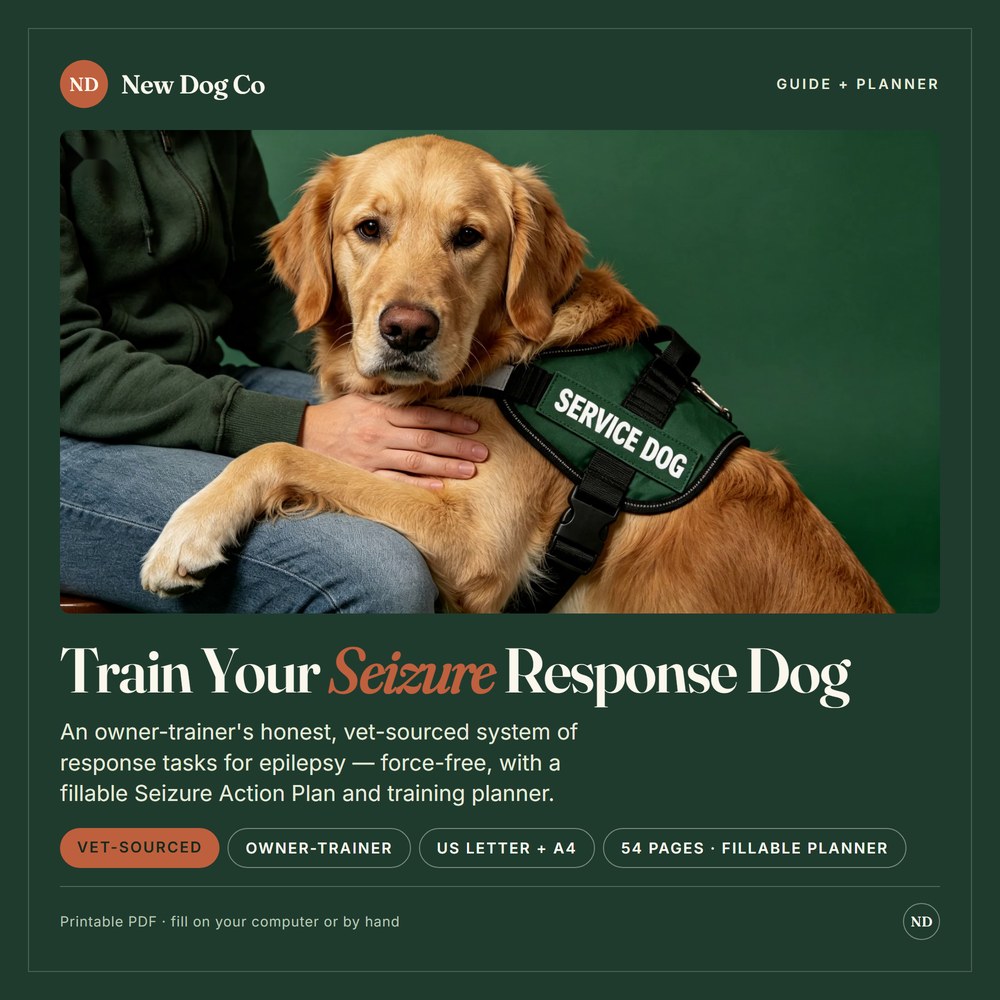
Seizure Response Service Dog Guide
Response and alert task training, explained plainly — guide + planner.
$19.97 · Guide + planner
Get it on Etsy ↗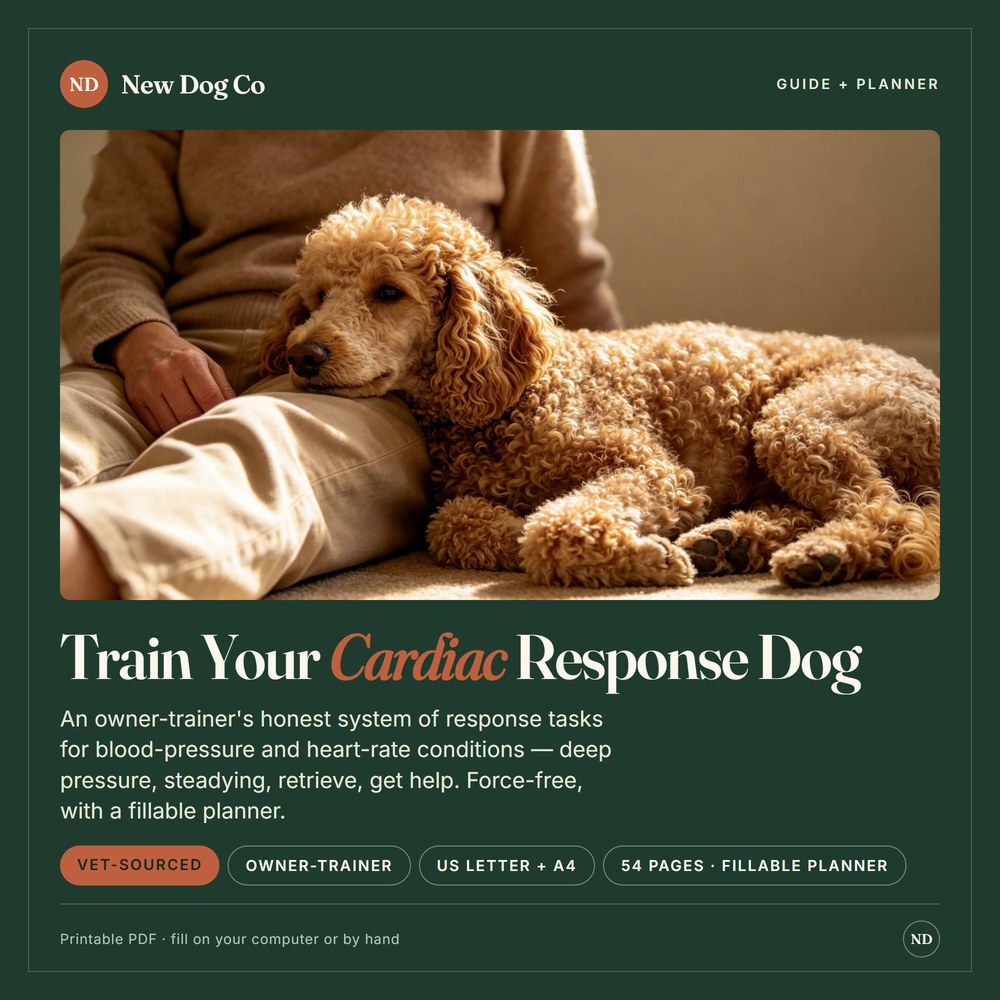
Cardiac & POTS Response Dog Guide
Response tasks for cardiac and dysautonomia handlers — guide + planner.
$19.97 · Guide + planner
Get it on Etsy ↗
Hearing Service Dog Guide & Planner
An owner-trainer guide and planner for sound-alert task training.
$14.98 · Printable PDF
Get it on Etsy ↗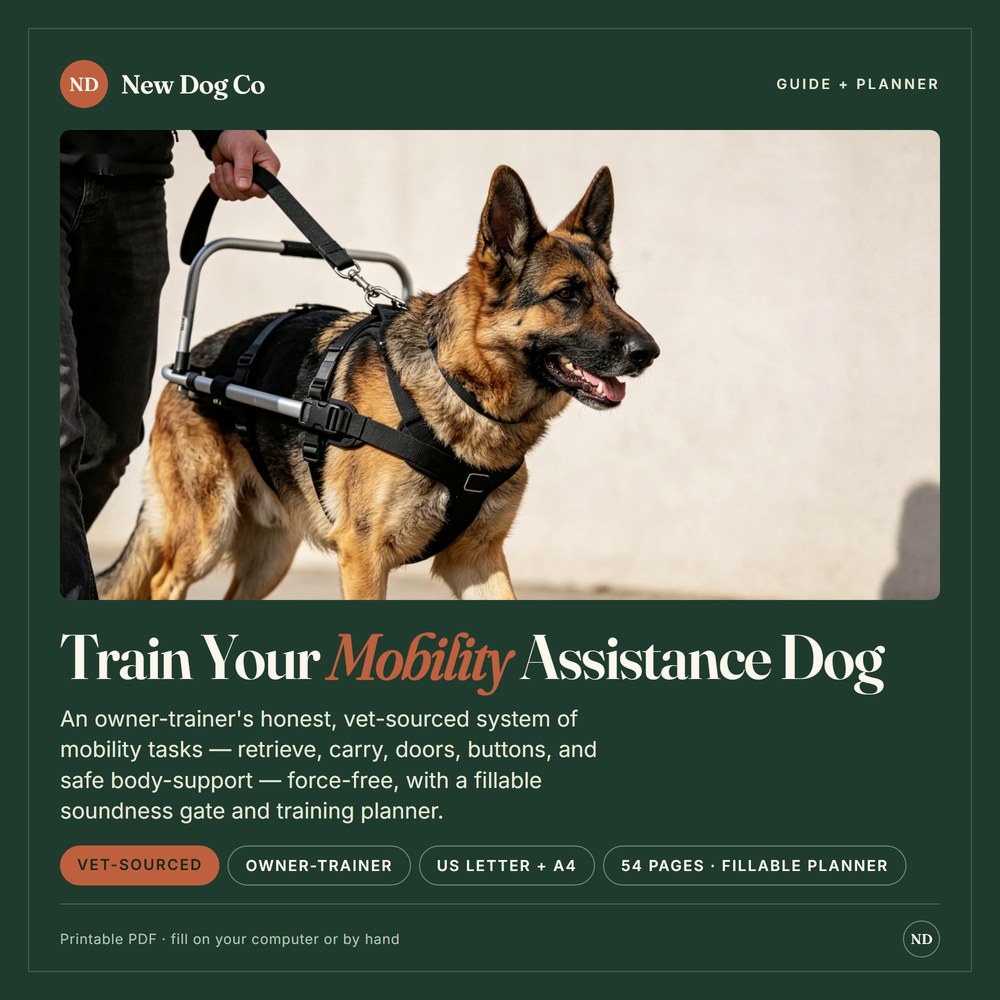
Mobility Assistance Service Dog Guide
Owner-trainer tasks, a soundness gate, and clear limits — guide + planner.
$19.97 · Guide + planner
Get it on Etsy ↗Psychiatric & developmental
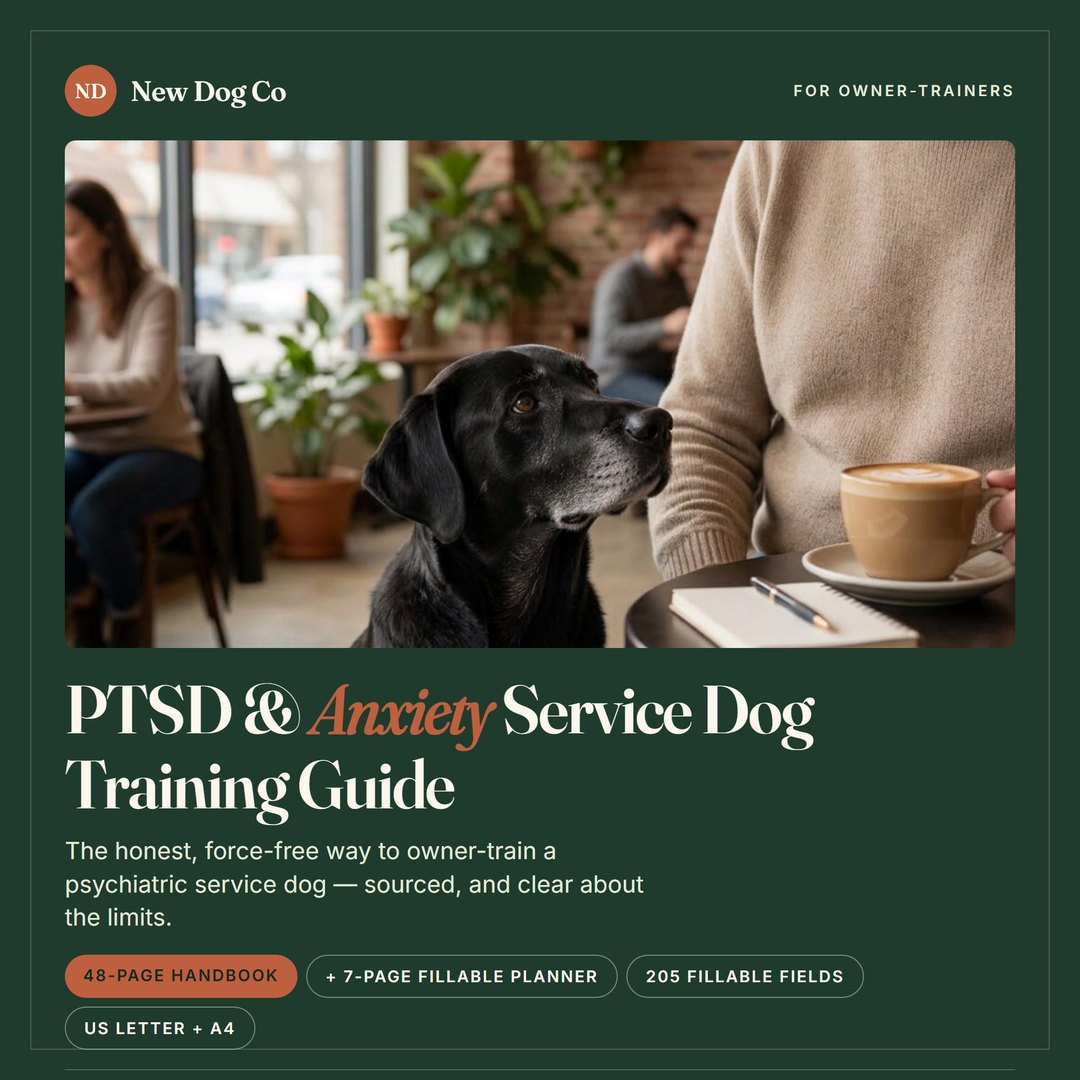
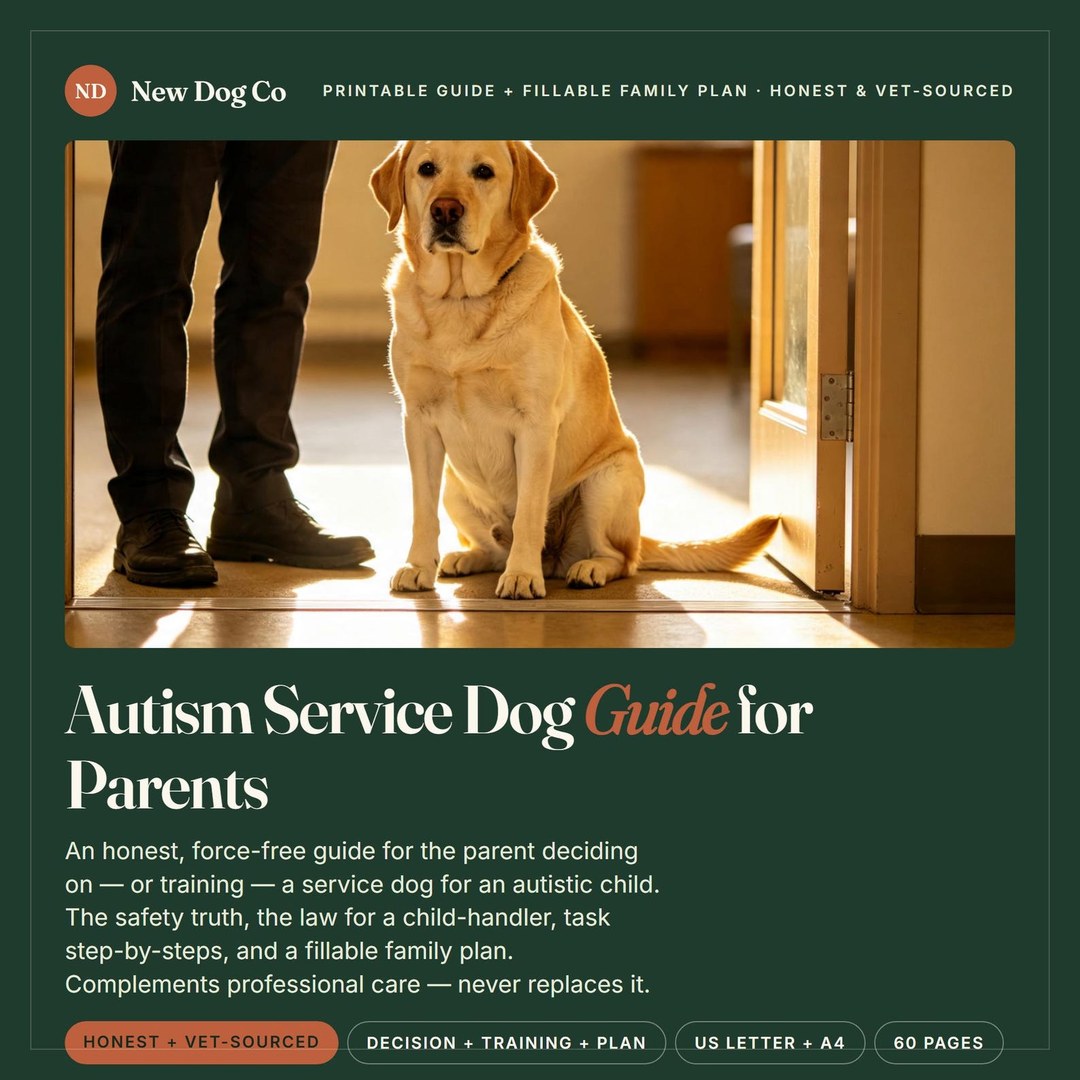
Task training for PTSD and anxiety, and an owner-trainer handbook for autism service dogs.
Foundations & public access
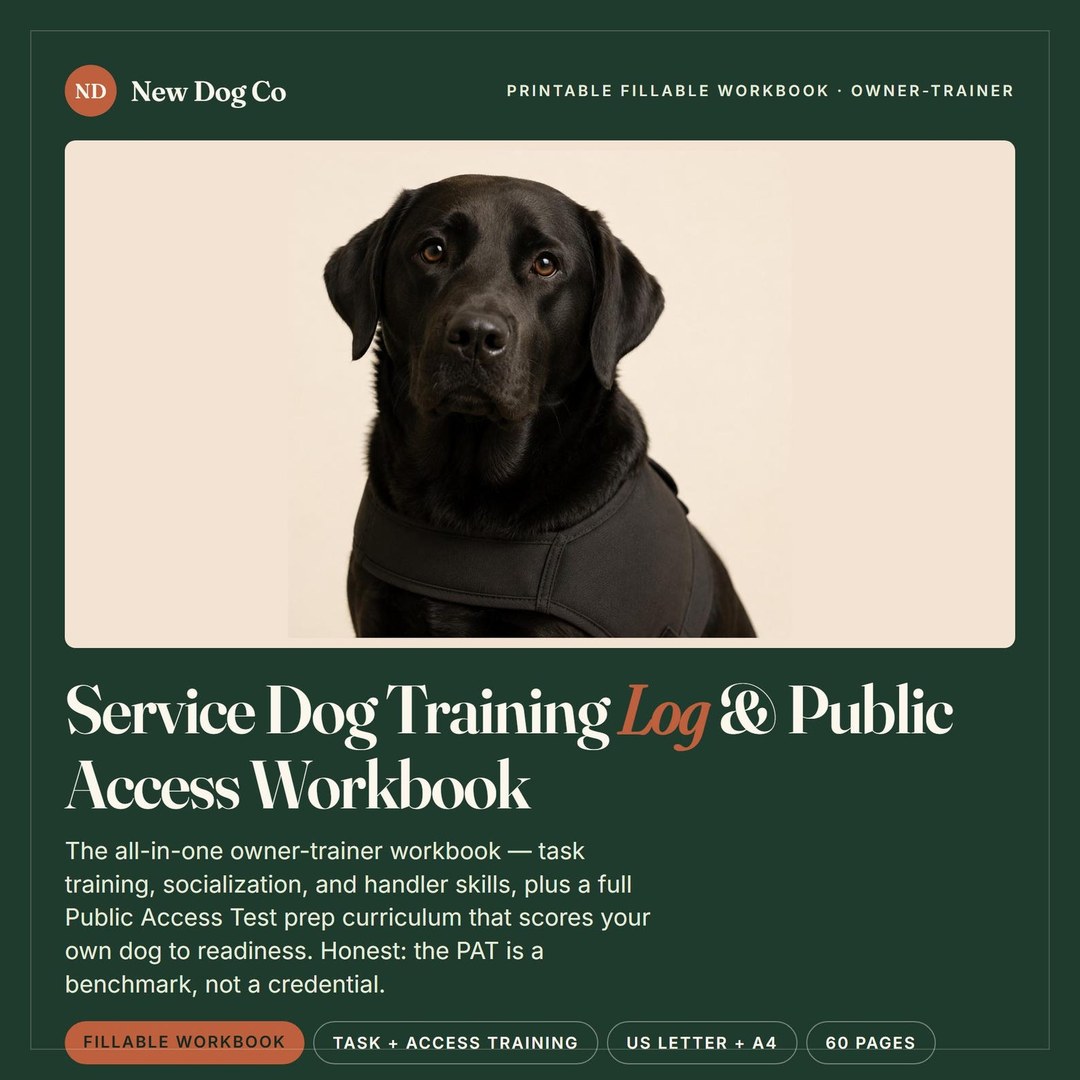
Start here: the owner-trainer path from candidate assessment to task work, plus a public-access training log.

Emotional support dogs (not service dogs)
An emotional support dog is not a service dog under the ADA. This guide covers what ESAs are, the housing rules, and the day-to-day routines.

Service dog questions, answered
- Do I have to register or certify my service dog?
- No. Under the ADA, service dogs do not need to be registered, certified, or issued an ID card or vest, and businesses may not require any of it. Any website selling a "registration" or "certificate" is selling a document with no legal weight. What makes a dog a service dog is task training for a disability, not paperwork.
- Can I train my own service dog?
- Yes. The ADA does not require that a service dog be trained by a professional program — a handler may train their own dog. There is also no federally required number of training hours or curriculum; figures like "18–24 months" or "120+ task hours" are industry norms, not legal requirements.
- What two questions can a business ask?
- Staff may ask only: (1) Is the dog required because of a disability? and (2) What work or task has the dog been trained to perform? They may not ask about your disability, demand documentation, or require the dog to demonstrate the task.
- Is an emotional support animal the same as a service dog?
- No. An emotional support animal provides comfort by its presence but is not trained to perform a task, so it is not a service animal under the ADA and has no public-access right — ESAs are covered only under the Fair Housing Act for housing. A therapy dog visits facilities to comfort others and also has no public-access right. Psychiatric service dogs, which are task-trained, are full service dogs.
- Where can my service dog go?
- A service dog may go with its handler into places open to the public — shops, restaurants, hotels, and so on — as long as the dog is housebroken and under control. Access can be limited only where the dog's presence would fundamentally alter the environment (for example, a sterile operating room). A dog that is out of control or not housebroken can be asked to leave.
- Will these guides "qualify" or certify my dog?
- No. My guides and planners are training tools, not credentials. They help you assess a candidate, build tasks, and document training. They cannot and do not certify, register, or qualify a dog, because no such certification exists under the ADA. For medical-alert work, remember that alerting is individual and never guaranteed.
Educational content, sourced to the ADA and to AAHA / AVSAB / ASPCA for training — not legal advice, and not a substitute for your veterinarian or a certified trainer. Guides are in English; purchase and download happen on Etsy. Full disclaimer → · Ver en español →