What can dogs eat?
The plain-English map of what's safe, what needs rules, and what's never safe — each food linked to a full, vet-sourced answer. Checking one food right now? Our free Dog Toxic-Foods Checker gives a verdict in seconds. Wondering how much to feed? The Dog Feeding Calculator works out the daily amount from your dog's weight.
Five rules that keep food safe
- Keep human food to about 10% of daily calories. Treats and scraps of any kind should stay small; a complete dog food supplies the rest. Find your dog's daily amount →
- Plain is what's safe — seasoning is the danger. Most human foods that hurt dogs do so because of what's added: onion, garlic, salt, butter, and sugar. Why onion & garlic are toxic →
- Toxins hide inside other foods. Xylitol in "sugar-free" peanut butter and gum, onion powder in gravy, raisins in baked goods — read the ingredients, not just the dish. The truth about xylitol →
- One dangerous part, one safe part. Many "safe" foods have a hazard: the corn cob, the avocado pit, the apple core, the cooked bone. The cob is the risk, not the corn →
- When in doubt, don't wait. If your dog ate something you're unsure about, call your vet or a poison line — some toxins act on tiny amounts. Check a food + poison-line numbers →
A quick reference to help you act — not a diagnosis. Brands, recipes and amounts vary, and individual dogs differ; when your dog has already eaten something, calling your vet or a poison line is always the safe move.
Safe in moderation
Good, everyday treats — served plain and kept small. Tap any food for the full guide: portions, prep, and what to skip.
This is the common-food shortlist. Our free Dog Toxic-Foods Checker covers 50+ foods with a searchable verdict, the reason, and what to do.
How much should my dog eat?
The amount on the bag is a rough average, not your dog. The right daily amount depends on weight, age, and how active your dog is — and treats and human food count toward it. Our free Dog Feeding Calculator gives an estimated daily calorie target and portion from your dog's weight and activity, using the standard veterinary formula; split it across meals, keep treats under about 10%, and adjust to hold a healthy body condition. Our full guide covers how much to feed by weight, meals a day, and puppy vs. senior amounts. For a puppy, senior, or a dog with a health condition, confirm the amount with your vet.
Work out my dog's daily amount →Keep it all in one place
The at-a-glance list and the recipes that pair with it — from the New Dog Co shop.
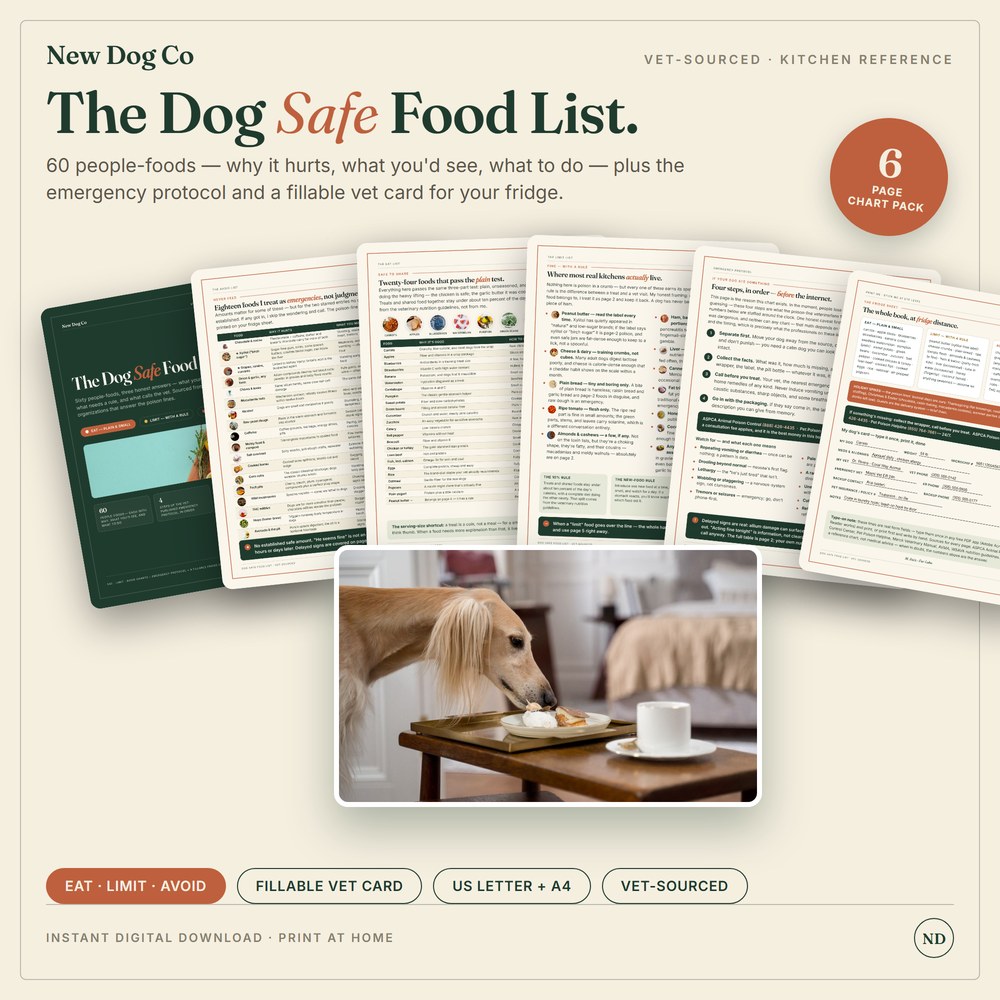
Dog Safe Food List
The whole eat / limit / avoid list on one printable — plus a fillable emergency card with the poison-line numbers for the fridge.
$3.97 · Printable PDF
Get it on Etsy ↗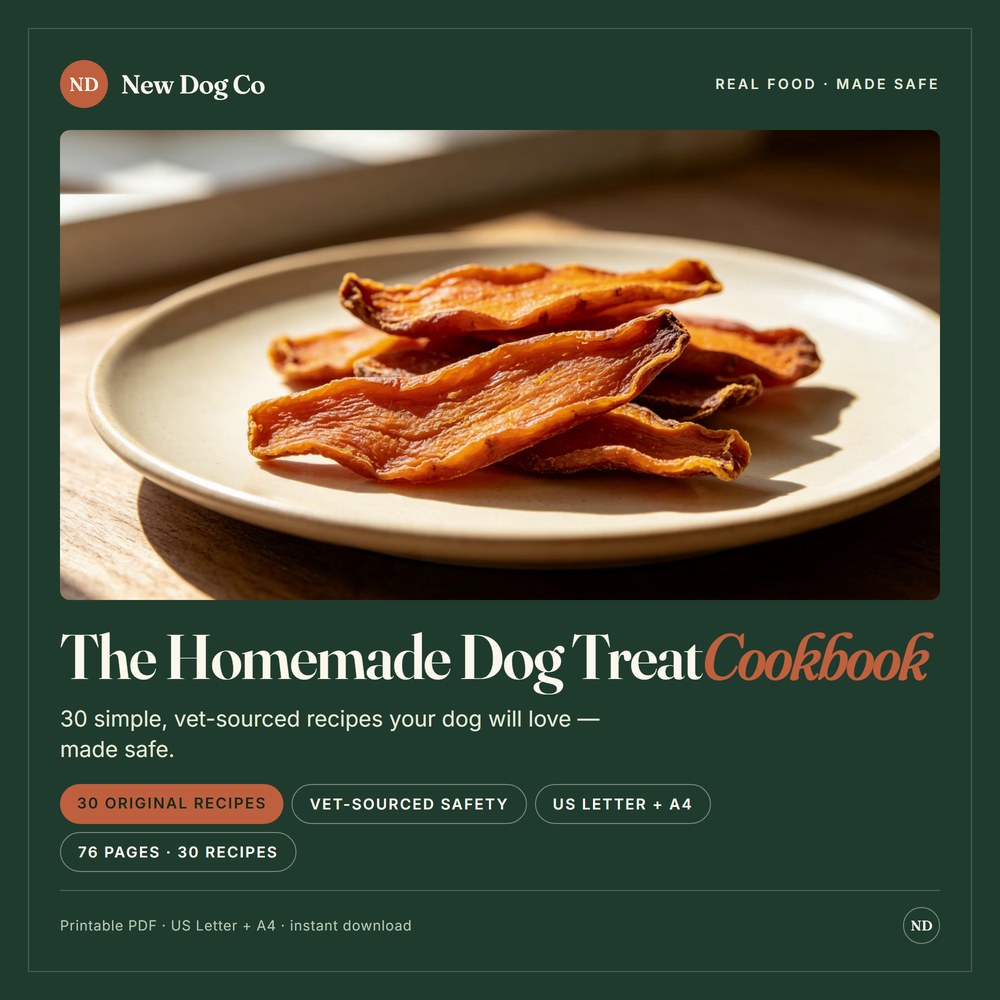
Homemade Dog Treat Cookbook
30 vet-sourced recipes built on the safe-ingredient list above — so you can make treats you actually trust.
$9.97 · Printable PDF
Get it on Etsy ↗Dog food questions, answered
- What human foods can dogs eat safely?
- Plenty — in moderation and plain. Good everyday options include carrots, blueberries, apple (no core or seeds), plain cooked egg, plain cooked chicken or rice, green beans, watermelon (no seeds or rind), and xylitol-free peanut butter. The two rules that keep them safe: serve them plain (no salt, butter, onion, garlic or sugar), and keep all treats and human food to about 10% of your dog's daily calories, with a complete dog food supplying the rest.
- What foods are toxic to dogs?
- The ones never to feed are chocolate, grapes and raisins (and currants), onions, garlic, leeks and chives, xylitol (a sweetener in sugar-free gum and some peanut butters, often labelled "birch sugar"), macadamia nuts, alcohol and caffeine, and raw yeast bread dough. Many hide inside other foods — onion or garlic powder in gravy and seasoning, xylitol in "sugar-free" products, raisins in baked goods — so check the ingredients, not just the dish.
- How much should I feed my dog?
- It depends on your dog's weight, age, and activity, not on the scoop the bag suggests. As a starting point, use our free Dog Feeding Calculator: it works out an estimated daily calorie target and portion from your dog's weight and activity using the standard veterinary formula, which you then split across meals and adjust to keep a healthy body condition. Treats and human food count toward that total — keep them under about 10%. When in doubt, or for a puppy, senior, or a dog with a health condition, confirm the amount with your vet.
- What should I do if my dog ate something toxic?
- Act now rather than waiting for symptoms. Call your vet, or a poison line — ASPCA Animal Poison Control at (888) 426-4435 or Pet Poison Helpline at (855) 764-7661 — and have the food, the amount, and your dog's weight ready. Some toxins (xylitol, grapes) are dangerous in tiny amounts and can act fast or with a delay, so "he seems fine" is not a reason to wait. Do not induce vomiting unless a professional tells you to.
- Can dogs eat table scraps and human food every day?
- Better not as a habit. Even safe human foods are usually richer, saltier, and fattier than a dog needs, and daily scraps both add up in calories and encourage begging. The bigger risk is that table food often contains onion, garlic, or a lot of fat and salt — the things that turn a safe ingredient into a problem. If you want to share, share the plain, dog-safe version in a small amount, and count it toward the 10% treat budget.
- How do I introduce a new food to my dog?
- Start small and one at a time. Offer a small amount of the new food, keep it plain, and watch your dog over the next day for any loose stool or upset — especially with fibre-rich fruits and vegetables, which are the most common cause of a soft stool after a new treat. If it agrees with them, you can make it a regular small treat; if it doesn't, cut the portion or drop it. Always check a food you're unsure about against the checker before the first bite.
Educational content, sourced to the ASPCA, AVMA, AAHA and Pet Poison Helpline — not veterinary advice, and not a substitute for your vet or an emergency call. Full disclaimer → · Ver en español →