New Cat Checklist
What do you need for a new cat? A home set up around five needs that the AAFP and ISFM describe: a safe, raised hiding place; separate spots for food, water, litter, scratching, play and rest; daily play and hunting; gentle, predictable people; and familiar smells. Add enough litter boxes, scratchers and a carrier, keep lilies and other cat poisons out of the house, and let your cat choose when to come to you. This one-page checklist covers all of it, plus a first-week log and the signs that mean calling your vet.
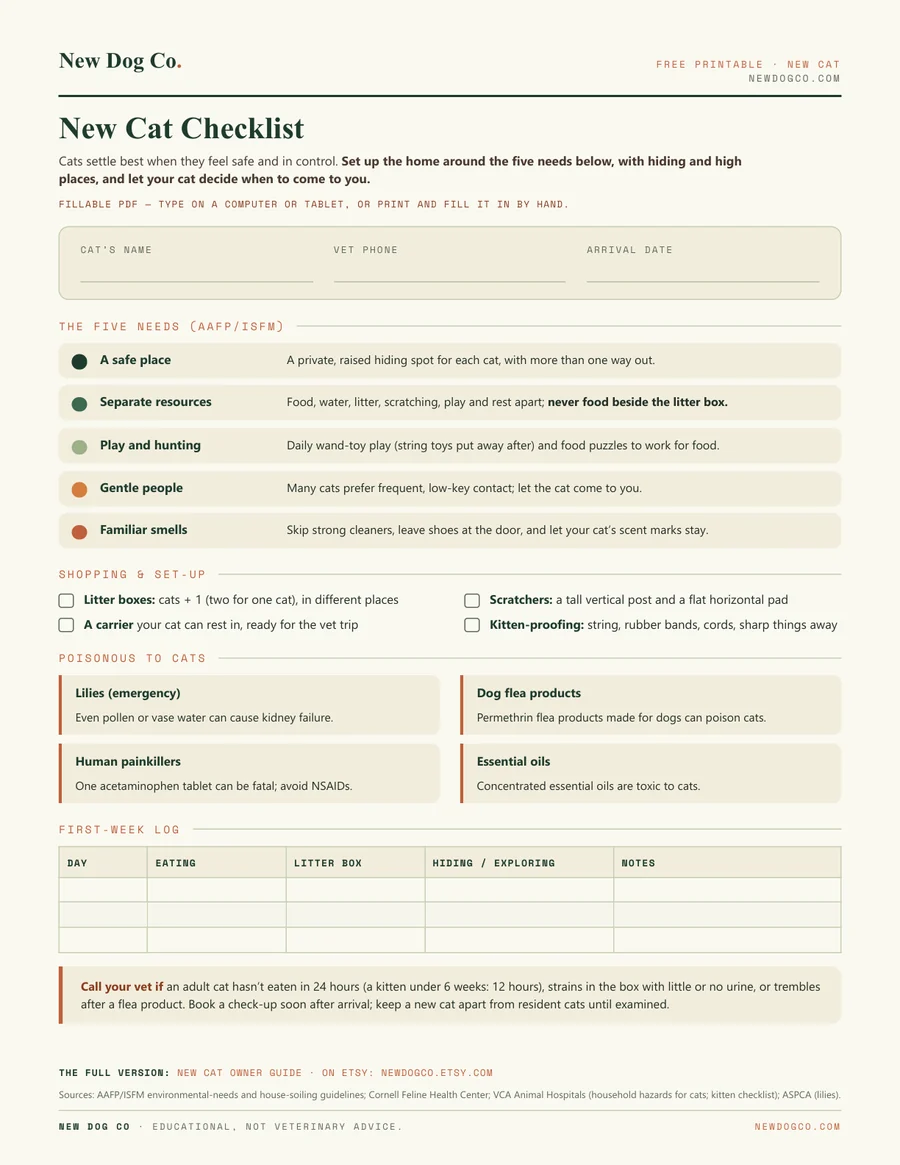
Fillable · bilingual EN/ES · vet-sourced, not a scanned template.
 Got the free sheet? The full version → New Cat Owner Guide $5.97
 What's inside
- The five environmental needs from the AAFP/ISFM guidelines
- Shopping and set-up: litter boxes, scratchers, carrier, kitten-proofing
- Four things poisonous to cats, lilies first
- A fillable first-week log and when to call your vet
How to use it
- Set up one quiet room with everything your cat needs before arrival day.
- Tick the shopping list and do a last sweep for lilies, dog flea products and medicines.
- Log eating, litter use and hiding each day of the first week.
- Book a vet check soon after arrival, and keep the cat apart from resident cats until then.
New printables + calm, sourced dog-care tips
Join the Pack and the 25-printable bundle is your instant thank-you — then we email new printables and short, vet-sourced tips as they’re ready. A few times a month, no spam.
The 25-printable pack lands instantly — new printables and tips follow. Unsubscribe anytime. Privacy Policy.Frequently asked questions
- How many litter boxes does a cat need?
- Cornell suggests one more than the number of cats. The AAFP/ISFM house-soiling guidelines go further and suggest two boxes for a single cat, in two different locations.
- Why does my new cat hide all the time?
- Hiding is normal while a cat settles. The AAFP/ISFM guidelines put a private, raised safe place first on the list of feline needs; let your cat choose when to come out rather than pulling them out.
- Are lilies really that dangerous to cats?
- Yes. The ASPCA warns that true lilies can cause kidney failure in cats, and even leaves, pollen or vase water can be enough. Treat any exposure as an emergency.
- When should a new cat see the vet?
- As soon as possible, according to Cornell, with testing for FeLV and FIV if the cat’s history is unknown. Keep a new cat apart from resident cats until it has been examined.
Free educational printable. Not veterinary advice, and not a substitute for your vet's official records or an emergency call. Full disclaimer → · Leer en español →