Dog Enrichment: Easy Ways to Beat Boredom and Settle a Busy Dog
Simple sniffing, foraging, chewing and problem-solving routines that meet a dog's real needs.
On this page
A bored dog is a self-employed dog. The ASPCA puts it plainly: the key to a happy, healthy dog is regular enrichment — letting them do the things dogs are built to do, “playing, chasing, smelling, chewing and scavenging.” Dogs who don’t get that stimulation “tend to find ways to enrich themselves, resulting in unwanted behaviors.” The chewed couch was never about the couch.
If your dog feels busy, restless, or “naughty,” the fix is usually not more discipline. It is a job. Below are easy, low-cost ways to give one, drawn from established enrichment guidance. A newly adopted dog especially benefits from this as it settles in — see the first weeks with a rescue dog. None of it takes special equipment, and most of it uses food you already measure out each day.
Start with the nose
Sensory enrichment — scent games, sniffy walks, new textures and sounds — is the cheapest and deepest enrichment there is. It is also one of the few types with peer-reviewed proof it lifts a dog’s mood: in a controlled study, two weeks of nosework, just letting dogs search with their noses, made dogs measurably more optimistic (Duranton & Horowitz, 2019). That single finding is why sniffing runs through almost every good routine.
A few easy starts:
- The sniffy walk. The dog picks the route and sniffs as long as it wants — slower, shorter and deeper than a march. Many dogs come home calmer than they would from a long, fast walk.
- “Find it.” Say “find it,” toss a treat in view, then throw farther, then start hiding treats around the room. This is the ASPCA’s exact progression.
- A texture path of safe surfaces — a towel, a mat, grass — with treats along it, building confidence on paws.
Make dinner an event
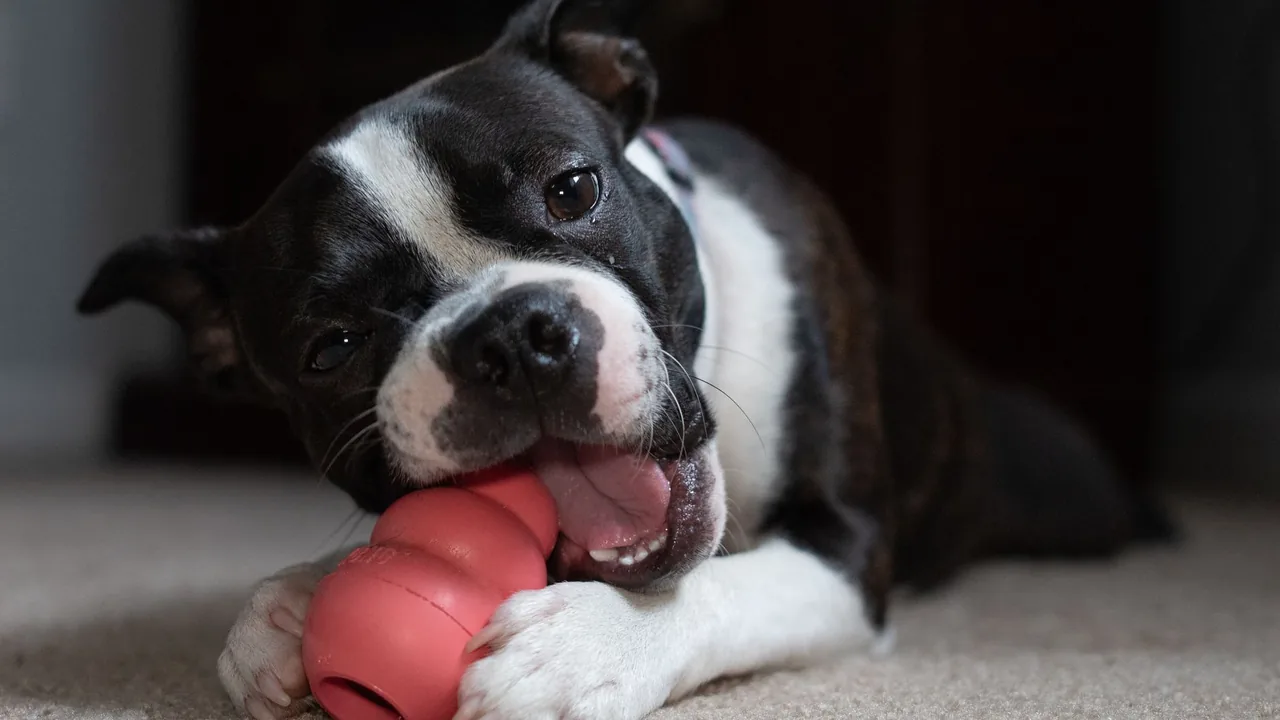
Food and foraging means working for food the way dogs were built to. The bowl, honestly, is the least interesting thing that ever happened to a meal. Licking, chewing and problem-solving are the natural behaviors that food enrichment exists to feed (ASPCApro).
Try a snuffle mat — scatter kibble through a high-pile bath mat or fleece-tie mat and let the dog forage a whole meal slowly (an ASPCA method). Or a muffin-tin puzzle: kibble in the cups, tennis balls on top, lift and find. Scatter feeding across clean grass needs zero equipment. A frozen stuffed toy turns dinner into a thirty-minute project, and a lick mat with xylitol-free peanut butter or plain yogurt is a calm distraction for bath time or a vet visit. Commercial puzzle feeders work too — start at the easiest level and raise difficulty as your dog graduates (the ASPCA notes these slow eating and add mental work).
One rule keeps this honest: enrichment calories count. Treats stay under 10% of daily calories (AAHA). The simple move is to portion the day’s measured kibble in the morning and let every game draw from that jar — not extra snacks.
Add thinking games
Brains tire faster than legs. Short, happy, reward-based training sessions are the only kind worth doing (AVSAB). Three minutes of “sit, touch, come, spin,” twice a day, ended while it is still fun, does real work — and it stays just as valuable later for keeping a senior dog’s mind sharp. A cup shell game (a treat under one of three cups, shuffled slowly) and hide and seek (one person hides and calls once) both turn problem-solving into play.
Keep play structured, and chew smart
Physical play with rules is exercise plus impulse control — two workouts in one. Two-toy fetch teaches a clean drop without a fight; tug with rules uses a cued start and a cued end. Skip high-impact games like the flirt pole for puppies and dogs with joint issues, and keep sessions short.
Chewing is a real need, but it is where dogs get hurt. The FDA warns against bone treats generally — choking, broken teeth, obstruction. Two major welfare organizations say to skip rawhide because of choking and blockage risk, especially for smaller dogs and power chewers (ASPCA position statement; Humane World guidance). Match any chew to your own dog, watch the wear, and treat a swallowed chunk as an immediate vet trip.
Two rules before any game
These are short and non-negotiable. First, supervise DIY items — the ASPCA’s rule is to actively supervise whenever DIY items are out and remove anything the dog starts to eat, cardboard, towel, or mat. Second, read every label: xylitol hides in many “sugar-free” peanut butters and is toxic to dogs. The full never-list also includes grapes and raisins, onions and garlic, chocolate, alcohol, and macadamia nuts (ASPCA Animal Poison Control).
Rotate — novelty is the active ingredient
You do not need more activities; you need to rotate the ones you have. The ASPCA literally calls this the “Daily Change-Up.” A game your dog hasn’t seen in three weeks lands like a brand-new toy. One or two small things a day is plenty; five real minutes of sniffing counts, and an off day counts too.
If a problem behavior doesn’t shrink once needs are met, that deserves a different conversation. This is educational content, not veterinary advice — for a new food, a new chew, a dog with health issues, or panic when left alone, ask your vet or a credentialed behavior professional first.
If you are still finding your footing with a new dog, our First-Time Dog Owner Guide lays out the calm, sourced basics — feeding, routine, and the everyday needs that enrichment is built on — so these games fit naturally into your week. It is a quiet place to start.
Frequently asked questions
- How much enrichment does a dog need each day?
- Less than most people fear — one or two small things a day is plenty, and five real minutes of sniffing counts. The ASPCA's advice is to rotate what you already have (its 'Daily Change-Up'): a game your dog hasn't seen in three weeks lands like a brand-new toy, so novelty matters more than volume, and an off day is fine too.
- Does sniffing actually calm a dog down?
- Yes, and it is one of the few enrichment types with peer-reviewed support. In a controlled study, two weeks of nosework — simply letting dogs search with their noses — left dogs measurably more optimistic (Duranton & Horowitz, 2019). A slow sniffy walk where the dog picks the route often brings a dog home calmer than a long, fast march.
- Will more enrichment fix my dog's problem behavior?
- Often, yes — a bored dog tends to self-employ into chewing, digging, or barking, and the ASPCA notes dogs who lack stimulation find their own, usually unwanted, outlets. Meeting the need to sniff, forage, chew, and problem-solve resolves a lot of it. But if a behavior doesn't shrink once needs are met, or the dog panics when left alone, that is a separate conversation for your vet or a credentialed behavior professional.
- Are rawhide and bone chews safe for dogs?
- Both carry real risk. The FDA warns against bone treats generally because of choking, broken teeth, and obstruction, and major welfare organizations advise skipping rawhide for the same reasons, especially for small dogs and power chewers. Match any chew to your own dog, watch it wear down, keep enrichment treats under about 10% of daily calories (AAHA), and treat a swallowed chunk as an immediate vet trip.
Educational content only — not veterinary or professional behavior advice. Consult your vet, or a certified trainer or behaviorist, for your pet. Read the full disclaimer →