Is It Separation Anxiety or Just Boredom?
The destroyed couch and the noise complaint — how to tell panic from boredom, and what actually helps.
On this page
- How can I tell the difference?
- What does separation anxiety actually look like?
- Why does my dog destroy things by the door or window?
- Is my dog doing this out of spite or revenge?
- Will punishing it help?
- Could it be medical — or just incomplete house training?
- How do I help a dog with separation anxiety?
- When should I see a vet or a behaviorist?
The biggest tell is when it happens. If your dog only destroys things, barks, or has accidents while you’re gone — and is calm when you’re home — that points to separation anxiety. If it happens whether you’re there or not, it’s more likely boredom, too little exercise, or unfinished training. The kind of damage matters too: chewing random objects is often boredom; frantic scratching and chewing at doors, windows, and crate bars is a dog trying to escape — and that’s anxiety.
Telling the two apart matters, because the fixes barely overlap: boredom wants a bigger, busier life; panic needs a slow rebuild of feeling safe alone. Treat one like the other and you’ll spin your wheels for months. So the first job isn’t training — it’s working out which one you’re actually looking at.
How can I tell the difference?
Watch the timing first. Boredom damage happens any time the dog is under-stimulated — sometimes while you’re right there. Anxiety damage is tied to your absence, and usually starts within the first 15–30 minutes after you leave.
Then look at what got damaged. A bored dog chews what’s interesting — a shoe, the trash, a cushion, in the middle of the room. An anxious dog targets the exits: the door frame, the window sill, the crate door — the boundaries between them and you.
The only way to really know is to watch. Set a phone or laptop to record the first 30–45 minutes after you leave. What you see — settling down versus pacing, drooling, and clawing the door — answers the question faster than any guess.
What does separation anxiety actually look like?
It’s panic, and it looks like panic. The common signs: pacing or circling, heavy drooling, non-stop barking or howling, destruction aimed at escape, and accidents from a dog who’s otherwise house-trained.
A big one is refusing food. A dog who won’t touch a stuffed Kong or a favorite treat the moment you’re gone isn’t being picky — a panicking brain can’t eat. (It’s also why the food-puzzle trick below only works for milder cases.)
The timing is the signature: it ramps up right as you leave and often peaks in the first half hour, not three hours in.
Why does my dog destroy things by the door or window?
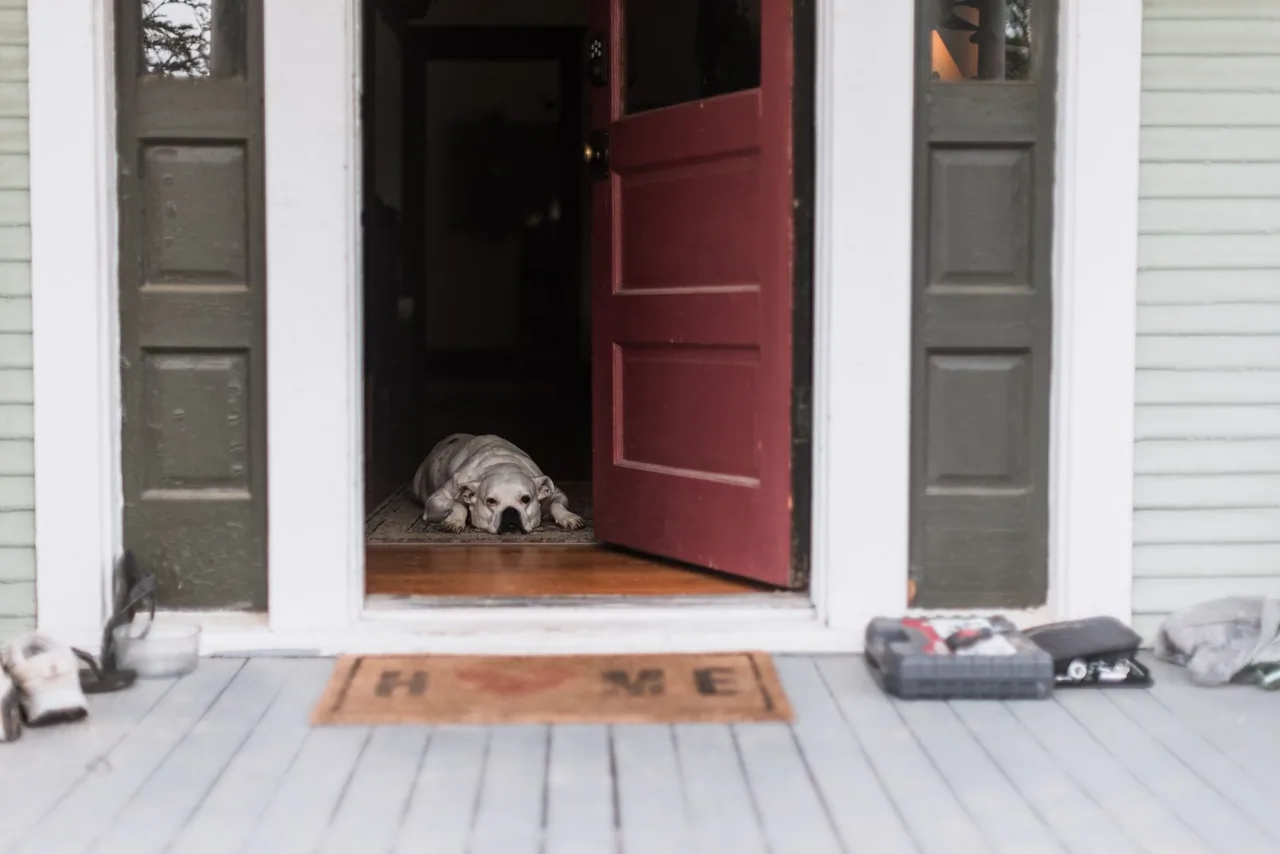
Because he’s trying to get back to you. Scratching, digging, and chewing at doors, windows, and crate doors is an escape attempt, not random mischief — the dog is working on the barrier between himself and the person he’s panicking without.
This is the clearest line between the two problems. Boredom chews the couch; anxiety chews the way out. If the damage clusters at exits, treat it as anxiety until proven otherwise.
Is my dog doing this out of spite or revenge?
No. This is the most important thing to get right: it is a panic response, not spite, and not a dog being “bad.” Dogs don’t wreck the house to punish you for leaving — they don’t plan revenge, and they have no concept of getting even.
That “guilty look” when you walk in isn’t guilt, either. It’s appeasement — your dog reading your tense body language and the wreckage and trying to defuse you. Learning to read your dog’s body language makes that obvious, and it takes the blame off both of you.
Naming it correctly matters, because it points you away from the one thing that makes it worse.
Will punishing it help?
No — punishment makes separation anxiety worse, and it’s worth being blunt about why. Coming home and scolding, or worse, adds fear to a dog who is already terrified of being alone. Now being alone predicts panic and a frightening homecoming.
Anti-bark and shock collars are not a fix. At best they suppress the sound; they do nothing for the panic underneath, and they stack pain on top of fear — exactly the wrong direction. The American Veterinary Society of Animal Behavior (AVSAB) is clear that aversive tools raise fear, anxiety, and aggression.
The dog isn’t choosing the behavior, so there’s nothing to punish. There’s only fear to lower.
Could it be medical — or just incomplete house training?
Rule this out first. A sudden change in a settled adult dog can be medical — pain, a GI upset, incontinence, or (in seniors) cognitive decline — so a vet visit comes before a training plan. This article is educational, not a substitute for your veterinarian.
And not every accident is anxiety. A younger dog soiling when alone may simply have unfinished house training, or be left longer than his bladder can hold. Be honest about which one fits before you treat it as panic.
How do I help a dog with separation anxiety?
The core fix is gradual alone-time practice — systematic desensitization. You start below the level that triggers panic (sometimes that’s stepping out for ten seconds) and build the duration up slowly, only as fast as the dog stays relaxed. It’s the same calm, under-threshold approach that works for a leash-reactive dog: small steps the dog can actually handle.
Next, take the charge out of your departure cues. Pick up your keys, put on your shoes, touch the doorknob — and then don’t leave. Repeated until those cues stop predicting that you’re gone, the pre-departure dread starts to fade. (Malena DeMartini’s separation-anxiety work is built around this missing-exit retraining.)
For milder cases, a special food puzzle that only ever appears when you leave can help the alone-time predict something good — but if your dog won’t eat it, that’s a sign the case is past food, and the alone-time training is what matters.
While you train, manage the rest: as much as you can, don’t leave the dog alone longer than he can currently handle, because every full-blown panic episode sets the work back. Daycare, a sitter, or a friend for the long days buys you room to practice the short ones.
Be honest with yourself about the timeline. Mild cases can ease in a few weeks of consistent practice; real cases often take months. Progress isn’t “never anxious” — it’s settling faster, at longer absences, with calmer departures.
When should I see a vet or a behaviorist?
See your vet first, always — to rule out a medical cause and because, for moderate-to-severe cases, anti-anxiety medication paired with training genuinely helps (a veterinary decision, not a DIY one).
For the training itself, a real or severe case deserves a credentialed, reward-based professional: a certified trainer (CCPDT), a behavior consultant (IAABC), or a veterinary behaviorist (DACVB) — ideally one who specializes in separation anxiety. And if your dog is hurting himself trying to escape — broken nails or teeth, bloodied paws, injuries from the crate — get help now, not later.
Separation anxiety is one of the most treatable behavior problems there is — it just takes a patient, step-by-step rebuild of feeling safe alone. If you want the whole plan in one place — the graduated alone-time ladder, the departure-cue desensitization, the food-puzzle routine, and a tracker so you can see the progress you’d otherwise miss — that’s exactly what our Dog Separation Anxiety Toolkit is built for: a calm, step-by-step system to start working on it today.
Frequently asked questions
- Will my dog grow out of it?
- Usually not on its own — left alone it tends to entrench, because each panicked absence rehearses the panic. The good news is it responds well to gradual practice, and the earlier you start, the easier it goes.
- Does getting a second dog help?
- Usually not. Separation anxiety is about missing *you*, not the company of other dogs, so a second dog often doesn't fix it — and an anxious dog can even pass the habit to the new one. Get a second dog only if you genuinely want two dogs.
- Is crating the answer?
- Not by itself. For a panicking dog a crate can make things worse — more frantic, and a real risk of self-injury against the bars. Crate only if your dog already loves it as a safe den; otherwise put the energy into alone-time training, not confinement.
- How long does it really take?
- Mild cases: a few weeks of short, consistent sessions. Genuine cases: often months. Severe cases usually need a professional and sometimes medication. Slow and steady is the whole method — rushing it backfires.
Educational content only — not veterinary or professional behavior advice. Consult your vet, or a certified trainer or behaviorist, for your pet. Read the full disclaimer →