How to Crate Train a Puppy
A crate should feel like a den, not a jail. The step-by-step introduction, how long a puppy can really stay in, the night routine, and what to do when your puppy cries.
On this page
To crate train a puppy, make the crate a calm den in small steps: leave the door open with treats inside, feed meals in it, then close the door during meals and slowly build the time while your puppy stays relaxed. Keep crate stretches short, especially under 6 months, plan potty breaks around your puppy’s age, and never use the crate as punishment. That’s the approach VCA Animal Hospitals and Humane World for Animals describe, and VCA says most puppies accept the crate within a month or two.
Done well, the crate becomes the place your puppy chooses to nap. Done too fast, it becomes the place your puppy screams. The difference is almost always pace.
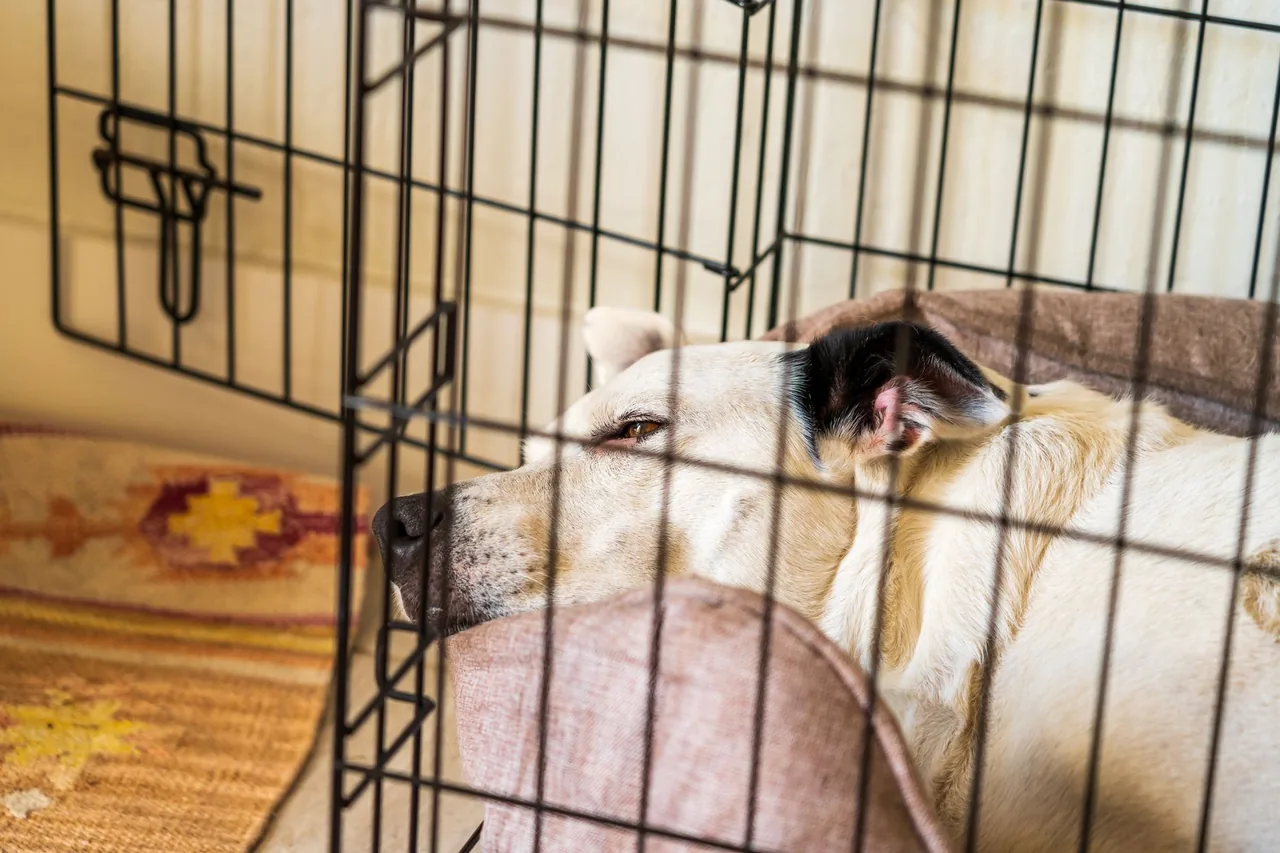
Choose the right crate
VCA says the crate should be just big enough for your puppy to stand up, turn around and lie down. Many crates come with a divider so you can enlarge the space as your puppy grows.
Make it comfortable with bedding and a safe chew or a food-stuffed toy. VCA suggests safe chews, stuffed toys and puzzle feeders for crate time.
The introduction, step by step
Humane World for Animals lays out a gentle progression. Move to the next step only when your puppy is relaxed with the current one:
- Door open, treats inside. Toss treats in and let your puppy wander in and out. No closing the door yet.
- Meals in the crate. Put the bowl near the front, then further back once your puppy steps in easily.
- Door closed during meals. Close it while your puppy eats and open it as soon as the bowl is empty. Then gradually leave it closed a few minutes longer, building to about 10 minutes after eating.
- Longer, calm stretches. Build to about 30 quiet minutes with you mostly out of sight before you leave the house or try a full night.
If your puppy whines to get out, Humane World for Animals says that usually means you lengthened the time too fast. Shorten it next session rather than waiting it out.
The free puppy crate training schedule has these steps, the potty table below and a daily log on one page.
How long can a puppy stay in the crate?
Less time than most people think. Two respected rules of thumb are both maximums:
| Puppy’s age | VCA: about 1 hour per month | AKC: months of age + 1 |
|---|---|---|
| 2 months | About 2 hours, even overnight | About 3 hours |
| 3 months | About 3 hours | About 4 hours |
| 4 months | About 4 hours | About 5 hours |
| 5 months | About 5 hours | About 6 hours |
At 6–8 weeks, VCA says puppies need to go out at least every 2 hours, even overnight. And Humane World for Animals advises that puppies under 6 months stay in the crate no more than 3–4 hours at a time. Use the stricter number while you learn your puppy’s signals.
When to take your puppy out
The AKC lists the moments that predict a potty break: on waking, after naps, 5–30 minutes after meals, after drinking, and after play. Add a last trip right before bed. Taking your puppy out at those times prevents most accidents before they happen. If you’re keeping track, the free house-training log makes patterns obvious within a week.
The night routine
Put the crate in or near your bedroom, as the AKC and Humane World for Animals suggest, and take your puppy out right before bed. If your puppy wakes and cries, take them out, but keep it brief, calm and boring. VCA advises no play on night trips, so your puppy learns that night is for sleeping. Puppy won’t sleep at night? covers the first-week nights in more detail.
What not to do
- Never use the crate as punishment (VCA; Humane World for Animals). It has to stay a good place.
- Never punish accidents, rub a puppy’s nose in them or hit. VCA is clear that this doesn’t teach house training.
- Don’t rely on the crate for separation anxiety. Humane World for Animals notes a crate isn’t a fix for it; a behavior professional is.
When to call your vet
VCA suggests calling your vet if your puppy drools, cries constantly, tries to escape or can’t settle in the crate. The AKC notes that stalled house-training progress can be a sign of a urinary tract infection, and VCA suggests checking in with your vet team if your puppy isn’t progressing by 4–6 months. Most puppies are fully house-trained by about 6 months, according to VCA.
Frequently asked questions
- How long can a puppy stay in a crate?
- Not long at first. Humane World for Animals advises no more than 3–4 hours at a time for puppies under 6 months, and potty breaks need to come even sooner for young puppies: VCA suggests about one hour per month of age as a maximum, and at least every 2 hours, even overnight, at 6–8 weeks.
- My puppy cries in the crate. Should I let them cry it out?
- Humane World for Animals says whining to get out usually means the time was lengthened too fast. Go back a step and build more slowly. At night, a puppy may genuinely need to go out, so take them, keep it brief and calm with no play, and go back to bed.
- Where should the crate go at night?
- In or near your bedroom, according to the AKC and Humane World for Animals, with a last potty trip just before bed. Being close to you helps a young puppy settle.
- How long does crate training take?
- VCA says most puppies accept the crate within 1–2 months and are comfortable in it all night by about 6 months. Most puppies are fully house-trained by around 6 months too.
Educational content only — not veterinary or professional behavior advice. Consult your vet, or a certified trainer or behaviorist, for your pet. Read the full disclaimer →