How Do I Read My Cat's Body Language?
Tail, ears, eyes, and posture — read together — plus the fear and overstimulation signals that come before a bite.
On this page
Read the whole cat, not one part. A cat’s tail, ears, eyes, whiskers, and body posture only make sense together — a “wagging” tail on a cat means the opposite of a dog’s. In general: loose, upright, and slow-blinking is a relaxed, friendly cat; flattened “airplane” ears, dilated pupils, a twitching or thrashing tail, and a crouched or sideways-puffed body mean fear, arousal, or “stop.” The most useful habit you can build is watching for those early stop signals — because cats almost always warn before they scratch or bite.
The myth that cats attack “out of nowhere” is mostly a myth about people not reading the cat.
What does my cat’s tail tell me?
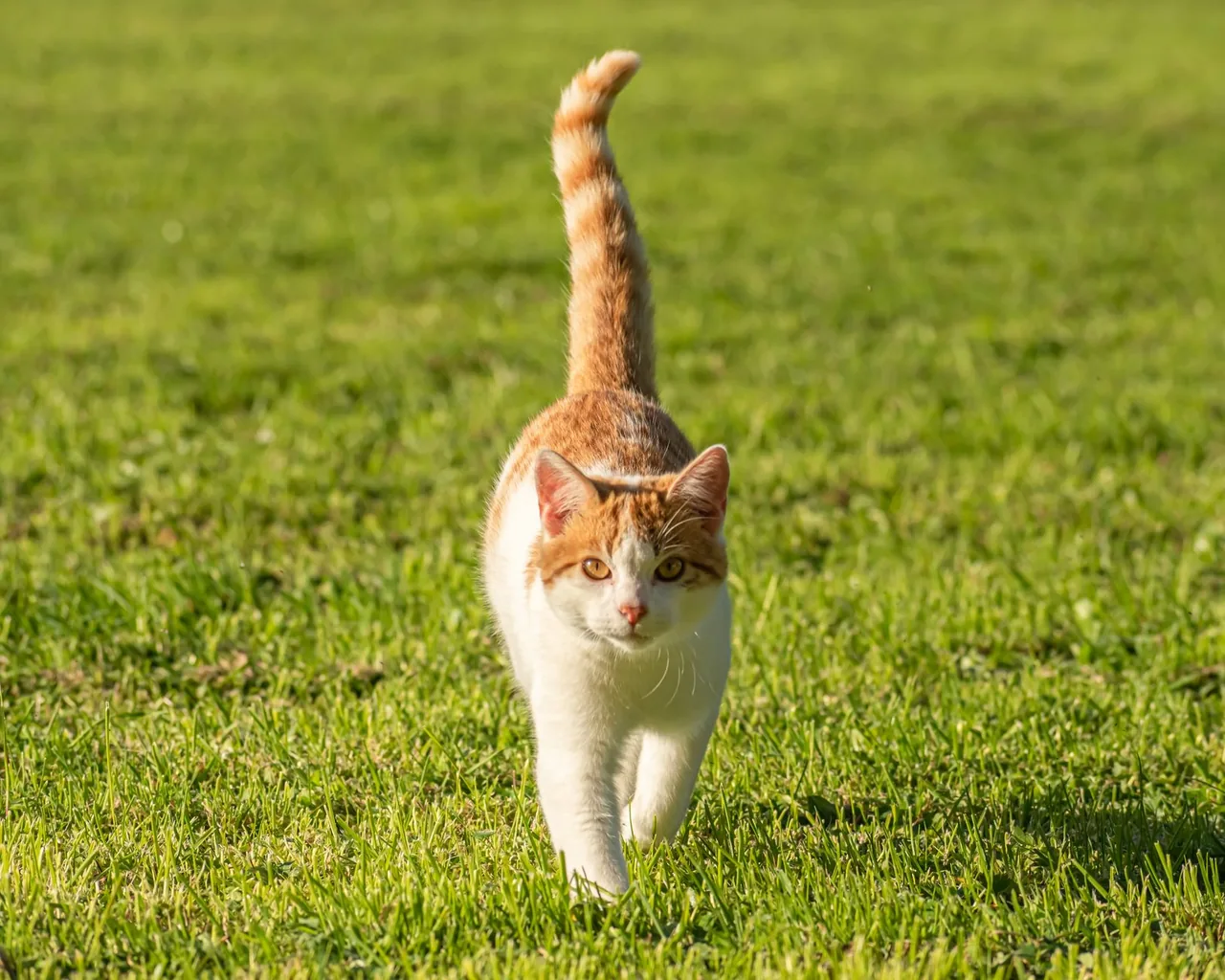
A lot — and it’s the opposite of dog tails. An upright tail with a little curl or hook at the tip is a confident, friendly greeting; a cat that trots over with its tail up is happy to see you.
A tail tucked down or wrapped tightly around the body signals fear or discomfort. A tail puffed into a bottlebrush, often with an arched back, means the cat is startled or threatened and trying to look bigger.
And the movement matters most. Slow, gentle swishing can be focus or mild interest, but a fast flick, thump, or thrashing tail is agitation — the feline equivalent of “I’m done.” If the tail starts lashing while you’re petting, stop; that’s a warning, not an invitation.
What are my cat’s ears and eyes saying?
The ears are a live mood dial. Forward and upright means alert and comfortable. Ears swivelled or flattened sideways and back — “airplane ears” — mean the cat is frightened, irritated, or overstimulated. The flatter and more pinned the ears, the more upset the cat.
Eyes tell you arousal and intent. Soft, half-closed eyes are content. A slow blink — the cat slowly closing and opening its eyes at you — is a genuine sign of trust and affection; you can slow-blink back to “talk” to your cat.
Watch the pupils, too. Pupils dilated wide in normal light signal fear, excitement, or arousal; a hard, unblinking stare with narrowed pupils can be a threat. Read the eyes alongside the ears — dilated pupils plus flat ears is a clearly unhappy cat that wants space.
What does an overstimulated or scared cat look like?
Fear makes a cat small: crouched low, weight back, tail tucked, ears flattened, trying to shrink or flee. A more defensive cat turns sideways with an arched back and puffed fur to look bigger, and may hiss, growl, or spit. Both are asking for distance — the answer is to give it, not to reach in and reassure.
Overstimulation is the sneaky one, and it’s behind a lot of “he bit me while I was petting him.” Petting feels good up to a point, then tips into too much, and the cat snaps. The tells come first: skin rippling along the back, tail lashing, ears flicking back, a sudden turn of the head toward your hand, or the body going tense. Learn those and you can stop before the teeth come out.
The golden rule with cats is consent. Offer a hand, let the cat rub into it, keep petting to the cheeks and chin most cats prefer, and pause often. A cat that leans in wants more; a cat that goes still or twitchy wants you to stop.
How can I use body language day to day?
Treat it as an ongoing conversation, not a test. Spend a week just noticing — the ear flicks, the slow blinks, the tail positions — before trying to change anything, and you’ll start seeing the cat’s mood shift in real time.
Respond to the quiet signals and you rarely reach the loud ones. When you see ears flatten, a tail start to flick, or pupils blow wide, give the cat space or an exit and let it choose to come back. Green (loose body, upright tail, slow blink) means carry on; yellow (flicking tail, turning ears, skin twitch) means pause; red (hiss, flat ears, puffed fur, hard stare) means stop and back away calmly.
This is the same skill that makes introductions go well — reading a cat’s early “I need space” the moment it appears, whether it’s meeting a new person or a resident dog.
When should I worry about my cat’s behavior?
Body language reflects how a cat feels, so a sudden, lasting change in it is worth attention. This is educational content, not veterinary advice.
See your vet if a normally relaxed cat becomes persistently tense, hides constantly, suddenly stops using the litter box, or turns suddenly aggressive or withdrawn — pain and illness change body language first, and cats hide sickness well, so a behavior shift is often a medical clue. Sudden aggression, in particular, is a vet question before a training one.
For fear, anxiety, or aggression that isn’t medical, a Fear Free or feline-experienced professional helps — a veterinary behaviorist (DACVB) or a cat-savvy behavior consultant (IAABC). Reading your cat well is the first step; getting skilled help early is the next when the signals point to real distress.
The better you read a cat, the safer and calmer life together becomes — you catch “I need space” long before it becomes a scratch. That skill matters most when a cat meets someone new, which is why our Dog & Cat Introduction Plan builds these exact cues into every stage of a dog-and-cat introduction. (A dedicated Cat Body Language guide is on the way.) If you’re still in the early days, how long it takes a cat to adjust sets realistic expectations for the settling-in you’re watching for.
Frequently asked questions
- Why does my cat bite me when I'm petting him?
- Usually overstimulation — petting that felt good crosses into too much, and the cat says "enough" the only clear way it can. The warning almost always comes first: a tail that starts flicking or lashing, skin rippling along the back, ears turning back, a tensing body, or the head swinging toward your hand. Keep sessions short, stick to the cheeks and chin most cats prefer over the belly and base of the tail, and stop at the first twitch rather than pushing to the bite. It's not aggression or spite — it's a threshold, and you can learn to read it.
- What does it mean when my cat slow-blinks at me?
- It's one of the friendliest things a cat can do — a relaxed, slow closing and opening of the eyes that signals trust and comfort, sometimes called a "cat kiss." A cat that slow-blinks at you feels safe. You can answer in the same language: look at your cat softly, then slowly close and open your own eyes. Many cats will return it. It's a lovely, low-pressure way to build trust with a shy or new cat, precisely because it asks nothing of them.
- Is a cat showing its belly asking for a belly rub?
- Usually not. A cat rolling over to show its belly is showing trust and comfort — it's a vulnerable position — but for most cats it's not an invitation to touch the belly, which is a sensitive area that can trigger a defensive grab-and-kick. Take it as a compliment, and pet where the cat actually enjoys it (cheeks, chin, the base of the ears). Some individual cats do love belly rubs; let each cat teach you which it is, and stop at the first sign of a tail flick or tensing.
- Do cats wag their tails like dogs when they're happy?
- No — and this trips up a lot of dog people. In cats, a swishing or thrashing tail signals agitation or overstimulation, closer to the opposite of a happy dog wag. A relaxed, happy cat holds its tail up, often with a soft curl at the tip, and keeps it fairly still. If your cat's tail is lashing side to side, read it as "I'm annoyed or overstimulated, give me space," not "I'm excited to see you." When in doubt, watch the ears and eyes alongside the tail for the full picture.
Educational content only — not veterinary or professional behavior advice. Consult your vet, or a certified trainer or behaviorist, for your pet. Read the full disclaimer →