Dog Pregnancy Week by Week: What to Expect
From breeding to whelping in about nine weeks: when a vet can confirm the pregnancy, what changes each week, how to feed her, and the signs that labor is near or going wrong.
On this page
A dog’s pregnancy lasts about nine weeks: roughly 63 days counted from ovulation, according to the AKC, and anywhere from 58 to 72 days counted from the first breeding (Merck, AKC). Nothing shows for the first few weeks; a vet can confirm the pregnancy from about week three or four; her belly grows from around week six; and an X-ray near day 55 tells you how many puppies to expect. Here is what happens week by week, how to feed her, and the signs that labor is near or needs a vet. The free dog pregnancy calculator turns a breeding date into dates for each stage.
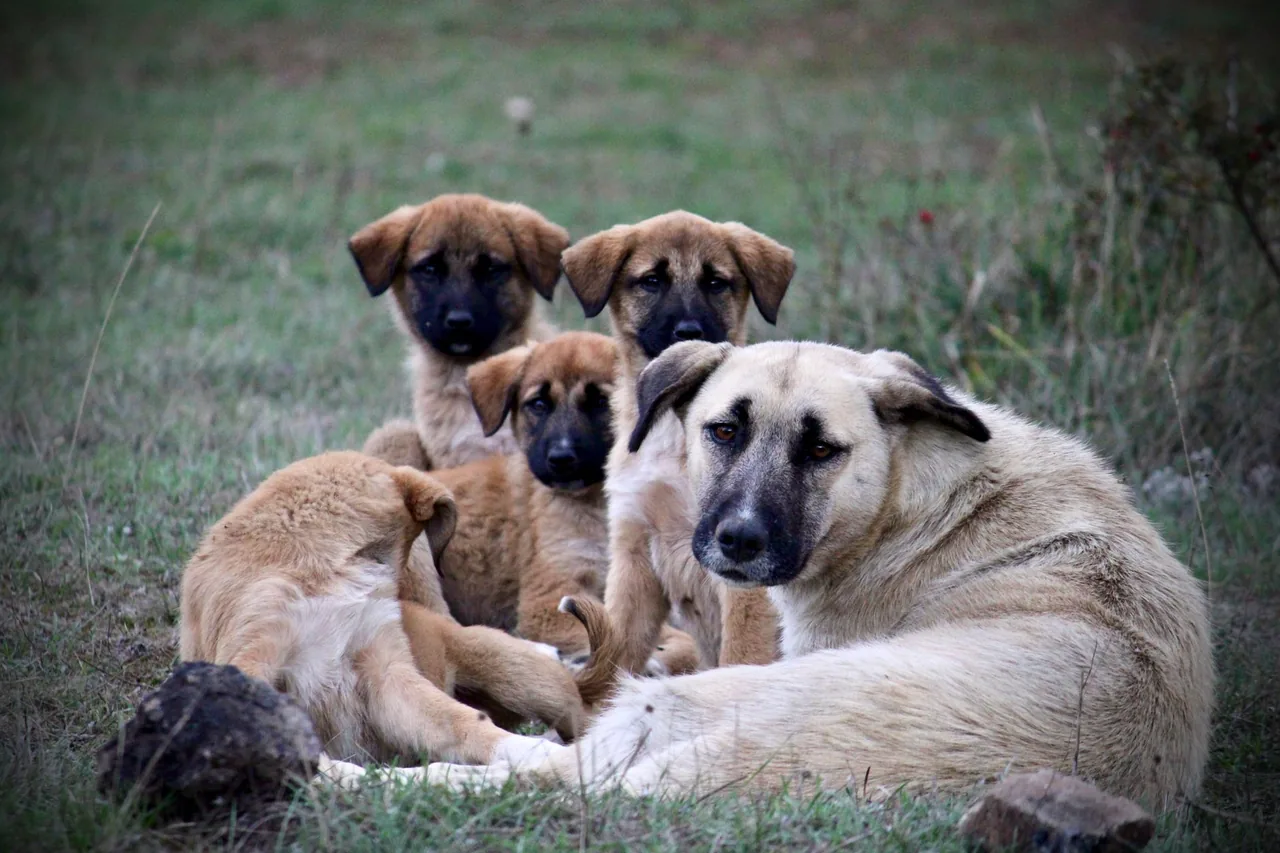
How long dog pregnancy lasts
The answer depends on what you count from. The AKC puts it at about 63 days from ovulation; the Merck Veterinary Manual gives about 62 to 64 days. But the day of ovulation is rarely known. Counted from the first breeding, the normal range is 58 to 72 days, because breeding and conception dates don’t line up closely enough to predict whelping accurately (Merck). If your vet did progesterone testing and found the LH surge, the window narrows to 64 to 66 days (Merck).
Weeks 1–3: no visible change
For the first weeks there is little to see. The embryos implant at about day 18 (Merck). Some dogs eat less or vomit for a few days in the first weeks, and the AKC describes the nipples becoming larger and pinker (“pinking up”). Keep her routine normal, and book a vet visit to plan the pregnancy.
Weeks 3–5: confirming the pregnancy
This is when a vet can confirm it:
- Ultrasound works best at about days 25 to 35 (Merck); VCA notes embryos can be seen as early as three weeks after breeding, and Merck warns that false negatives can happen before day 21.
- A relaxin blood test can detect pregnancy from about 22 to 27 days after breeding (Merck, VCA). If the first test is negative, VCA says two negatives a week apart are needed to be sure.
- Palpation: a vet may feel the swellings in the uterus from about day 21, with three and a half to five weeks being the best time (Merck, VCA).
Weeks 6–8: the belly grows
From around days 45 to 50, her abdomen grows larger and firmer, and her appetite and weight usually rise through these weeks (AKC). The AKC says no diet change is needed for the first two-thirds of pregnancy, and that food goes up gradually in the last weeks. Ask your vet what and how much to feed her.
On X-ray, the puppies’ skeletons start to show from about day 42 to 45 and are clear by day 47 to 48 (Merck).
From about day 55: counting the puppies
An X-ray taken after about day 55 is the best way to count the litter (Merck, VCA, AKC). Knowing the number matters: it tells you when she is finished, and whether a puppy may still be inside if labor stops. Use this time to set up a quiet whelping area she can get used to.
The last days: signs labor is near
- Nesting may start around days 58 to 62, and she may stop eating a few days before whelping (AKC).
- Her temperature drops. Rectal temperature falls below 99°F (37.2°C), usually 8 to 24 hours before whelping (Merck, VCA).
- First-stage labor: she may be restless, nest, hide, refuse food, vomit, pant or tremble (Merck). This stage lasts 12 to 24 hours according to Merck and the AKC, and 6 to 12 hours on average according to VCA.
When to call the vet
Call your vet during whelping for any of these (using the earliest line any source gives):
- strong contractions for 20 to 30 minutes with no puppy (VCA, Cornell);
- more than 2 hours between puppies (AKC, Merck);
- green or black discharge before the first puppy (VCA, Merck, AKC);
- no labor more than 24 hours after her temperature drops (VCA, AKC);
- a fever over 103°F (39.5°C) or heavy bleeding (VCA, Cornell, Merck).
If she shows no signs of whelping 64 days after her last mating, the AKC advises calling your vet; Merck counts more than 70 days from a known breeding as a prolonged pregnancy.
Once the puppies arrive, the free newborn puppy weight chart helps you track the daily weights and box temperatures for the first two weeks.
Frequently asked questions
- How long are dogs pregnant?
- About 63 days, or nine weeks, counted from ovulation, according to the AKC; the Merck Veterinary Manual gives about 62 to 64 days. Counted from the first breeding, the normal range is 58 to 72 days, because breeding and conception don’t happen on the same day.
- When can a vet confirm a dog is pregnant?
- From about three to five weeks. The Merck Veterinary Manual says ultrasound works best at about days 25 to 35, a relaxin blood test can detect pregnancy after about 22 to 27 days, and a vet may feel the swellings in the uterus from about day 21.
- What are the signs a dog is pregnant?
- Early on there may be few. The AKC describes enlarged, pinker nipples and sometimes a few days of nausea in the first weeks, then a bigger appetite, weight gain and a larger, firmer belly from around days 45 to 50. Only your vet can confirm it.
- Should I feed a pregnant dog more?
- Not at first. The AKC says no diet change is needed for the first two-thirds of pregnancy, and that food is increased gradually in the last weeks. Ask your vet what to feed her and how much.
- When should I call the vet during whelping?
- For strong contractions for 20 to 30 minutes with no puppy, more than 2 hours between puppies, green or black discharge before the first puppy, no labor more than 24 hours after her temperature drops, a fever over 103°F, or heavy bleeding. If she shows no signs of whelping 64 days after her last mating, the AKC advises calling too.
Educational content only — not veterinary or professional behavior advice. Consult your vet, or a certified trainer or behaviorist, for your pet. Read the full disclaimer →