Road Trip with a Dog: The Plan
A good road trip with a dog is mostly planned before the engine starts. How to secure your dog in the car, what crash tests found about harnesses, what to pack, the paperwork, and the heat rule that can’t be broken.
On this page
A safe road trip with a dog comes down to four things: secure your dog in the car, pack for them like a person, carry ID and paperwork, and never leave them in a parked car. The ASPCA recommends a secured, well-ventilated crate your dog can stand, sit, lie down and turn around in, or the back seat with a harness attached to a seatbelt. The CDC warns that a parked car can heat up by almost 20°F in just 10 minutes.
Everything else, from snacks to stops, is easier once those basics are settled at home.
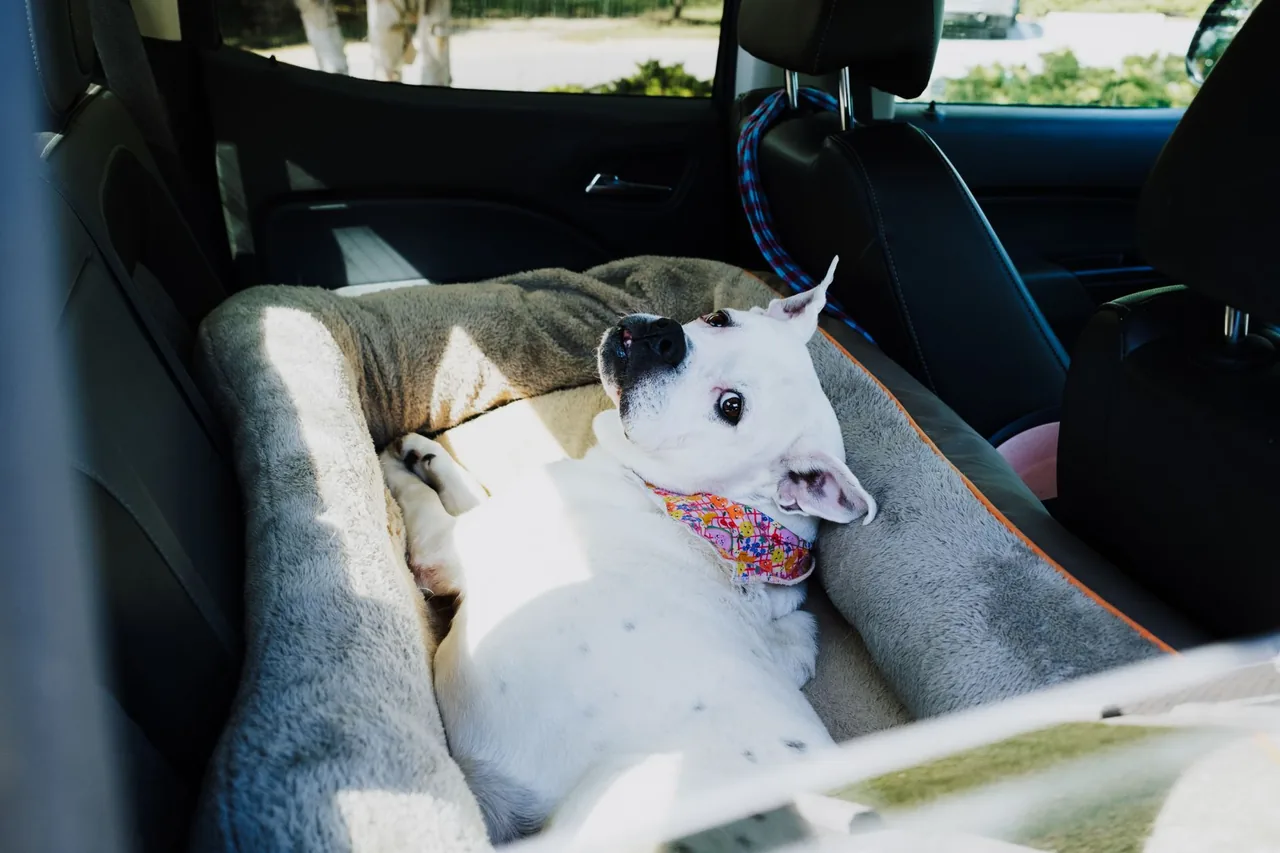
How to secure your dog
Crate: the ASPCA recommends a well-ventilated crate big enough for your dog to stand, sit, lie down and turn around, secured so it can’t slide or tip.
Harness: without a crate, the ASPCA suggests the back seat with a harness attached to a seatbelt. Choose carefully. In the Center for Pet Safety’s 2011 pilot study, run at 30 mph with a 55-pound test dog, every harness failed. Its 2013 study found most harnesses insufficient, and recommends buying one that is “Center for Pet Safety Certified.” CPS also found that extension tethers and ziplines increase injury risk.
No head out of the window, however much your dog loves it (ASPCA).
What to pack
The ASPCA’s list covers the essentials: food, a bowl, a leash, a poop scoop and bags, grooming supplies, any medication, a first-aid kit, documents, and a familiar toy or pillow. Bring plenty of water; the ASPCA suggests bottled water if you can. The free road-trip packing checklist puts all of it on one page.
Feeding on the road
The ASPCA suggests a light meal 3–4 hours before you leave, and never feeding in a moving car. If your dog gets carsick, ask your vet about feeding and anti-nausea options; advice on fasting before travel varies.
ID and paperwork
- Microchip and ID tag, plus a temporary tag with your cell number and destination (ASPCA).
- Rabies record with you; the ASPCA notes some states require a health certificate.
- Interstate rules are set by the destination state, according to USDA APHIS, so contact your vet early.
- Leaving the US and coming back? The CDC requires dogs entering the US to be at least 6 months old and microchipped, with a CDC Dog Import Form receipt.
Heat: the rule that can’t be broken
The CDC says a parked car can heat up by almost 20°F in 10 minutes, and that an open window isn’t enough. The ASPCA notes leaving animals in parked cars is illegal in several states, and that flat-faced, older and overweight dogs, and dogs with heart or lung disease, are at higher risk of heatstroke. Plan stops where your dog can come with you, or someone can stay with them in the air conditioning.
Know the heatstroke signs the ASPCA lists: heavy panting, hard breathing, drooling, weakness, stupor or collapse, seizures, bloody diarrhea or vomit, and a temperature over 104°F. Any of these is an emergency.
A nervous or carsick traveler
The ASPCA suggests short drives first. For a dog that drools, vomits or panics in the car, see dog car anxiety, which explains how to tell fear from car sickness, and practise with the free car-ride practice log. VCA notes many puppies outgrow car sickness by about a year old.
If your dog eats something at a stop
Rest stops are full of dropped food and trash. If your dog swallows something worrying, call your vet or ASPCA Animal Poison Control at 888-426-4435 (a fee may apply).
Frequently asked questions
- What’s the safest way for a dog to ride in the car?
- The ASPCA recommends a well-ventilated crate, secured in the car, that your dog can stand, sit, lie down and turn around in. Without a crate, use the back seat with a harness attached to a seatbelt, and don’t let your dog ride with its head out of the window.
- Are dog car harnesses crash tested?
- Many aren’t. In the Center for Pet Safety’s 2011 pilot study, every harness tested failed; its 2013 study found most harnesses insufficient. CPS recommends choosing a CPS-certified product and warns that extension tethers and ziplines increase injury risk.
- Can I leave my dog in the car for a few minutes?
- No. The CDC says a parked car can heat up by almost 20°F in 10 minutes and that opening a window isn’t enough. The ASPCA notes leaving animals in parked cars is illegal in several states.
- What paperwork do I need to take my dog to another state?
- Carry the rabies record, and check your destination state’s rules early: USDA APHIS explains that entry requirements are set by the destination state, and the ASPCA notes some states require a health certificate. Your vet can help.
Educational content only — not veterinary or professional behavior advice. Consult your vet, or a certified trainer or behaviorist, for your pet. Read the full disclaimer →