Why Does My Dog Lick His Paws So Much?
Occasional licking is grooming. Constant licking is a message, most often allergies, but sometimes infection, injury, pain, or anxiety. How to read the clues, and when it's time to call your vet.
On this page
Occasional paw licking is normal grooming, but frequent, intense, or focused paw licking is one of the most common signs of an underlying problem, and the number-one culprit is allergies. Skin infections, parasites, a foreign object or injury, dry skin, joint pain, and anxiety or boredom round out the list. The good news: you don’t have to guess blindly. The way your dog licks — which paw, when, how often, and what the skin looks like — narrows the possibilities considerably before you ever walk into the vet clinic.
Normal grooming or a red flag?
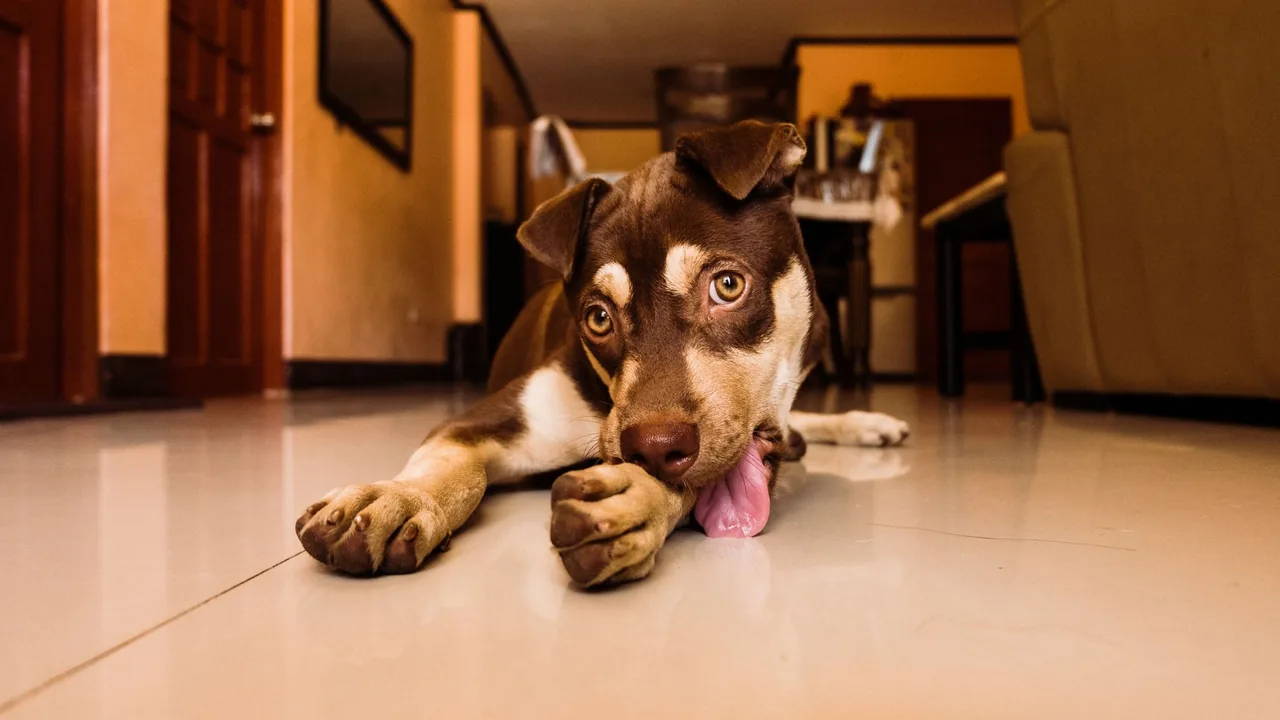
Dogs lick their paws briefly after walks, after meals, or as part of a wind-down routine. That’s healthy self-care. The picture changes when licking becomes long, urgent sessions; when it happens many times a day; when your dog wakes up to lick or licks instead of sleeping; or when the paws themselves start to change — redness between the toes, swelling, moist or thickened skin, or that telltale rusty pink-brown saliva staining on light-colored fur. Staining is a useful tell: it means the licking has been going on for weeks, not days, even if you’ve only just noticed it.
The number-one suspect: allergies
Veterinary dermatology sources, including VCA Animal Hospitals and the Merck Veterinary Manual, consistently list allergic skin disease as one of the most common reasons dogs itch, and the paws are a classic target. There are two big categories:
Environmental allergies (atopy). Pollens, grasses, molds, and dust mites. The pattern here is often seasonal — worse in spring or fall — or worse after walks through grass. Dogs with atopy usually itch in more than one place: paws plus ears, face, armpits, belly, or around the rear.
Food allergies. Less common than environmental allergy but very real, and the itching is typically year-round with no seasonal break. Recurrent ear infections alongside itchy paws are a frequent combination. Only a strict veterinarian-guided elimination diet can confirm a food allergy — over-the-counter “allergy tests” and hair or saliva kits are not reliable diagnostics.
Other causes worth knowing
Yeast or bacterial infection. Broken, moist skin from licking is an open invitation to the yeast and bacteria that normally live on skin in small numbers. Clues include a musty odor (owners often say “corn chips”), greasy or crusty skin, and brown discoloration around the nail beds. Infections are frequently secondary to allergies — the itch starts the licking, the licking feeds the infection, and the infection makes the itch worse.
Parasites. Fleas and certain mites cause intense itching. Even a dog on flea prevention can react dramatically to a single bite if he’s flea-allergic.
A foreign object or injury. If your dog suddenly starts licking one paw, look closely: grass awns, burrs, thorns, a cut pad, a torn or ingrown nail, or an interdigital cyst between the toes. Sudden, single-paw licking is a “check the paw now” situation.
Dry skin. Cold weather, low indoor humidity, and over-bathing can leave paw skin flaky and itchy.
Pain. Dogs sometimes lick over a spot that hurts underneath, not on the surface. An older dog persistently licking one wrist or ankle may be telling you about arthritis, per the Merck Veterinary Manual, especially if you also see stiffness after rest.
Anxiety or boredom. Licking releases soothing endorphins, so some dogs lick to self-calm when they’re stressed, under-stimulated, or left alone. In some dogs it escalates into a compulsive pattern that can create a raw sore (acral lick dermatitis).
What you can observe at home
You’re not diagnosing. You’re gathering the clues your vet will ask about anyway. Notice: Is it one paw or all four? (All four points toward allergies; one paw points toward injury, a foreign object, or localized pain.) Is there redness, swelling, odor, or staining? Is it seasonal or year-round? Does it spike after walks, at night, or when your dog is home alone? Is he also scratching his ears, rubbing his face, or scooting? Writing these details down for two or three weeks turns a vague “he licks a lot” into a pattern your vet can actually work with.
When to call your vet
Call your veterinarian promptly if you see any of the following:
- Raw, bleeding, or broken skin on the paws, or a sore that keeps reopening
- Limping, holding a paw up, or reluctance to walk
- Swelling of a toe, pad, or the whole paw
- Sudden, intense licking of one paw that started out of nowhere
- Odor, discharge, or crusting between the toes
- No improvement after a week or two, even with clean, dry paws
- Licking paired with lethargy, appetite loss, or any other behavior change
To be clear: this article is not a diagnosis. Only your veterinarian can examine the skin, rule causes in or out, and find what’s actually driving the licking. The list above exists to help you decide when to make that call, not to replace it.
The myth: “he’s just doing it out of habit — correct him”
Scolding a dog for licking, spraying bitter deterrents, or using a cone as a long-term fix treats the symptom while the cause keeps burning. If the driver is medical, no correction will out-argue an itch. And if the driver is anxiety, punishment actively makes it worse — the American Veterinary Society of Animal Behavior (AVSAB) recommends reward-based methods precisely because fear and punishment increase stress, and stress is what fuels the licking. The force-free approach: more physical and mental exercise, food puzzles and licking mats (channeling the licking onto something appropriate), predictable routines, and — for real separation distress — a gradual, positive training plan, ideally with your vet or a certified force-free trainer.
Managing an allergy dog: tracking beats guessing
The part most articles skip: allergies are managed, not cured. Even with your vet running the medical side, the pattern only reveals itself over weeks (which season, which park, which food, which cleaning product). Log the itch for two weeks and your vet gets a pattern instead of “it comes and goes.” That’s what my printable Dog Allergy Tracker & Elimination Diet is for: daily itch scores, paw checks, and food and environment notes, all in one place you can hand to your vet.
Your dog isn’t licking to annoy you. He’s telling you something itches, hurts, or worries him. Listen early, write it down, and let your vet do the detective work.
Frequently asked questions
- Why does my dog lick his paws at night?
- Nighttime paw licking usually stands out simply because the house is quiet. There are no walks, meals, or squirrels competing for your dog's attention, so an itch that was background noise all day takes center stage. Allergic itching in particular tends to feel worse when a dog finally settles and his body warms up under blankets or against your legs. That said, licking that repeatedly interrupts sleep — your dog wakes up to lick, or can't settle at all — is a sign the itch or discomfort is significant, not casual. Some dogs also lick at night to self-soothe if evenings are when they feel most restless or under-exercised. Track whether it's every night or only after certain days (grass-heavy walks, certain foods), and bring that pattern to your vet.
- What can I put on my dog's paws to stop the licking?
- Be careful here: the goal isn't to stop the licking, it's to stop the reason for it. Rinsing and thoroughly drying the paws after grass-heavy walks can help allergic dogs by physically removing pollen, and that's safe to start today. But avoid human creams, ointments, or hydrocortisone products unless your vet specifically approves them — dogs lick off whatever you apply, and some human topicals (including anything containing zinc oxide) can be harmful when swallowed. Bitter anti-lick sprays only mask the symptom; if the cause is an itch, infection, or pain, the discomfort continues underneath. If the skin is red, moist, smelly, or broken, skip home treatment entirely and have your vet look. Those paws often need prescription treatment, and delays let secondary infections dig in.
- How do I know if it's a food allergy or an environmental allergy?
- You can gather strong hints at home, but only your veterinarian can confirm either one. The biggest clue is the calendar: environmental allergies (atopy) are often seasonal — worse in spring and fall, better in winter — or flare after outdoor exposure, while food allergies typically cause year-round itching with no seasonal break. Recurrent ear infections alongside itchy paws show up in both but are a classic food-allergy combination. Age offers another hint: atopy usually appears between one and three years old, while food allergy can start at any age, including in a dog who has eaten the same food for years. The only reliable test for food allergy is a strict elimination diet supervised by your vet, usually eight to twelve weeks long. Mail-order saliva and hair "allergy tests" are not considered reliable by veterinary dermatologists.
- Is paw licking a sign of anxiety in dogs?
- It can be. Licking releases endorphins that have a mild calming effect, so some dogs lick their paws to self-soothe when they're stressed, bored, or alone, the canine equivalent of nail-biting. Clues that point toward an emotional driver rather than a medical one: the licking clusters around specific situations (being left alone, thunderstorms, visitors, evenings with no exercise), the skin looks relatively normal early on, and the dog can be easily interrupted with something engaging. The catch is that anxiety and allergies are not mutually exclusive, and chronic licking from any cause can damage skin. So a vet visit still comes first to rule out medical causes. If anxiety is part of the picture, the fix is force-free: more exercise and enrichment, licking mats, predictable routines, and gradual positive training, never punishment, which reliably increases the stress that's driving the behavior.
Educational content only — not veterinary or professional behavior advice. Consult your vet, or a certified trainer or behaviorist, for your pet. Read the full disclaimer →