Why Does My Dog Follow Me Everywhere?
From the kitchen to the bathroom, your dog is never far behind. Why some dogs stick so close, and how to tell devotion from distress.
On this page
Almost always, it’s normal: dogs are a social species, shaped over thousands of years to live and work beside humans, and you’re the most interesting thing in the house. It only matters if your dog panics when you’re actually gone, and a 20-minute camera check tells you which. The follow-you-to-the-bathroom routine that people jokingly call being a “velcro dog” is, most of the time, nothing to worry about.
That said, there is one important distinction every owner should know: the difference between a dog who prefers your company and a dog who panics without it. This article covers both — the everyday reasons behind the shadowing, the real signs of separation-related distress, and gentle, force-free ways to build a little independence if your dog would benefit from it.
Following you is normal dog behavior
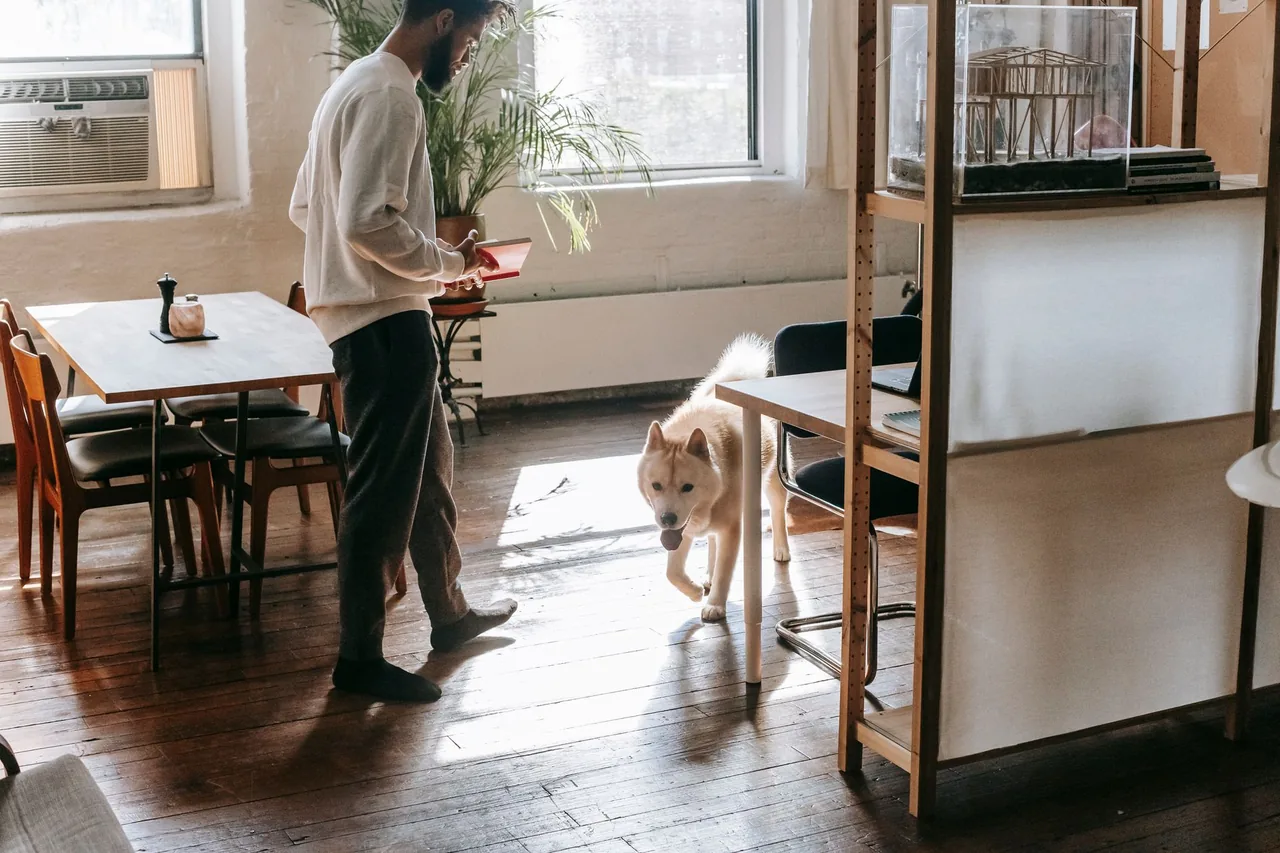
Dogs evolved alongside humans, and companionship is the whole point of that partnership, not a glitch in it. The AKC notes that many breeds were deliberately developed to work in close partnership with people all day: herding dogs shadowing a handler, toy and companion breeds bred for nothing but sitting near their person. If you share your home with a Cavalier, a Chihuahua, a Border Collie, or a Vizsla, a certain amount of orbiting is practically in the job description.
Beyond genetics, following is how dogs participate in family life. You are the most interesting thing in the house. You control the doors, the food, the leash, and the couch privileges. From your dog’s point of view, keeping an eye on you is simply good information-gathering.
The everyday reasons behind the shadowing
Most velcro-dog behavior traces back to a few ordinary causes, often stacked together.
Bonding. Dogs seek out the people they feel safest with. A dog who follows you around the house is usually telling you the attachment worked — you’re their person. Rescue dogs in their first months home often shadow closely while they figure out that this new life is stable.
Learned reinforcement. Following you pays. It has led to dropped cheese in the kitchen, a scratch behind the ears in the hallway, a walk when you picked up shoes. Dogs repeat what works — that’s the same learning principle that AVSAB-endorsed reward-based training is built on, just running in the background of daily life. You have, pleasantly and accidentally, trained the following.
Anticipation and routine. Dogs are superb pattern-readers. If it’s 5:40 and dinner happens at 6:00, your dog isn’t following you so much as following the future bowl of food. Pre-walk hours, pre-mealtime, and just-got-home windows are peak shadowing times, and that’s anticipation, not anxiety.
Curiosity and boredom. A dog with nothing better to do will supervise your laundry-folding. Adding enrichment — sniffing walks, food puzzles, chew projects — often dials the shadowing down on its own.
Velcro dog vs. separation anxiety: the myth to drop
One correction is worth remembering: following you around while you’re home is not separation anxiety. The two get conflated constantly, and it causes needless worry.
Separation anxiety, as the ASPCA describes it, is a panic response that shows up when the dog is actually left alone or separated from their people. The signs happen in your absence: frantic pacing, sustained barking or howling, drooling, destruction concentrated at doors and windows (escape attempts, not recreational chewing), and house soiling from a dog who is otherwise reliably trained. A camera pointed at the door while you run a 20-minute errand tells you more than a week of watching your dog trail you to the pantry.
A true velcro dog follows you from room to room, sighs, and settles nearby. A dog with separation-related distress may also follow you, but the diagnosis lives in what happens after the door closes. If your dog naps peacefully while you’re out, the daytime shadowing is companionship, full stop. If the camera shows panic, that’s a real welfare issue, and my complete Dog Separation Anxiety guide walks through the force-free protocol step by step.
When it’s worth addressing
A few situations make the shadowing worth some gentle attention:
- Your dog can’t settle unless touching you. If they pace, whine, or stress when you simply close the bathroom door, the attachment has tipped from preference into dependence — mild, fixable, but worth working on before it grows.
- The clinginess is new. A sudden change in an adult or senior dog — a previously independent dog now glued to you — deserves a vet visit first. VCA Animal Hospitals notes that increased clinginess in older dogs can accompany pain, failing senses, or cognitive decline. Rule out the medical piece before assuming it’s behavioral.
- You see actual alone-time panic. That’s separation distress, not velcro behavior, and it needs its own structured plan.
If none of those apply, you’re allowed to just enjoy it. Being followed by someone who adores you is not a problem in need of solving.
Gentle independence-building, force-free
If you’d like your dog to be more comfortable at a distance, teach it the same way you’d teach anything else — by making it pay. Never punish following; per AVSAB’s position on humane training, punishment adds stress and damages trust, which is the opposite of what a slightly clingy dog needs.
Reward settling on a mat. Put a comfy bed a few feet from your desk or couch. Any time your dog chooses to lie on it, calmly drop a treat between their paws. Over days, the mat becomes a paying station and “relaxing near you but not on you” becomes your dog’s own idea. Gradually move the mat farther away, then into the next room with the door open.
Feed independence. Serve food puzzles, snuffle mats, and long-lasting chews in another room while you stay put. The dog learns that great things happen away from your feet.
Make departures boring. Skip dramatic goodbyes and ecstatic reunions. Leave calmly, return calmly, and greet your dog once everyone’s four feet are on the floor. Low-drama exits teach your dog that your comings and goings are unremarkable background events.
Practice micro-absences. Step out of the room for ten seconds and return before your dog reacts. Boring repetition, not endurance tests, is what builds a dog who shrugs when you leave.
Where to go next
If your camera check revealed real alone-time panic, start with my Dog Separation Anxiety guide and the printable Separation Anxiety Toolkit, which packages the graduated alone-time ladder and tracking sheets in one place. And if you want to get better at reading what your dog’s shadowing means (relaxed companionship or low-grade worry), my guide to reading your dog’s body language is the place to start. Loose body, soft eyes, casual flop at your feet? That’s not a behavior problem. That’s a fan.
Frequently asked questions
- Is it bad that my dog follows me everywhere?
- No — in almost all cases it's healthy, normal social behavior. Dogs are companion animals bred to live closely with humans, and following a bonded person around the house is affection plus curiosity plus good pattern-reading, not a disorder. It only merits attention in three situations: if your dog cannot settle when briefly separated from you inside your own home (whining or pacing at a closed bathroom door), if the clinginess appeared suddenly in an adult or senior dog (see your vet — VCA notes new clinginess can accompany pain, sensory loss, or cognitive changes), or if your dog shows real panic when actually left alone. Otherwise, a velcro dog who follows you, sighs, and settles nearby is simply enjoying your company, and you're free to enjoy theirs back.
- Why does my dog follow me and not other family members?
- Dogs usually attach most strongly to the person who is the best combination of reliable and rewarding. That's often whoever feeds them, walks them, trains them with treats, and spends the most calm time with them, but not always. Some dogs gravitate to the quietest person in the house, or the one whose schedule matches theirs. Reinforcement history does most of the work: if following you has paid off with food, walks, play, and gentle attention, your dog repeats what works, which is the same learning principle behind AVSAB-endorsed reward-based training. Breed also plays a role — many herding and companion breeds were developed to focus on one handler. If other family members want more shadow time, having them take over some meals, walks, and treat-based training sessions usually shifts the balance within weeks.
- Does my dog follow me to the bathroom because something is wrong?
- Almost certainly not. Bathroom-following is one of the most common velcro-dog behaviors, and it's driven by simple things: dogs don't share the human concept of privacy, closed doors cut them off from their favorite person, and your movement through the house is the most interesting event on offer. For a social species, "where you go, I go" is the default setting, not a symptom. The behavior only matters if your dog shows real distress at the separation (scratching frantically at the door, whining continuously, or panicking), which suggests dependence worth gently addressing with mat-settling practice and micro-absences. A dog who pads in after you, flops on the bath mat, and waits is just doing normal, slightly comical companion-dog behavior that the AKC describes as typical of closely bonded pets.
- How do I teach my clingy dog to be more independent?
- Make distance pay, and keep it drama-free. Place a comfortable mat a few feet away from where you sit and calmly reward your dog every time they choose to settle on it; over days and weeks, move the mat gradually farther, eventually into the next room with the door open. Serve food puzzles and long-lasting chews away from you so good things happen at a distance. Practice micro-absences — leave the room for ten seconds and return before your dog reacts, slowly building duration. Keep departures and arrivals boring: calm exits and low-key greetings teach your dog that your movements are unremarkable. Never punish following; per AVSAB's humane training position, punishment adds stress and erodes trust, which worsens clinginess. If your dog panics when truly alone, follow a structured separation anxiety protocol instead.
Educational content only — not veterinary or professional behavior advice. Consult your vet, or a certified trainer or behaviorist, for your pet. Read the full disclaimer →