Why Does My Dog Yawn and Lick His Lips When He's Not Tired?
Out-of-context yawns and lip-licks are your dog's quietest "I'm uncomfortable," and the easiest warning to miss.
On this page
If your dog yawns when he’s not tired, or flicks his tongue over his lips when there’s no food anywhere, he’s almost certainly telling you he’s uncomfortable. Out-of-context yawning and lip-licking are stress signals — part of a set of behaviors trainers call “calming signals” — and they’re the earliest, easiest-to-miss sign that something in the moment feels like too much for your dog.
That reframe matters more than it sounds. Most owners read a yawn as boredom and a lip-lick as anticipation of dinner, so the dog’s quietest requests for help go unanswered, and dogs whose quiet signals never work eventually learn to speak louder. Learning to catch these two little behaviors is the beginning of really reading your dog.
What are calming signals?
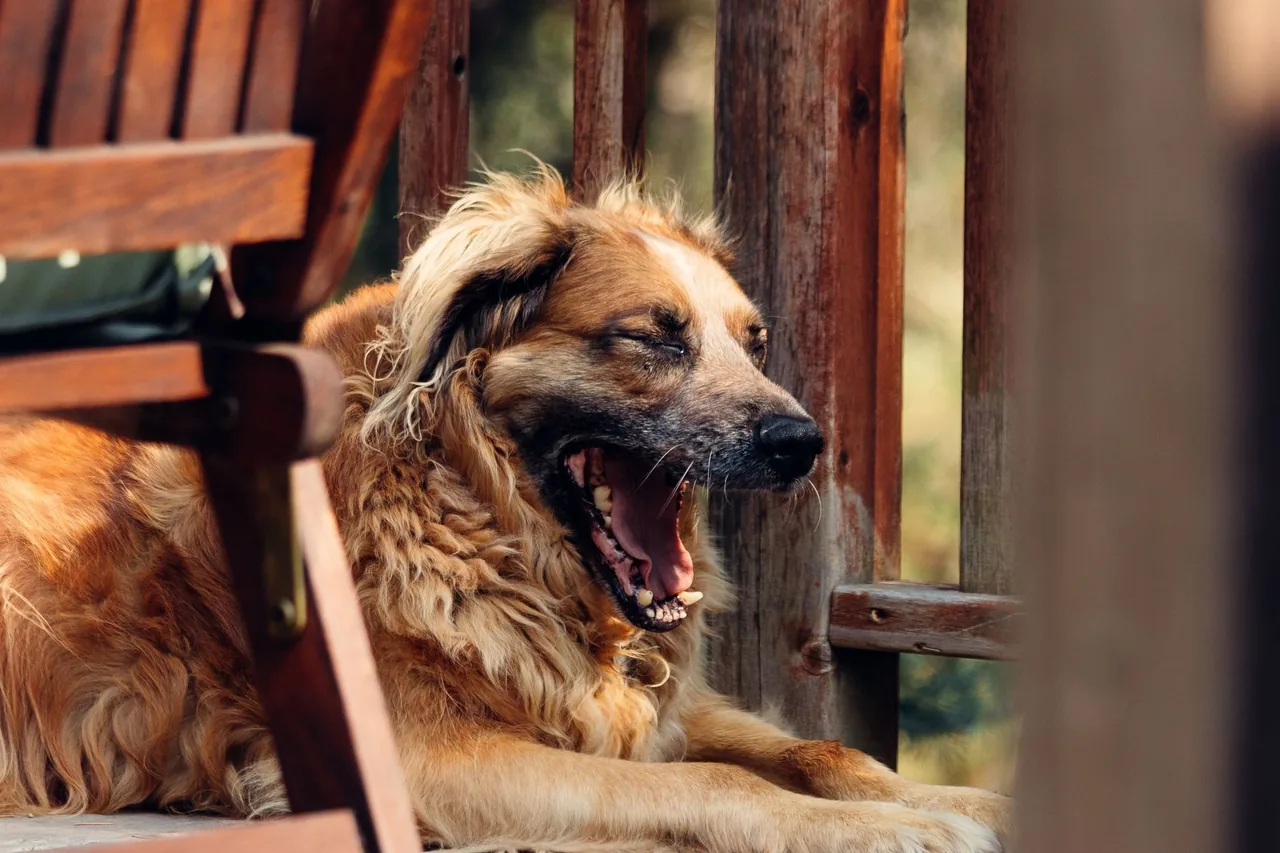
The term comes from Norwegian trainer Turid Rugaas, who spent years documenting the small, ritualized behaviors dogs use when they feel tension, in themselves, in another dog, or in a person. Her list includes yawning, licking the lips or nose, turning the head or whole body away, suddenly sniffing the ground, moving in slow motion, curving on approach rather than walking straight in, and the full-body shake-off after a tense moment passes.
Behavior researchers still debate whether these signals actually “calm” the other party, and organizations like the ASPCA describe them a bit more plainly, as early signs of stress and appeasement. For an owner, the practical takeaway is the same either way: these behaviors reliably show up when a dog is uneasy and trying to defuse, not escalate, a situation. They’re information, and they’re free.
Tired, hungry — or stressed? How to tell
Context is the whole game. A real sleepy yawn happens where sleep happens — waking up, settling in for the night, stretching after a nap. A stress yawn shows up at the vet’s office, during a hug, when a stranger leans over him, mid-training-session when he’s confused, or when the phone comes out for a photo, and it’s often longer and more exaggerated than a drowsy one.
Same test for the tongue. A food lip-lick happens while dinner is being prepped. The stress version is a quick flick of the tongue to the nose or lips with no food in sight, typically while someone new reaches for him, another dog approaches head-on, or you’re scolding him.
So the common reading (“he yawned, he must be relaxed or bored”) is a myth. A dog yawning while a toddler climbs on him is not relaxed. He’s asking, politely, for the situation to change.
Read the cluster and the context, not one signal
No single signal is a verdict. Dogs yawn because they’re sleepy, lick because they’re about to eat, and sniff because the ground smells fascinating. What separates noise from message is the cluster: a yawn plus a head turn away, plus weight shifting backward, plus pinned ears and a tightly closed mouth is a dog saying “too much” in four ways at once.
When you spot one signal, ask three questions. What just happened — did someone reach, hug, approach, or raise a voice? What is the rest of his body doing — loose and wiggly, or still and tucked? And does the behavior stop when the pressure stops? If backing off makes the licking or yawning vanish, you have your answer. My guide to reading your dog’s body language walks the whole body head to tail, and the free body-language decoder lets you check a specific combination of signals on the spot.
Why catching these early prevents growls and snaps
Canine stress escalates like a ladder. It starts with exactly these signals: yawns, lip-licks, look-aways, sudden sniffing. Ignored, it climbs: whale eye (whites of the eyes showing), freezing, a stiff closed mouth. Ignored again: growl, snap, and in the worst case a bite. Dogs described as biting “out of nowhere” almost always warned, quietly, early, and repeatedly, in a language nobody in the room could read.
This is also the exact skill reactivity work is built on. Helping a leash-reactive dog means working “below threshold” — close enough to notice the trigger, far enough to stay calm — and the only way to know where threshold is, is to read these early signals in real time. A lip-lick and a look-away at fifty feet from another dog is your cue to add distance now, before the barking starts. My complete guide to reactive dogs builds the whole method on this foundation, and why a dog reacts to some dogs and not others explains the trigger-stacking that quietly lowers a dog’s threshold through the day.
What to do in the moment
Reduce the pressure. That’s the entire move. Add distance from whatever he’s worried about, ask the guest to stop reaching, put yourself between him and the trigger, or cheerfully end the training session and try again later with an easier version. Then let him decompress: a sniffy pause, a few treats scattered in the grass, a calm exit.
Two things never to do. Don’t force him to “push through” — flooding a dog past his signals teaches him that signaling is useless. And never punish the warning — this is the loudest point in AVSAB’s humane-training guidance, because punishment can suppress the signal without touching the fear underneath. A dog corrected for growling (or for the lip-licks that came before it) doesn’t feel better; he just skips the warning next time. Comforting a worried dog, by contrast, is fine — fear is an emotion, not a behavior you can reinforce.
When it’s medical, not emotional
Lip-licking has one important non-behavioral cause: nausea. Veterinary sources like VCA note that repeated lip-smacking with drooling, grass-eating, appetite loss, or licking surfaces can point to GI upset or dental pain rather than stress. The tell is context again: stress licking is tied to specific social moments and stops when pressure eases; medical licking happens at random, including when your dog is alone and relaxed. Any sudden, persistent change deserves a vet visit first, before you treat it as behavior.
If you’re seeing these signals everywhere
A dog throwing calming signals on every walk — at dogs, strangers, traffic — isn’t “fine so far.” He’s a dog coping, and coping has a budget. This is the single best moment to act, while the warnings are still whispers: the free Reactive Dog Starter Path asks a few questions about your dog and hands you a starting plan, and the printable Body Language Chart Pack puts every signal on your fridge so the whole household reads the same early warnings. Your dog is already talking, and now you can answer.
Frequently asked questions
- Why does my dog yawn when I hug him?
- Because for most dogs, a hug is pressure, not affection. Being wrapped and held removes a dog's default option when something makes him uneasy — moving away — so many dogs respond with the classic stress cluster: a yawn, a lip-lick, a head turn, sometimes "whale eye" where the whites of the eyes show. It doesn't mean your dog doesn't love you; it means the specific sensation of being restrained is uncomfortable for him. Watch his body next time: if he goes still, turns his face away, and yawns, he's tolerating the hug, not enjoying it. Trade hugs for the kinds of contact most dogs actively seek (chest scratches, leaning against you, sitting hip-to-hip) and save the full wrap for the rare dog who melts into it.
- Is my dog licking his lips because he's nauseous, not stressed?
- It's possible, and worth ruling out. Stress licking is tied to specific social moments — a hand reaching in, a hug, another dog approaching head-on — and it stops as soon as the pressure eases. Nausea licking is random: your dog smacks his lips while lying alone and relaxed, swallows repeatedly, drools, eats grass, licks the floor or furniture, or goes off his food. Veterinary sources like VCA link that picture to GI upset, reflux, or dental pain rather than emotion. If the licking is new, persistent, or comes with any of those signs, book a vet visit first and treat it as behavior only after medical causes are cleared. A sudden change in any of your dog's habits always justifies that call.
- Should I comfort my dog when he's stressed, or will that reward the fear?
- Comfort him without guilt. Fear is an emotion, not a behavior, and you can't reinforce it with calm support. The old advice to ignore a scared dog so you don't "reward" the fear is a myth that modern reward-based guidance, including AVSAB's position, has left behind. What does make things worse is forcing him to stay inside the situation that scares him, or punishing his warning signals. The best help has two parts: first reduce the pressure — add distance, ask the guest to stop reaching, end the session — and then offer low-key support: a soft voice, your presence, a few treats if he'll take them. A dog who learns you'll get him out of tight spots trusts you more, and a trusting dog stresses less the next time.
- Do dogs yawn because they're tired, like humans do?
- Yes. Sleepy yawns are real, and dogs also catch yawns. A dog waking from a nap who stretches into a long yawn is simply drowsy, same as you. Research has also documented contagious yawning in dogs, with some studies suggesting dogs yawn more in response to their own owners, a phenomenon studied as a possible marker of social bonding. That's exactly why a yawn on its own proves nothing: the meaning lives in the context and the rest of the body. A yawn on his bed with a loose, floppy body is rest. A yawn in the vet's waiting room, with ears back, weight shifted away, and a lip-lick right after, is stress. Always read the cluster and the situation before you draw a conclusion.
Educational content only — not veterinary or professional behavior advice. Consult your vet, or a certified trainer or behaviorist, for your pet. Read the full disclaimer →