Resting Breathing Rate Log
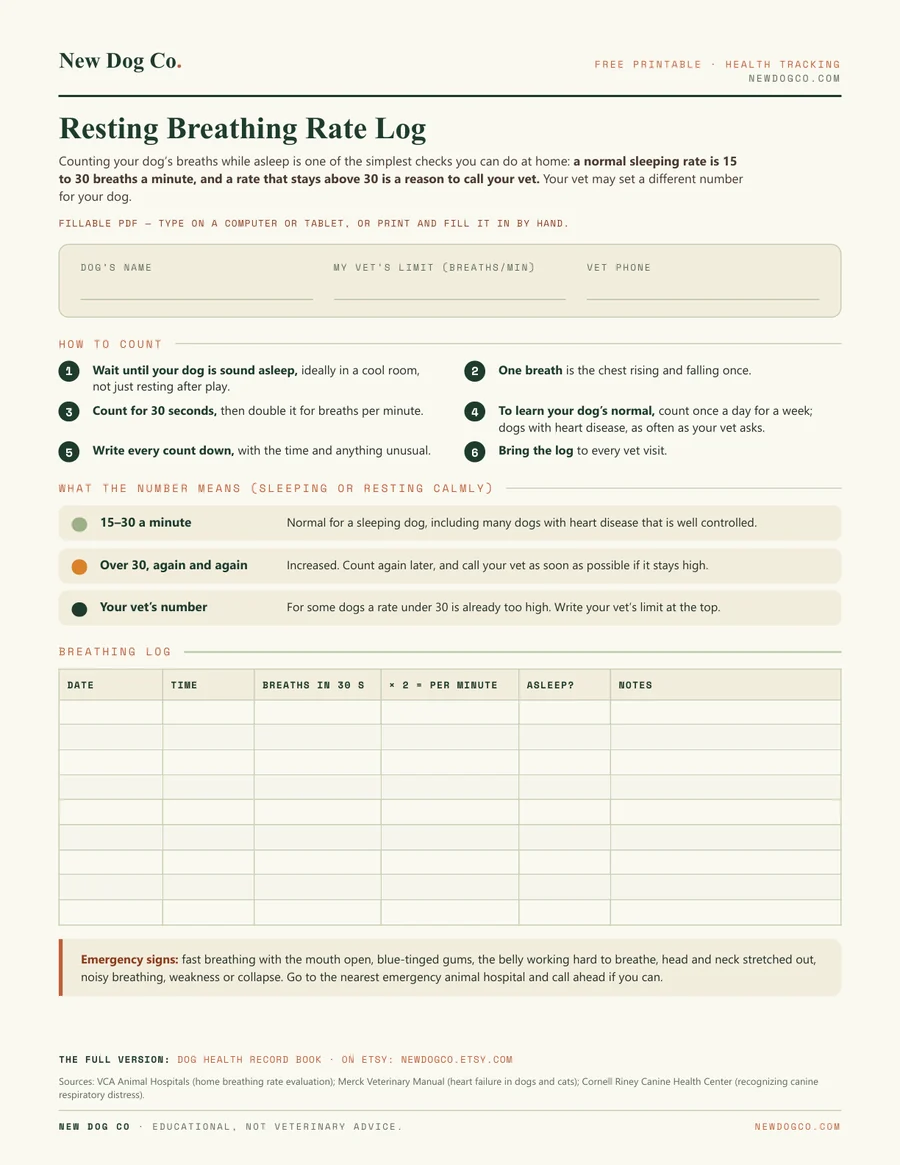
What is a normal breathing rate for a sleeping dog? Between 15 and 30 breaths a minute, according to VCA Animal Hospitals, and the Merck Veterinary Manual puts a normal sleeping rate under 30. A rate that stays above 30 is increased and a reason to call your vet, though your vet may set a lower limit for your dog. This one-page log shows how to count (asleep, for 30 seconds, then double it), gives you a table to record each count, and lists the emergency signs that can’t wait.
Fillable · bilingual EN/ES · vet-sourced, not a scanned template.
 Got the free sheet? The full version → Dog Health Record Book
What's inside
- How to count: asleep, one breath per rise and fall, 30 seconds times two
- What the number means: normal, increased, and your vet’s own limit
- A fillable log: date, time, breaths in 30 seconds, per minute, asleep, notes
- The emergency breathing signs that mean go now
How to use it
- Ask your vet whether your dog has its own limit, and write it at the top.
- Count once a day for a week while your dog is sound asleep, to learn its normal.
- If your dog has heart disease, keep counting as often as your vet asks.
- Bring the log to every vet visit, and call sooner if counts stay above the limit.
Sources
Vet-sourced: the facts on this sheet come from these sources. It is educational, not veterinary advice.
- VCA Animal Hospitals (home breathing rate evaluation)
- Merck Veterinary Manual (heart failure in dogs and cats)
- Cornell Riney Canine Health Center (recognizing canine respiratory distress)
Published
New printables + calm, sourced dog-care tips
Join the Pack and the 25-printable bundle is your instant thank-you — then we email new printables and short, vet-sourced tips as they’re ready. A few times a month, no spam.
The 25-printable pack lands instantly — new printables and tips follow. Unsubscribe anytime. Privacy Policy.Frequently asked questions
- What is a normal breathing rate for a sleeping dog?
- Between 15 and 30 breaths a minute while sleeping or resting calmly, according to VCA Animal Hospitals; that also holds for many dogs with heart disease that is well controlled. The Merck Veterinary Manual puts a normal sleeping rate under 30.
- How do I count my dog’s breathing rate?
- Wait until your dog is sound asleep, ideally in a cool room. Count one breath each time the chest rises and falls, for 30 seconds, then multiply by two. Write each count down with the time.
- When should I worry about my dog’s breathing rate?
- When it stays above 30 breaths a minute at rest. VCA calls that increased and advises contacting your vet as soon as possible. For some dogs, especially those with heart disease, your vet may set a lower limit.
- How often should I count?
- To learn your dog’s normal, VCA suggests once a day for a week. Dogs with heart failure on medication are usually counted at least once a day, and dogs with heart disease but no signs as often as your vet decides, often once or twice a week.
- What breathing signs are an emergency?
- Fast breathing with the mouth open, blue-tinged gums, the belly working hard, the head and neck stretched out, noisy breathing, weakness or collapse. Cornell’s Riney Canine Health Center advises going to the nearest emergency animal hospital and calling ahead if you can.
Free educational printable. Not veterinary advice, and not a substitute for your vet's official records or an emergency call. Full disclaimer → · Leer en español →