
When is a dog actually "senior"?
There is no single birthday that makes a dog senior. Veterinary guidance generally places the senior stage in roughly the last 25% of a dog's expected lifespan, which is why size and breed matter so much. Small dogs may live 14 or more years and reach senior status around 9 to 10. Medium dogs often cross into it near 7. Large and giant breeds age faster and can be considered senior as early as 5 to 6.
The American Animal Hospital Association's senior-care framework treats aging as a life stage that changes how often and how closely a dog should be monitored, rather than a disease. Chronological age is only a starting point; your veterinarian weighs body condition, mobility, organ function, and overall health to judge where your individual dog sits. This guide gives you a reference to estimate that milestone and a place to record your dog's current stage so you can watch trends over time.
The changes to expect as your dog ages
Aging touches the whole body, and knowing the common patterns helps you notice them early. Osteoarthritis is one of the most common sources of chronic discomfort in older dogs, showing up as stiffness after rest, reluctance to jump or take stairs, or slowing on walks. Vision and hearing often decline gradually; a dog that startles when touched or ignores familiar cues may be losing senses rather than "being stubborn."
Canine cognitive dysfunction, a recognized age-related change described in veterinary behavior literature and by the Merck Veterinary Manual, can cause disorientation, altered sleep-wake cycles, changed interactions, house-soiling, and anxiety. Weight and muscle shifts go both ways: some seniors gain weight as activity drops, while others lose lean muscle mass. This guide provides separate trackers for mobility, senses, cognition, and body condition so you can document specifics and bring concrete observations to your veterinarian instead of vague impressions.
Why twice-a-year vet visits matter now
Healthy adult dogs typically see the vet once a year, but AAHA senior-care guidance recommends wellness exams about every six months for older dogs. Aging changes can progress quickly between annual visits, and dogs are skilled at masking illness until it is advanced.
More frequent visits also make baseline diagnostics more useful. A complete blood count, chemistry panel, urinalysis, and blood-pressure check establish what "normal" looks like for your individual dog, so your veterinarian can catch shifts in kidney, liver, thyroid, or other values before outward symptoms appear. The AVMA similarly emphasizes preventive care and early detection as central to senior health. This guide includes a visit planner with prompts for exam frequency, recommended screenings, and results tracking, plus space to write questions in advance. Recording values over time turns a single number into a trend your vet can act on. Always let your veterinarian decide which tests fit your dog.
Spotting the pain dogs hide
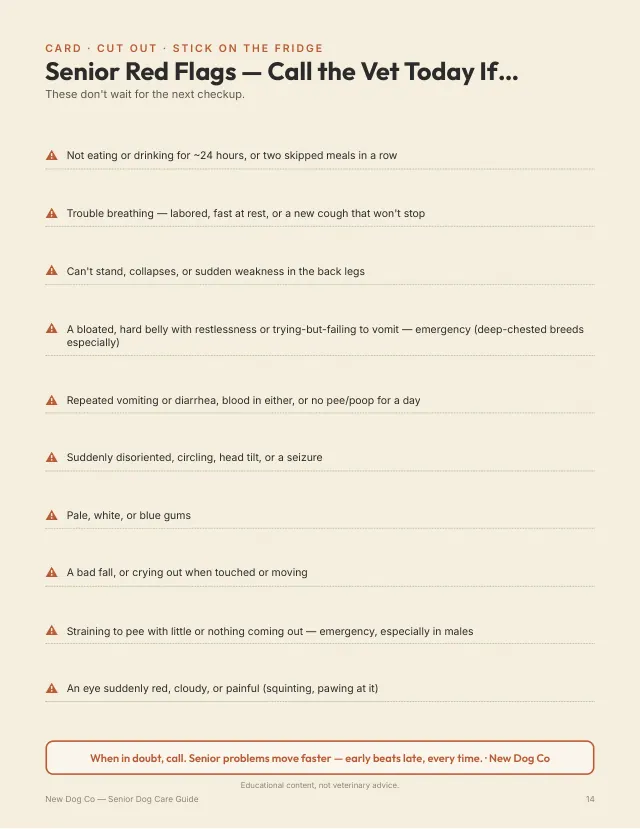
Dogs evolved to conceal weakness, so senior pain is often quiet and easy to miss. Rather than crying out, an uncomfortable older dog may show subtle, gradual changes: hesitating at stairs, taking longer to lie down or rise, shifting weight off a limb, or a roached (hunched) back. Reduced self-grooming, a duller coat, or new licking of a joint can signal discomfort.
Watch too for behavioral shifts: less enthusiasm for play or walks, irritability when handled, changes in appetite or sleep, or reluctance to be touched in a particular spot. The American Animal Hospital Association's pain-management guidance stresses that chronic pain in dogs is frequently underrecognized precisely because signs are so understated. Effective, humane pain control relies on reward-based cooperation and veterinary treatment, never force or punishment. This guide's checklist prompts you across posture, gait, grooming, appetite, sleep, and mood so patterns become visible; anything new belongs in a conversation with your vet, who can diagnose the cause and tailor relief.
Everyday support: joints, teeth, diet, and home
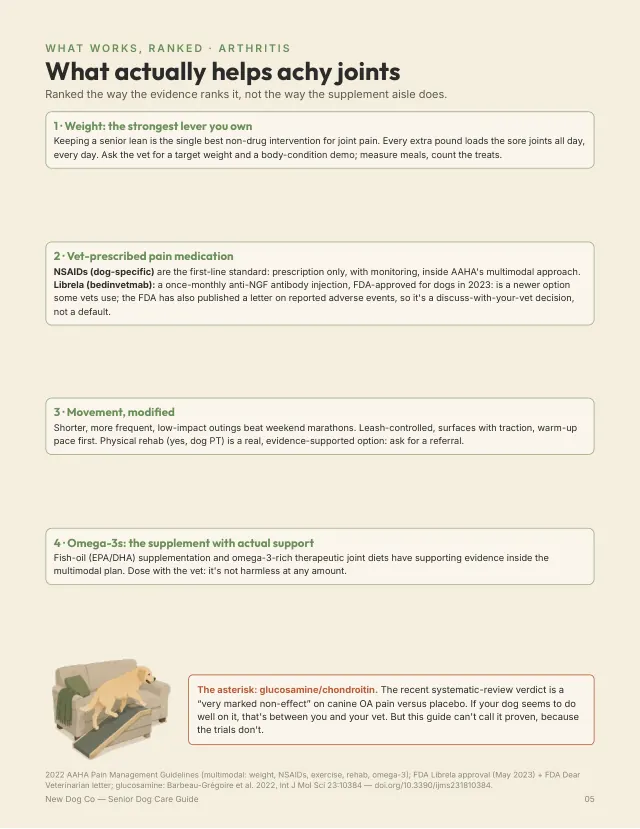
A few cheap changes (rugs on slick floors, a ramp, orthopedic bedding) visibly ease an aging dog’s day. For joints and mobility, add traction on slick floors with runners or rugs, use ramps instead of jumps, and provide supportive orthopedic bedding; keeping your dog at a lean, healthy weight reduces load on arthritic joints. Any supplements or joint medications should be chosen with your veterinarian.
Dental health matters at every age: AAHA's dental guidelines note that periodontal disease is extremely common in adult dogs and can cause ongoing pain, so home care and professional cleanings support comfort and overall health. Diet should suit your senior's body condition and any medical needs; ask your vet before switching foods, as the right choice depends on the individual, not the label "senior." Gentle, consistent routines and reward-based handling reduce stress for a dog whose senses and confidence may be changing. This guide gives you fillable pages to plan home adaptations and log daily support.
Quality of life, measured honestly
One of the hardest parts of loving a senior dog is judging how they are really doing. Structured quality-of-life scales — such as the widely used HHHHHMM scale developed by veterinary oncologist Dr. Alice Villalobos for animal hospice and palliative care — help you assess factors like hurt (pain control), hunger, hydration, hygiene, happiness, mobility, and whether good days outnumber bad. Scoring these regularly turns a stressful, emotional question into something you can track over time.
The goal is not a single verdict but a clear, repeatable picture you can share with your veterinarian, who remains your partner for medical decisions and, when the time comes, end-of-life guidance. This guide includes a quality-of-life worksheet you can revisit, so choices are grounded in your own observations rather than a single hard day. Keeping records also helps everyone in the household stay aligned on your dog's comfort. Nothing here diagnoses or predicts; it organizes what you see so you and your vet can decide together, with compassion and clear information.