Dog Weight Tracker
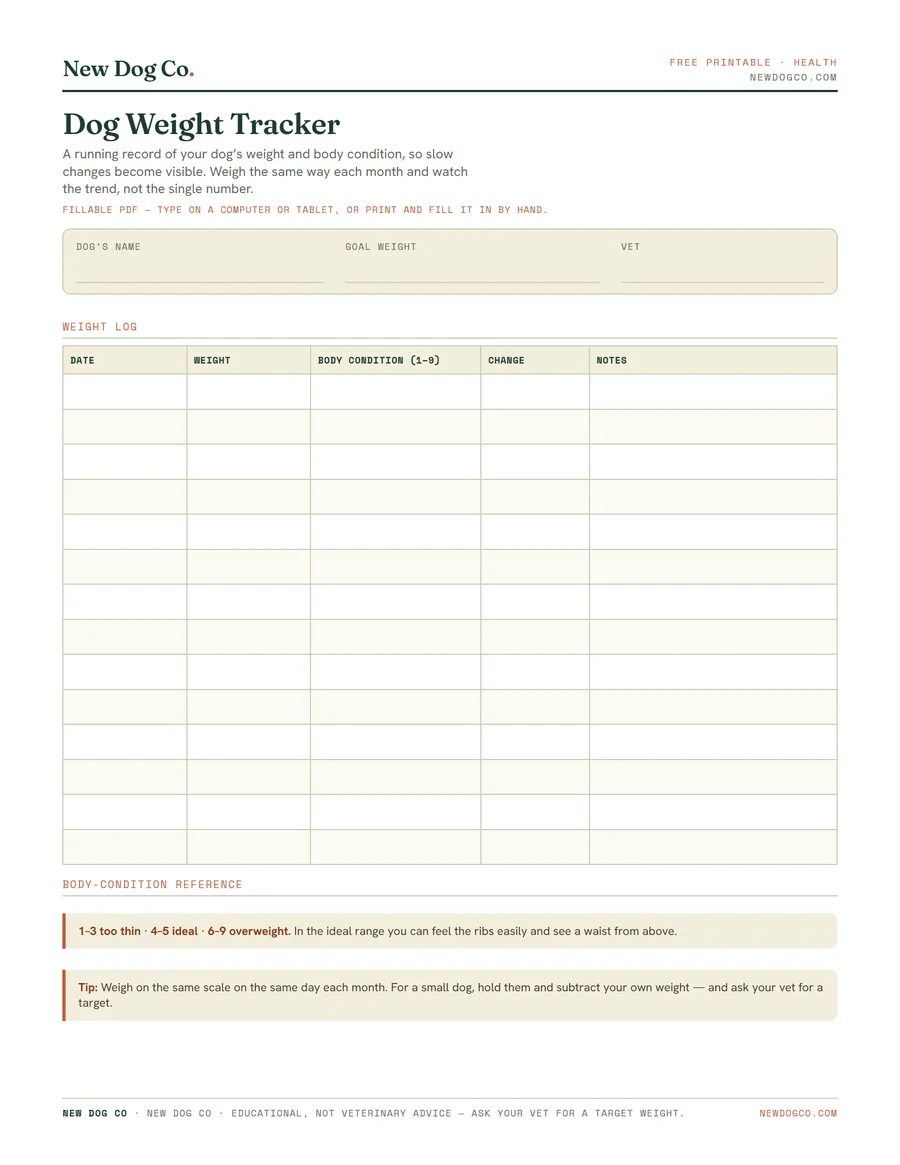
'Is my dog gaining weight?' is hard to answer from memory — the change happens too slowly to notice. This one-page log holds a running record: date, weight, body-condition score (1–9), the change since last time, and notes. It’s for any owner keeping an eye on a puppy filling out, a senior slimming down, or a vet-set target. Weigh monthly, write it down, watch the trend.
Genuinely fillable · bilingual EN/ES · vet-sourced — not a scanned template.
What's inside
- A top strip for your dog’s name, goal weight, and vet
- A 14-row table: date, weight, body condition (1–9), change, and notes
- A body-condition guide: 1–3 too thin, 4–5 ideal, 6–9 overweight
- The at-a-glance signs — ribs you can feel, a visible waist from above
- A tip on weighing the same way each month, with hold-and-subtract for small dogs
How to use it
- Fill the top row with your dog’s name, goal weight, and your vet.
- Weigh on the same scale on the same day each month; for a small dog, hold them, then subtract your own weight.
- Score body condition against the 1–9 guide and note the change since last time.
- Ask your vet for a target weight and bring the sheet to visits.
New printables + calm, sourced dog-care tips
Join the Pack and the 18-printable bundle is your instant thank-you — then we email new printables and short, vet-sourced tips as they’re ready. A few times a month, no spam.
The 18-printable pack lands instantly — new printables and tips follow. Unsubscribe anytime. Privacy Policy.Frequently asked questions
- How often should I weigh my dog?
- Monthly works for most healthy adults. Your vet may want more frequent checks for a puppy, a senior, or a weight-loss plan. Use the same scale and the same day so the numbers actually compare.
- What’s a body-condition score?
- It’s the 1–9 scale vets use for how much fat a dog carries: 1–3 is too thin, 4–5 is ideal, 6–9 is overweight. In the ideal range you can feel the ribs easily and see a waist from above.
- How do I weigh a small dog at home?
- Step on the scale holding your dog, then step on alone and subtract. Bathroom scales aren’t exact, so treat the trend over months as the real signal, not any single reading.
- Does this replace a vet visit?
- No — it’s a tracking sheet, not medical advice. Ask your vet to set a goal weight and to check any sudden or unexplained change in weight.
Free educational printable — not veterinary advice, and not a substitute for your vet's official records or an emergency call. Full disclaimer → · Leer en español →