Senior Dog Health Checklist & Tracker
An older dog changes so slowly you rarely catch it — a little less spring on the stairs, a bowl left half-full — until it’s suddenly obvious. Once a month you fill one line — weight, appetite, mobility, energy, lumps, and toileting — plus a short list of changes worth a vet call. Built for owners of dogs entering their senior years (about 7–11, depending on size). It’s educational, not veterinary advice.
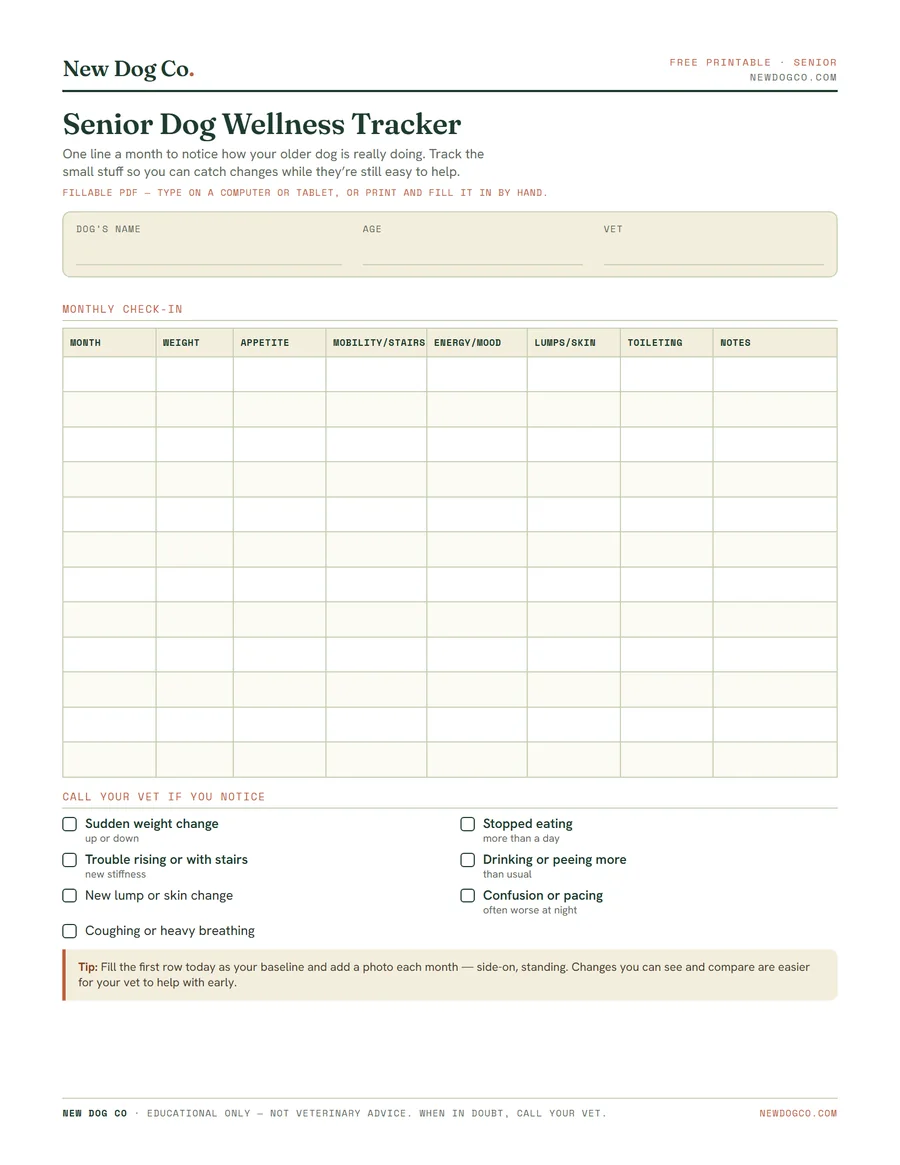
Fillable · bilingual EN/ES · vet-sourced, not a scanned template.
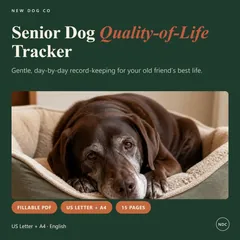 Got the free sheet? The full version → Senior Dog Quality-of-Life Tracker $2.23
What's inside
- A top strip for your dog’s name, age, and vet
- A 12-row monthly table: weight, appetite, mobility/stairs, energy/mood, lumps/skin, and toileting
- A 'call your vet if you notice' checklist — sudden weight change, stopped eating, trouble rising, drinking/peeing more, new lumps, confusion, coughing
- A tip on setting a baseline and taking one photo a month
How to use it
- Print it, fill the top strip, and pick one day a month — say the 1st — to do the check-in.
- Weigh your dog, watch, and jot a quick note in each column; even 'same as last month' is worth writing.
- Tick anything on the checklist and call your vet — bring the sheet to your next appointment.
Sources
Vet-sourced: the facts on this sheet come from these sources. It is educational, not veterinary advice.
- American Animal Hospital Association (AAHA), Canine Life Stage Guidelines (senior = the last quarter of expected lifespan)
Published
New printables + calm, sourced dog-care tips
Join the Pack and the 25-printable bundle is your instant thank-you — then we email new printables and short, vet-sourced tips as they’re ready. A few times a month, no spam.
The 25-printable pack lands instantly — new printables and tips follow. Unsubscribe anytime. Privacy Policy.Frequently asked questions
- How often should I fill it in?
- Once a month is enough for most senior dogs. Your vet may want it more often if something is already changing.
- What age counts as senior?
- It depends on size. AAHA counts the last quarter of expected lifespan as senior — roughly 10–11 for small breeds, 9–10 for medium, 7–8 for large, and 6–7 for giant breeds. Ask your vet where yours lands.
- Can this replace a vet visit?
- No. It helps you notice changes early and describe them clearly. Your vet makes the calls on anything medical.
Free educational printable. Not veterinary advice, and not a substitute for your vet's official records or an emergency call. Full disclaimer → · Leer en español →