Puppy-Proofing Checklist
How do you puppy-proof a house? Get down to puppy height and go room by room: cords, medicines, cleaners, trash, small objects, batteries, antifreeze and rodent bait are the usual dangers, as the AKC and ASPCA describe. In 2025, ASPCA Animal Poison Control logged pet exposures to more than 376,000 items, led by over-the-counter medicines and supplements. This one-page checklist covers ten fixes, the six exposures that mean calling your vet or a poison line now even if your puppy seems fine, and a log to track each room.
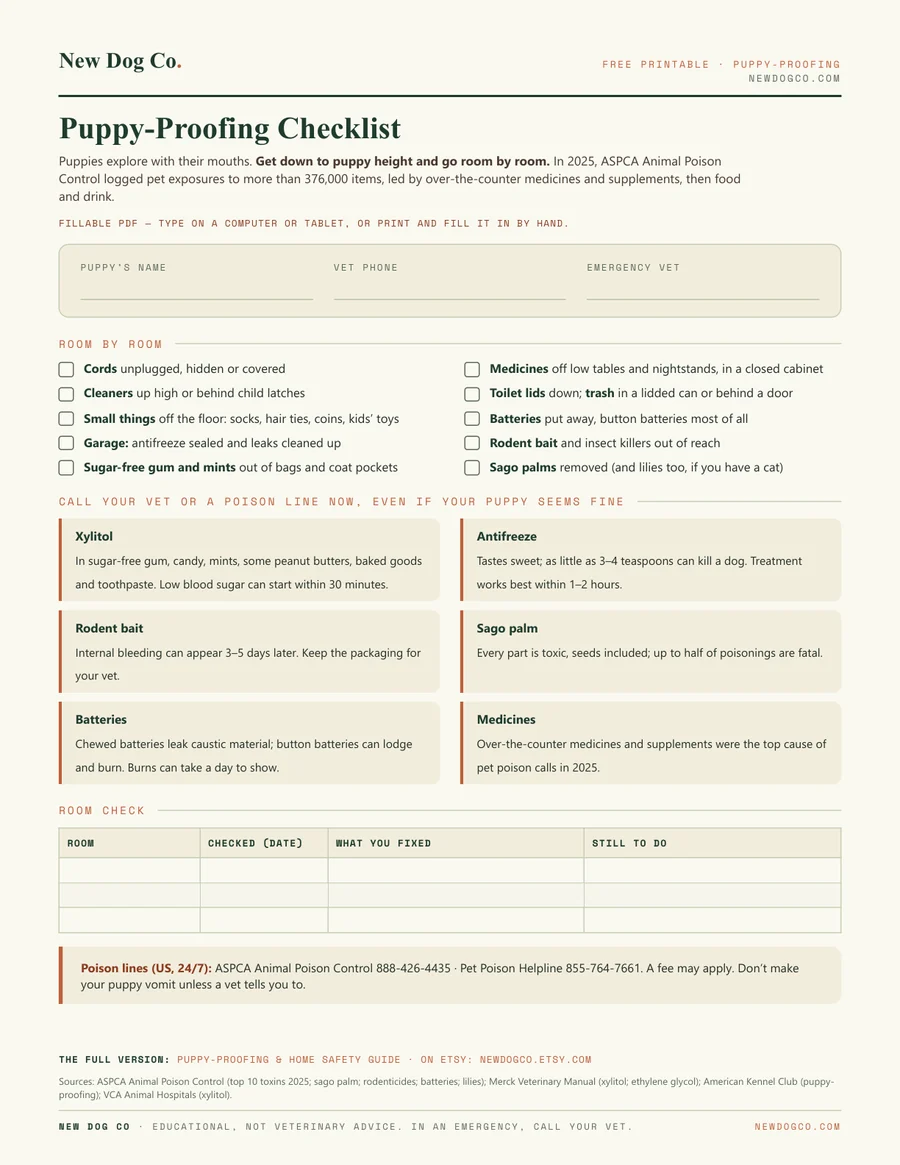
Fillable · bilingual EN/ES · vet-sourced, not a scanned template.
 Got the free sheet? The full version → Puppy-Proofing & Home Safety Guide $4.97
 What's inside
- Ten room-by-room fixes, from cords and medicines to sago palms
- Six exposures that mean a call now: xylitol, antifreeze, rodent bait, sago palm, batteries, medicines
- The two US 24/7 poison-line numbers
- A fillable room-check log
How to use it
- Walk each room at puppy height before your puppy comes home, then again every few weeks as they grow.
- Tick each fix and note anything still to do in the room log.
- Put the sheet on the fridge so everyone in the house sees the poison numbers.
- If your puppy gets into anything in the call-now list, phone straight away, even if they seem fine.
New printables + calm, sourced dog-care tips
Join the Pack and the 25-printable bundle is your instant thank-you — then we email new printables and short, vet-sourced tips as they’re ready. A few times a month, no spam.
The 25-printable pack lands instantly — new printables and tips follow. Unsubscribe anytime. Privacy Policy.Frequently asked questions
- What are the most common things pets get poisoned by?
- In ASPCA Animal Poison Control’s 2025 data, over-the-counter medicines and supplements were the top category (16.9% of cases), followed by food and drink (16.4%), then prescription medicines and chocolate.
- Is xylitol really that dangerous?
- Yes, for dogs. The Merck Veterinary Manual says signs of low blood sugar can start within 30 minutes. It is in some sugar-free gum, candy, mints, peanut butters, baked goods and toothpaste, so check labels and keep bags and pockets out of reach.
- Should I make my puppy vomit if they ate something?
- Not unless a vet tells you to. Call your vet or a poison line first: ASPCA Animal Poison Control 888-426-4435 or Pet Poison Helpline 855-764-7661 (US, 24/7; a fee may apply).
- My puppy chewed a battery. What now?
- Call your vet right away. ASPCA warns that chewed batteries can leak caustic material and button batteries can lodge in the esophagus and burn, and burns can take a day to show.
Free educational printable. Not veterinary advice, and not a substitute for your vet's official records or an emergency call. Full disclaimer → · Leer en español →