Senior Cat Quality-of-Life Checklist
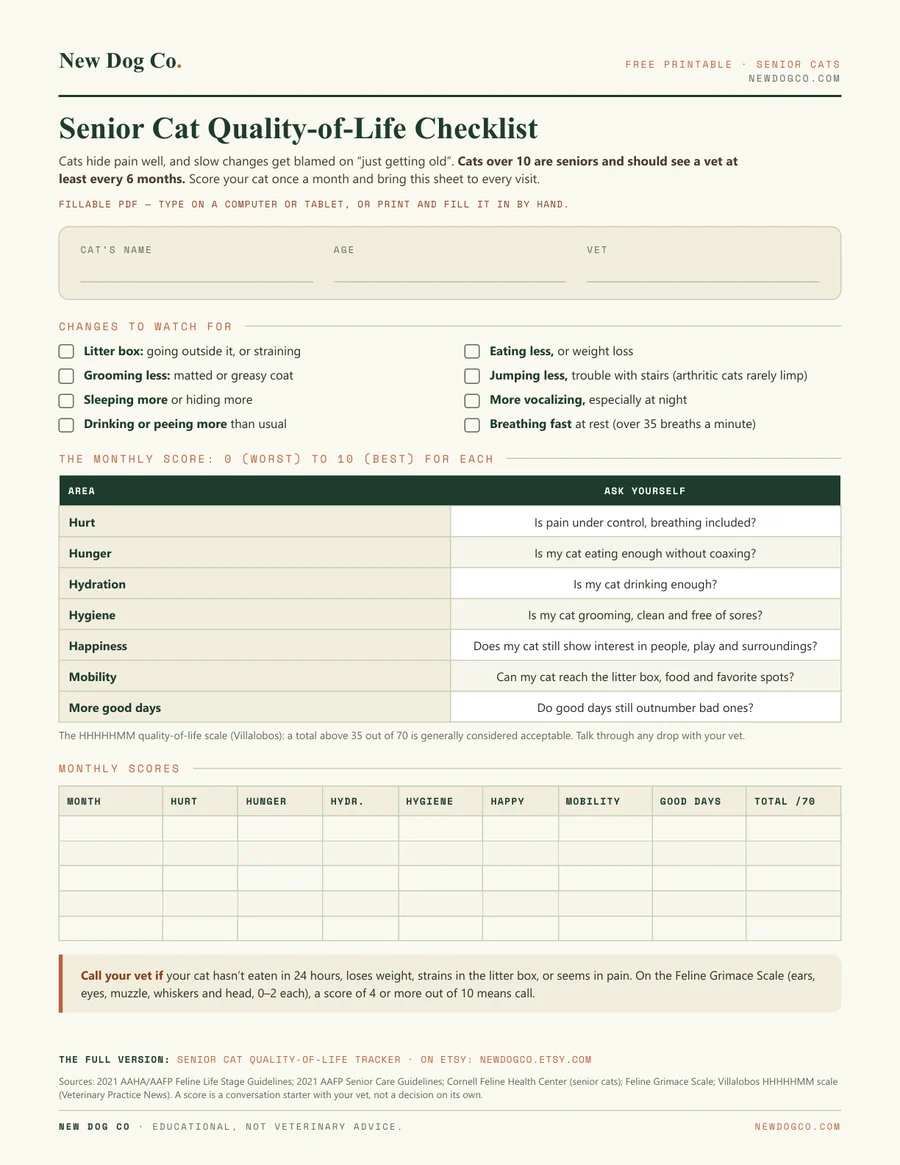
How do I know if my senior cat is doing okay? Watch for slow changes and score them regularly. The 2021 AAHA/AAFP guidelines count cats over 10 as seniors and suggest vet visits at least every 6 months, and they list changes such as house-soiling, eating less, grooming less, jumping less, sleeping and hiding more, and more vocalizing. This one-page checklist covers eight changes to watch for, a monthly score across seven quality-of-life areas from the HHHHHMM scale, and when to call your vet, including the Feline Grimace Scale pain threshold.
Fillable · bilingual EN/ES · vet-sourced, not a scanned template.
 Got the free sheet? The full version → Senior Cat Quality-of-Life Tracker $5.97
 What's inside
- Eight changes to watch for, from litter-box habits to fast breathing
- The seven-area HHHHHMM quality-of-life score, 0–10 each
- A fillable monthly score table
- When to call your vet, including the Feline Grimace Scale threshold
How to use it
- Score your cat on the same day each month, at a quiet time.
- Tick any change you notice and write the date beside it.
- Bring the sheet to every vet visit; a falling total is worth a conversation.
- Call sooner if your cat stops eating, strains in the box or seems in pain.
New printables + calm, sourced dog-care tips
Join the Pack and the 25-printable bundle is your instant thank-you — then we email new printables and short, vet-sourced tips as they’re ready. A few times a month, no spam.
The 25-printable pack lands instantly — new printables and tips follow. Unsubscribe anytime. Privacy Policy.Frequently asked questions
- At what age is a cat a senior?
- The 2021 AAHA/AAFP Feline Life Stage Guidelines count cats over 10 as seniors, with 7–10 as mature. Senior cats should see a vet at least every 6 months.
- How can I tell if my old cat is in pain?
- Cornell notes that cats with arthritis rarely limp; they struggle to reach the litter box or food instead. The Feline Grimace Scale scores ears, eyes, muzzle, whiskers and head from 0–2 each, and a total of 4 or more out of 10 means calling your vet.
- What is the HHHHHMM scale?
- A quality-of-life scale developed by Dr. Alice Villalobos that scores Hurt, Hunger, Hydration, Hygiene, Happiness, Mobility and More good days than bad from 0–10 each. A total above 35 out of 70 is generally considered acceptable.
- Is fast breathing a problem in an older cat?
- It can be. Cornell considers more than 35 breaths a minute at rest abnormal. Count breaths while your cat is asleep or relaxed, and call your vet if it is high.
Free educational printable. Not veterinary advice, and not a substitute for your vet's official records or an emergency call. Full disclaimer → · Leer en español →