The first week: keep it boring on purpose
The most common first-time mistake is throwing a welcome party. A new dog has just lost everything familiar. The kindest first week is a quiet one. Decide on a single confinement area, set up the crate before arrival, and let the dog approach people rather than the other way around.
Introduce the crate as a good place, never a punishment. Feed meals inside it with the door open, toss in a treat, and let the dog choose to enter. The ASPCA recommends building crate time gradually and keeping early crating short so the dog associates it with calm and food, not isolation. A crate the dog can stand up, turn around, and lie down in is enough.
Book a wellness exam in the first few days. Bring any paperwork from the breeder or shelter, a fresh stool sample if your vet asks, and a list of questions. This first visit sets the vaccine and parasite schedule and gives you a baseline weight to track.
The vaccine timeline you actually need
Puppies get a series, not a single shot, because the antibodies they absorb from their mother fade at different times and can block a vaccine that comes too early. Following AAHA guidance, the core canine vaccine (distemper, adenovirus, parvovirus, often with parainfluenza, abbreviated DAP or DHPP) starts around 6 to 8 weeks and repeats every 2 to 4 weeks until the puppy is at least 16 weeks old. The final dose in that window matters most, so do not stop early.
Rabies is given once between roughly 12 and 16 weeks, then boostered, with timing set by your local law. Since AAHA’s 2024 update, leptospirosis counts as core for most dogs too (two doses, starting no earlier than 12 weeks). Non-core vaccines such as Bordetella, canine influenza, and Lyme are recommended based on lifestyle and region, and your vet decides which apply. An adult dog with unknown history usually gets an initial dose plus a booster.
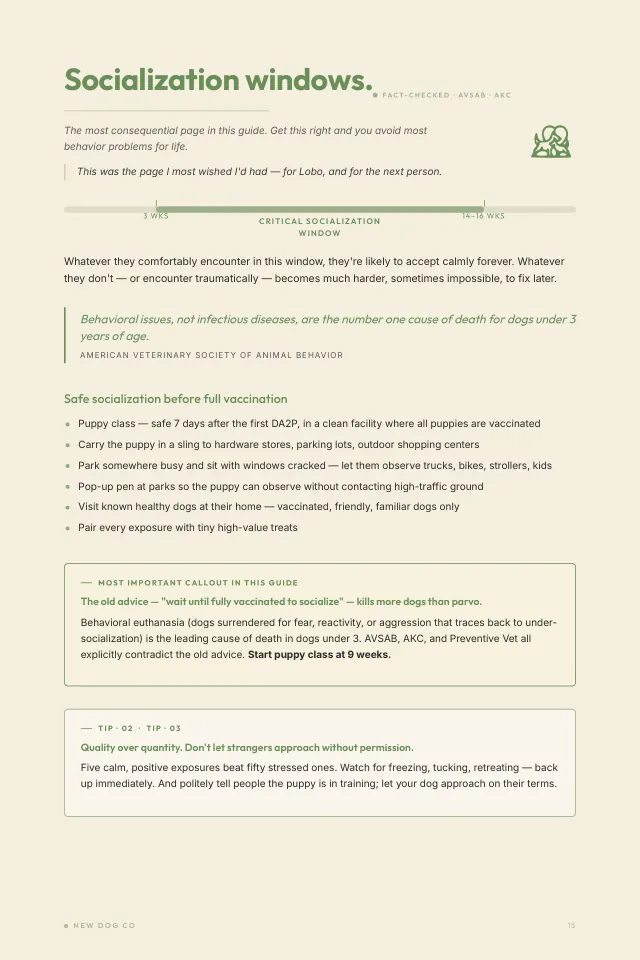
Until the series is complete, your puppy is not fully protected. That creates real tension with socialization, covered next, and the answer is not to lock the dog away. The AVSAB position is that the risk of behavior problems from under-socialization outweighs the manageable disease risk, so you socialize carefully rather than not at all.
The socialization window closes faster than you think
There is a sensitive period, roughly 3 to 14 weeks of age, when a puppy's brain is primed to file new experiences as normal. The AVSAB notes this window is largely closing by about three to four months, which is why waiting until the vaccine series finishes is a mistake that costs you the most important weeks.
Socialization is not a dog park. It is calm, positive exposure to the everyday world: different floor surfaces, beards and hats, umbrellas, wheelchairs, car rides, the vacuum, gentle handling of paws and ears, and unfamiliar but healthy, vaccinated dogs. Pair each new thing with treats and let the puppy retreat when it wants to. Keep sessions short and end on a good note.
To do this safely before vaccines finish, carry the puppy in busy places, use clean private yards, host calm friends at home, and enroll in a well-run puppy class that requires proof of first vaccines. Force is never part of this. Flooding a scared puppy with the thing it fears makes fear worse, not better.
House-training and feeding: rhythm beats willpower
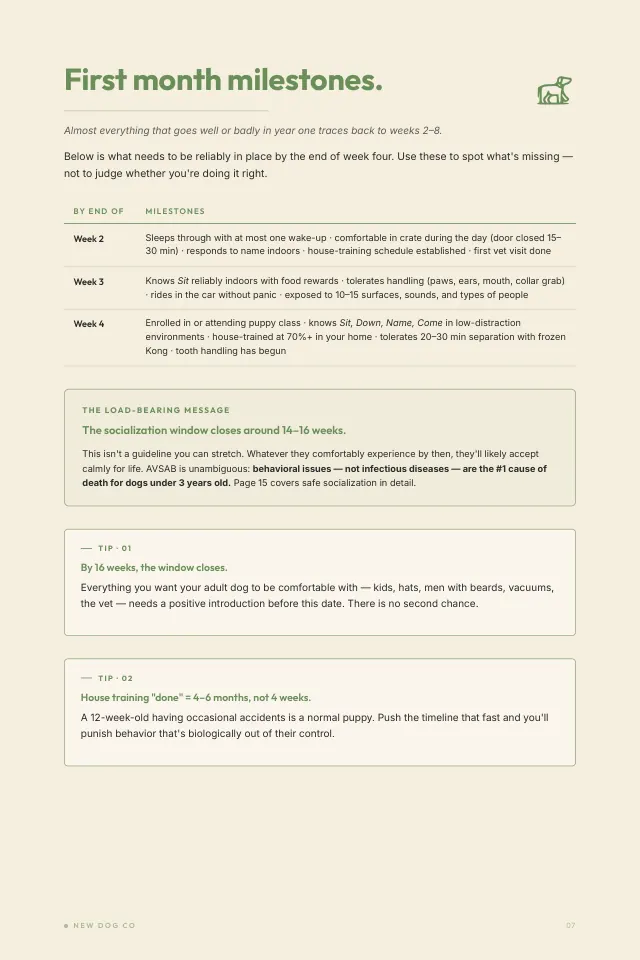
House-training runs on prediction, not punishment. Take the puppy out first thing in the morning, after every meal, after naps, after play, and last thing at night. A rough guide is that a puppy can hold its bladder about one hour per month of age plus one, so a two-month-old needs a break roughly every two to three hours, including overnight at first.
Go outside with the dog, reward the moment it finishes in the right spot, and give that reward within a second or two so the dog connects the treat to the act. If you find an accident after the fact, clean it with an enzyme cleaner and say nothing. Punishing after the fact only teaches the dog to hide from you.
For feeding, most puppies eat three to four small meals a day, tapering to two as they grow. Choose a complete-and-balanced food that meets AAFCO standards for the right life stage, and follow the bag as a starting point, then adjust to body condition. AAHA and your vet use a body condition score: you should feel the ribs easily without pressing hard and see a waist from above. Fresh water is always available. Introduce any diet change over about a week to avoid stomach upset.
Reading stress before it becomes a bite
Dogs tell you they are uncomfortable long before they growl, and a first-time owner who learns the quiet signals prevents most problems. Early stress signs include lip licking when there is no food, yawning when the dog is not tired, turning the head away, a tucked tail, and whale eye, where you see the whites at the corner of the eye. Fear-Free and AVSAB educational material lists these as the polite requests for space that come before a growl.
A growl is information, not defiance. Never punish it, because a dog punished for growling may simply skip the warning next time. Instead, calmly increase the distance from whatever worried the dog and figure out the trigger.
The through-line for the whole first year is that reward-based, force-free methods are what the major veterinary bodies endorse. The AVSAB and AVMA both advise against dominance-based and aversive training, prong and shock collars included, because they raise fear and aggression. You are not establishing rank. You are teaching a young animal that the human world is safe and predictable, and that patient work is what a good first year is made of.