How Long Does It Take a Rescue Dog to Adjust to a New Home?
The honest answer to the 3-3-3 rule — a rough map, not a promise — plus what week one actually looks like.
On this page
Most rescue dogs need about three months to truly settle into a new home — but that number is a rough guide, not a rule, and plenty of dogs take six months to a year. The popular “3-3-3” rule (three days to decompress, three weeks to learn the routine, three months to feel at home) is a helpful map for setting your expectations, but only the first few days have solid science behind them. Your dog isn’t on a schedule. Some settle in weeks; some need a year. Both are normal.
The honest version matters, because the biggest mistake new adopters make is expecting too much, too soon — and reading a slow, scared start as “the wrong dog.”
What is the 3-3-3 rule — and is it actually true?
The 3-3-3 rule breaks the adjustment into three rough stretches: about three days to decompress from the shelter, three weeks to start learning your routine, and three months to feel settled and show their real personality. Shelters like the ASPCA use it to set expectations, and as a gentle framework it’s genuinely useful.
But it’s a guideline, not a law. Only the “three days” part lines up with hard evidence — stress research shows a real spike in a dog’s stress hormones on intake that eases over the first days in a calm home. The tidy “three weeks” and “three months” milestones are rules of thumb, not biology. Nothing flips like a switch at exactly week three.
So use 3-3-3 to stay patient, not to keep score. If your dog is ahead of it, wonderful. If your dog is behind it, your dog is still normal.
Why does adjustment take so long?
Because your dog just lost everything familiar — again. A rescue has often been through several homes, a shelter, or the street, and now every smell, sound, and face is new at once. Trust isn’t something you can rush; it’s built out of hundreds of small, predictable, safe moments.
Shy dogs, seniors, and dogs with rough histories almost always need longer. A confident young dog might feel at home in a few weeks; a fearful one who was never socialized can need most of a year. The common rescue behavior problems you might see along the way are usually fear and history surfacing, not the “real” dog getting worse.
The good news: with a steady routine and no pressure, almost every dog gets there.
What’s normal in the first week?
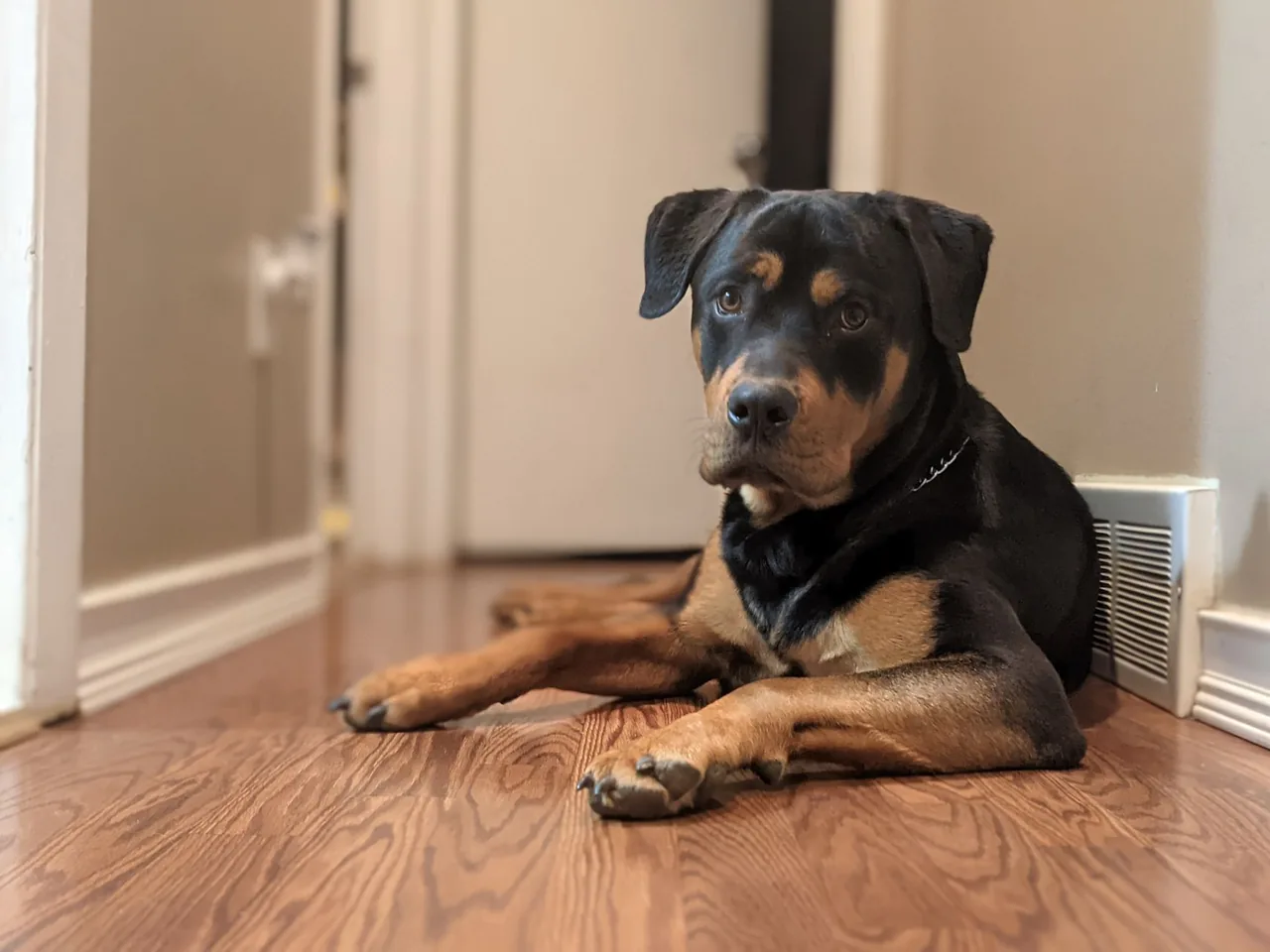
Quieter than you’d expect. Day one is rarely the happy, grateful reunion people imagine — often it’s a dog who hides, barely eats, and sleeps a lot. That’s decompression, not depression.
You may see a dog who shuts down and disappears under a table, or one who turns clingy and over-affectionate to keep the peace. Both are the stress talking, not the settled personality — which is why the dog you meet in week one usually isn’t the real dog yet. Our guide on what to expect the first week with a rescue dog walks through this in detail.
Light eating, a few accidents, some pacing, and a lot of sleep are all common. What you’re looking for isn’t progress you can measure — it’s a dog who slowly starts to eat a little more, sleep a little easier, and watch you with softer eyes.
What can I do to help my rescue dog settle faster?
Do less, not more. The instinct is to shower a new dog with outings, visitors, and training. The kinder, faster path is a small, calm, predictable world.
Keep a boringly consistent routine — same feeding, walk, and sleep times every day. Predictability is what tells a nervous animal that the world is safe now, an approach the ASPCA and Fear Free both build their advice around.
Give the dog one quiet safe space (a bed or open crate as a den, never punishment) that nobody bothers. Limit visitors, skip the dog park, and keep walks short and low-key for the first couple of weeks. And go slow on introductions — Best Friends Animal Society favors calm, one-at-a-time meetings on neutral ground.
Everything you build now is reward-based: good things happen, at the dog’s pace, with no force. That’s the whole method.
When is slow adjustment actually a problem?
Most slow starts are normal and just need time. This is educational content, not veterinary advice — but a few things are worth acting on sooner.
Call your veterinarian if the dog won’t eat for more than two to three days, won’t drink for a day, seems genuinely unwell, or shows any sudden or severe change. Humane World for Animals recommends a wellness check within the first week anyway.
And loop in a credentialed, reward-based professional — a certified trainer (CCPDT), a behavior consultant (IAABC), or a veterinary behaviorist (DACVB) — if you see growling or snapping over food or space, a bite or near-bite, or frantic panic when the dog is left alone. Reaching out early isn’t failing your dog; fear responds to help, and the sooner the better.
The fastest way through the first months is a calm routine the dog can count on — and having it written down so it actually happens. Our New Dog Owner Starter Kit gathers the week-one essentials — routine, checklists, and settle-in basics — in one calm bundle. For the full day-by-day decompression plan, the Rescue Dog Decompression Kit maps out the 3-3-3 phases. Go slow. Your dog has a whole life to settle in.
Frequently asked questions
- Is the 3-3-3 rule scientifically proven?
- Only partly. The "three days" decompression period matches real evidence that shelter stress hormones drop over the first days in a calm home. The "three weeks" and "three months" milestones are helpful rules of thumb, not proven biology — real adjustment can take six months to a year.
- My rescue dog has been here two months and still hides. Is that normal?
- Often, yes — especially for a shy or under-socialized dog. Keep the routine steady, let the dog approach you rather than reaching in, and reward every brave choice. If there's zero progress over weeks, or the fear is severe, ask your vet or a reward-based behaviorist for a plan.
- Will my rescue dog ever bond with me?
- Almost certainly, given time and consistency. Bonds form through predictable, safe, rewarding moments, not grand gestures — feeding, gentle routines, and letting the dog set the pace. Many adopters say the real dog "arrived" a few months in.
- Does a second dog help a rescue settle faster?
- Sometimes, but not always — and never adopt a second dog *only* to fix the first. A stressed new dog needs to bond with you and learn your home first; a second dog can add chaos to an already-overwhelmed household.
Educational content only — not veterinary or professional behavior advice. Consult your vet, or a certified trainer or behaviorist, for your pet. Read the full disclaimer →