
The first 24-72 hours: let the dog decompress
A new dog has just lost everything familiar, so the first days are for settling, not for socializing or testing commands. Set up one quiet zone with a bed, water, and a crate or pen where the dog can retreat, and keep the environment low-key: fewer visitors, calmer voices, shorter outings.
Let the dog come to you. Avoid crowding, reaching over the head, or forcing greetings, and give a nervous dog space to observe. The ASPCA describes this early adjustment as a decompression period where predictability and gentle routine help a dog feel safe. Keep the first meals, potty trips, and sleep on a simple, repeatable schedule.
Use this kit to write down what you see: appetite, potty timing, sleep, and any signs of stress such as pacing, hiding, or refusing food. Those notes make patterns obvious and give your veterinarian useful history. If the dog has not eaten in about 48 hours (sooner for a puppy or small dog) or seems unwell, contact your vet.
Gear that matters vs. what to skip
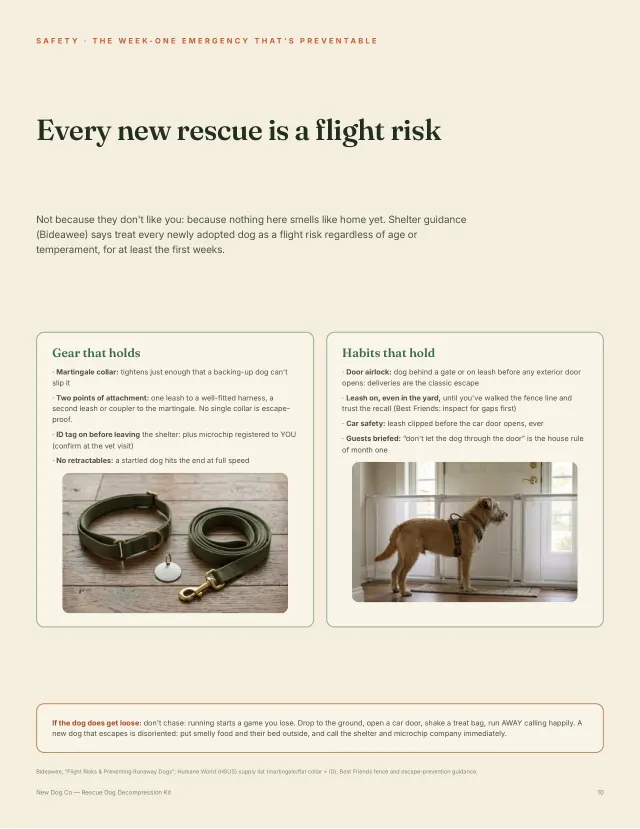
You need less than the pet-store aisle suggests. The real essentials are a flat collar with an ID tag, a standard leash, an appropriately sized crate or pen, food, and bowls. A well-fitted harness helps dogs that pull or have delicate airways, and a properly sized crate that lets the dog stand, turn, and lie down supports both safety and house-training.
Size and fit matter more than features. A collar should let two fingers slip underneath; a crate that is too large lets a puppy soil one end and sleep in the other, which slows house-training. Skip or delay gadgets you cannot yet size, such as expensive beds a puppy may chew, and anything aversive.
Avoid prong collars, choke chains, and shock or e-collars entirely. AVSAB advises against aversive tools and methods because they increase fear and can worsen behavior. Choose reward-based equipment, and use the checklists here to buy the basics first and add extras once you know your dog.
The first vet visit and vaccine schedule
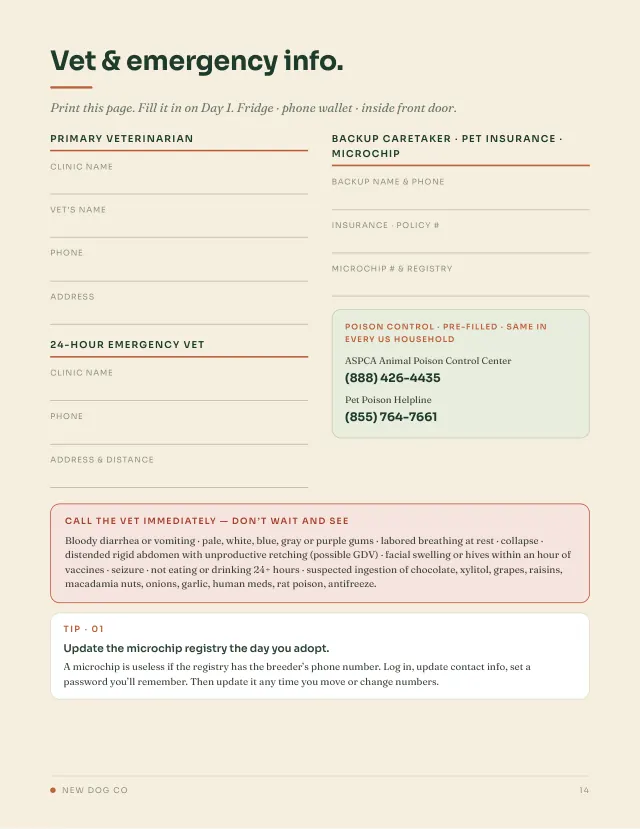
Book a first veterinary exam within the first week so a professional can check weight, teeth, skin, and overall health and start or continue prevention. Bring any records from the shelter or breeder, and use the organizer in this kit to log the visit.
Core vaccines protect against serious diseases, and puppies typically receive a series of boosters through roughly 16 weeks, with timing set by your veterinarian based on AAHA vaccination guidelines and your dog's history and risk. Your vet also advises on rabies vaccination per local law, on leptospirosis (core for most dogs since AAHA’s 2024 update), and on lifestyle vaccines such as Bordetella.
Ask about parasite prevention: heartworm, fleas, ticks, and intestinal worms. Record product names, doses, and due dates so nothing lapses. This kit organizes questions and a schedule tracker, but the actual protocol is your veterinarian's call. Never delay or skip veterinary care based on a printable alone; use it to prepare and to remember what was decided.
House-training and crate setup, the positive way
House-training works on prevention and reward, not punishment. Take the dog out on a schedule: after waking, after meals, after play, and before bed, plus regular intervals in between. When they go in the right place, reward immediately with a treat and calm praise so the behavior is clearly worth repeating.
Accidents are information, not misbehavior. If you catch one starting, interrupt gently and guide the dog outside; if you find one later, simply clean it with an enzymatic cleaner. The ASPCA notes that punishing after the fact teaches fear, not location, so log the accident here and adjust timing instead.
Introduce the crate as a safe space, never a place of punishment. Feed meals near it, toss treats inside, and build up time in short, positive steps so the dog chooses to rest there. A crate right-sized for the dog aids house-training and gives a settling spot during the decompression weeks. Use the crate and potty logs to track progress and spot patterns.
The puppy socialization window
For puppies, early experiences shape lifelong temperament. AVSAB identifies a sensitive socialization period of roughly 3 to 14 weeks, when positive exposure to new people, dogs, sounds, surfaces, and handling has the greatest lasting benefit. The goal is calm, rewarding experiences, not overwhelm, so keep sessions short and let the puppy set the pace.
Because this window closes before the vaccine series is complete, AVSAB advises that well-run, low-risk socialization should not be delayed until fully vaccinated; the behavioral risks of under-socialization are a leading reason dogs are surrendered. Favor clean, controlled settings and healthy, vaccinated playmates, and ask your veterinarian about safe options.
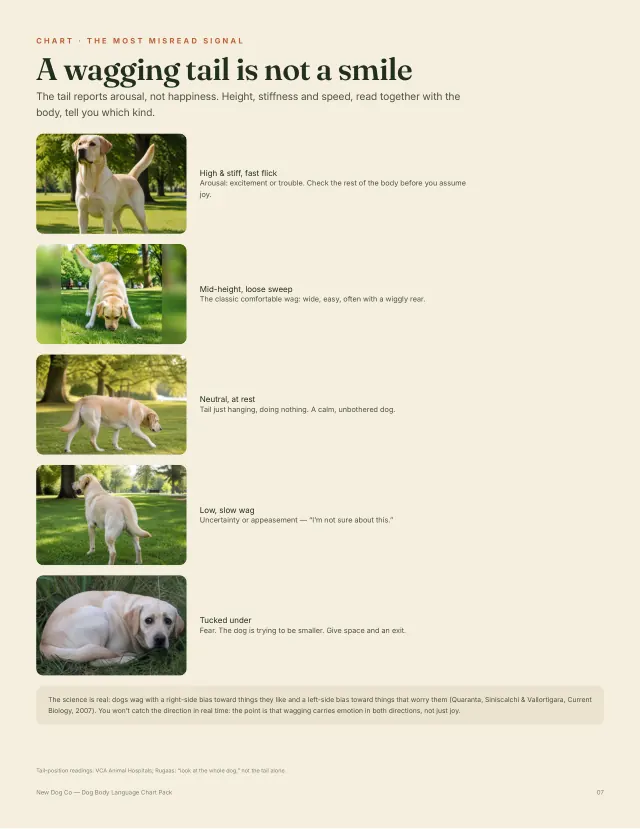
Pair each new thing with something good and watch body language; back off if the puppy shows fear rather than pushing through it. Adult dogs benefit from gentle, positive exposure too, just without the same developmental deadline. Use the socialization tracker to log new experiences and the puppy's comfort so you cover a broad, positive range.
Building a daily routine that sticks
Dogs settle faster with predictability, so a consistent daily rhythm is one of the most useful things you can give a new dog. Set regular times for feeding, potty breaks, walks, training, play, and rest, and keep them similar every day, especially in the early weeks.
Feed a complete, life-stage-appropriate diet and follow your veterinarian's guidance on amount and frequency; puppies usually eat more often than adults. Log what, when, and how much so you can spot appetite changes early and share accurate information at vet visits. Fresh water should always be available.
Consistency across the household matters as much as the schedule itself. When everyone uses the same cues, the same reward-based approach, and the same potty and crate routine, the dog learns faster and gets less mixed signaling. Use the daily and weekly logs here as a shared record so each family member can see what has already happened and keep the plan on track.