Common Rescue Dog Behavior Problems (and What They Mean)
Fear, guarding, separation anxiety, reactivity, chewing — the common rescue struggles, what they mean, and what actually helps.
On this page
- Why does my rescue dog have “behavior problems” at all?
- Fear and shyness: why is my rescue dog so scared of everything?
- Resource guarding: why does my dog freeze or snap over food or toys?
- Separation anxiety: why can’t my rescue be left alone?
- Leash reactivity: why does my dog bark and lunge on walks?
- Stress chewing and digging: is my dog wrecking things out of spite?
- When should I see a vet or a behaviorist?
Most rescue “behavior problems” aren’t a bad dog — they’re stress, fear, and history showing up as behavior. A dog who guards his bowl, panics when you leave, or lunges on leash isn’t broken or spiteful; he’s telling you what scares him. And the good news runs deep: the common ones — fear and shyness, resource guarding, separation anxiety, leash reactivity, and stress chewing or digging — nearly all improve with the same three things: safety, patience, and reward-based training.
Two ideas make the whole list easier. First, behavior is communication, not defiance. Second, punishment makes fear-based behavior worse — the American Veterinary Society of Animal Behavior (AVSAB) is clear that aversive tools raise fear, anxiety, and aggression. So the thread through every fix below is the same: lower the fear, don’t punish the symptom. This is educational content, not a substitute for your vet or a behavior professional.
Why does my rescue dog have “behavior problems” at all?
Because you’re meeting a dog with a past you can’t fully see. Missed puppy socialization, a chaotic shelter, a rough previous home, or simply weeks of stress can all leave marks that surface once the dog relaxes enough to show them.
That timing catches people off guard — many of these behaviors don’t appear on day one. They emerge in weeks two, three, and beyond, as the dog opens up. It’s not the dog getting worse; it’s the real dog arriving. (If you’re still in the very first days, start with what to expect the first week — decompression comes first.) None of it means you adopted the wrong dog. Here are the five you’re most likely to meet.
Fear and shyness: why is my rescue dog so scared of everything?
Fear is the root of most of this list. A fearful dog shrinks: ears back, tail tucked, body low, backing away, hiding, or freezing. Some also bark or snap — fear and aggression look different but often share the same engine.
The fix isn’t to flood the dog with the scary thing to “get it used to it” — that usually backfires. It’s the opposite: control the distance, keep experiences short and positive, and let the dog approach on its own terms while good things happen at a comfortable range. Confidence is built, not demanded — and a fearful dog gives you plenty of warning before it escalates, so learning to read your dog’s body language is the companion skill for this whole article.
Resource guarding: why does my dog freeze or snap over food or toys?
Resource guarding is when a dog stiffens, freezes, growls, or snaps to protect something valuable — a bowl, a bone, a stolen sock, sometimes a person or a spot on the couch. It’s common, especially in dogs who’ve had to compete for food, and it’s not the dog being “dominant” or ungrateful. It’s insecurity: the dog isn’t sure the good thing is safe, so it defends it.
This is the one to take seriously early. The instinct — to take the food away, to “show him who’s boss,” to punish the growl — is exactly wrong. Punishing a guarding dog teaches it that people near its stuff really are a threat, and that growling gets punished, so it may skip the growl next time and go straight to the bite. You never want to train away the warning.
What helps instead is teaching the dog that people approaching means more good things, not less — a better treat tossed as you pass the bowl, a trade-up for the stolen sock rather than prying it away. But because guarding involves teeth and can escalate, it’s the behavior to get professional eyes on soonest, rather than experimenting solo. (Jean Donaldson’s Mine! is the classic reward-based reference.)
Separation anxiety: why can’t my rescue be left alone?
A lot of rescues are frightened of being alone — which makes sense, given how many have already been left once. True separation anxiety is panic, not misbehavior: pacing, drooling, non-stop howling, accidents from a house-trained dog, and destruction aimed at escape routes, all starting within minutes of you leaving.
The fix is a slow rebuild of feeling safe alone — starting below the duration that triggers panic (sometimes seconds) and stretching it out only as fast as the dog stays relaxed — plus taking the charge out of your departure cues. It’s patient work, but one of the most treatable problems there is. The trap is confusing it with ordinary boredom, which needs the opposite fix; our guide on telling separation anxiety apart from boredom walks through how to tell them apart.
Leash reactivity: why does my dog bark and lunge on walks?
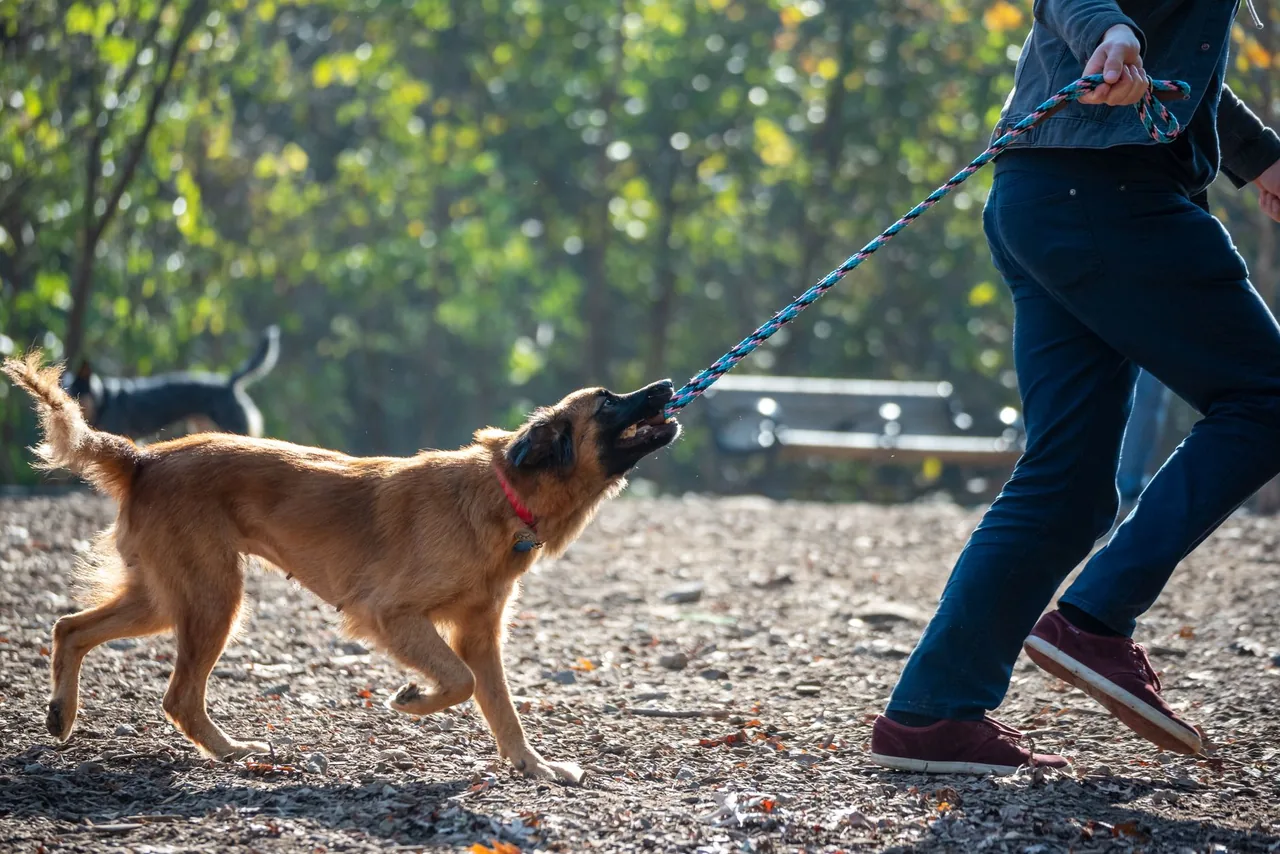
Barking, lunging, and spinning at the end of the leash is one of the most common rescue struggles, especially in undersocialized dogs who never learned that other dogs are no big deal. On leash, a nervous dog can’t do what it would otherwise choose — create distance — so it makes a big, noisy display to drive the scary thing away instead.
It usually isn’t aggression, and it isn’t your dog being “bad.” It’s fear or frustration boiling over because the dog is over its threshold — too close to the trigger to cope. The work is calm and built around distance: keep the dog far enough away to stay under threshold, and change how it feels about the trigger one rep at a time. Two guides go deep here — helping a leash-reactive dog for the core method, and why a dog melts down on leash but is fine off it for the leash piece.
Stress chewing and digging: is my dog wrecking things out of spite?
No — and this is the myth to drop first. Dogs don’t chew the couch or dig the yard to punish you or get even; they have no concept of revenge. Destruction is almost always boredom, unspent energy, or a way to cope with stress — chewing and digging actually lower a dog’s arousal, so an anxious dog does more of it.
For a new rescue, some of it is simple: a dog with too little to do and too much nervous energy finds its own job. The answer isn’t punishment (which piles stress on an already-stressed dog) but an outlet — real exercise, plus enrichment that lets the dog chew, sniff, and forage in ways you’re fine with; our guide to easy enrichment that beats boredom has the practical side. One caveat: if the chewing only happens when the dog is alone and targets the exits, that’s a different problem in the same costume — read the separation-anxiety guide above instead.
When should I see a vet or a behaviorist?
See your vet first for any behavior that’s sudden, severe, or new in a settled dog — pain and illness can drive irritability, guarding, house-training lapses, and more, so a medical cause gets ruled out before a training plan. This article is educational, not veterinary advice.
Bring in a credentialed, reward-based professional — a certified trainer (CCPDT), a behavior consultant (IAABC), or, for the hardest cases, a veterinary behaviorist (DACVB) — early rather than late for anything involving teeth or real panic. Resource guarding, any bite or near-bite, aggression toward people or animals, and severe separation anxiety all deserve help sooner: they can escalate, and they respond far better to early, skilled work. Asking for help isn’t failing your dog — it’s what you’d do for any problem past your depth.
Almost none of this is about a bad dog — it’s about a dog carrying a history, and nearly all of it gets better with safety, patience, and reward-based training. If you want a calm place to start — a day-by-day settle-in plan built around exactly this, so the early weeks lower the fear instead of feeding it — that’s what our Rescue Dog Decompression Kit is for. And if you’re new to dogs altogether, the First-Time Dog Owner Guide covers the foundations these fixes are built on. Your rescue isn’t giving you a hard time. It’s having one — and that you can help with.
Frequently asked questions
- Are rescue dogs more likely to have behavior problems than puppies from a breeder?
- Not inherently "worse" — different. A rescue may come with unknown history and missed socialization, but it also often comes past the destructive puppy stage and with a personality you can already see. Most rescue behavior issues are stress- and fear-based, so they tend to improve as the dog settles and gets consistent, kind training.
- Will my rescue dog's behavior problems go away on their own?
- Some ease a lot with just decompression, routine, and time — especially fear and general nervousness. But guarding, separation anxiety, and reactivity usually need active, reward-based work to really change, and they can entrench if ignored. The earlier you start, the easier they are.
- Is it ever too late to fix a rescue dog's behavior?
- No. Older dogs learn perfectly well — the "old dog, new tricks" line is a myth. Some deeply rooted fears are managed rather than cured, but improvement is the norm at any age with the right, force-free approach.
Educational content only — not veterinary or professional behavior advice. Consult your vet, or a certified trainer or behaviorist, for your pet. Read the full disclaimer →