What to Expect the First Week With a Rescue Dog
The dog you bring home this week isn't the real dog yet — why the first week is for decompression, not training.
On this page
The dog you bring home this week usually isn’t the real dog yet. Shelter stress pushes dogs to extremes — some shut down and hide, some turn clingy and over-affectionate to keep the peace — and the personality you’ll actually live with only surfaces once the dog feels safe, often weeks later. So the first week isn’t for training, long outings, or introductions. It’s for decompression: quiet, space, a predictable routine, and very few demands. Do less than you think you should.
Almost everything that goes wrong in a first week comes from doing too much, too soon, with the best intentions. Your new dog doesn’t need a fun week. It needs a boring, safe one.
Why isn’t the dog I brought home the “real” dog yet?
Because a shelter is a loud, frightening place, and a frightened animal doesn’t show you who it is — it shows you a survival version of itself. Some dogs cope by shutting down and hiding; others by turning the charm all the way up, following you everywhere. The first looks like a calm dog, the second like instant love. Neither is the real dog yet — much of that clinginess is appeasement, a stressed dog working to keep the new humans happy.
What you’re meeting in week one is the stress, not the settled dog. The real one — goofier, more opinionated, maybe more independent than day two’s velcro dog — arrives later, once the stress chemistry drops and the dog believes this is home. Studies of shelter dogs have measured exactly that: stress hormones that run high on intake and ease over the first days in a quiet, consistent home.
What does shelter stress actually look like at home?
It tends to fall into two patterns, and knowing which one you have changes how you help.
The shut-down dog is quiet in the worst way: hiding, barely eating, sleeping all day, no interest in toys or treats. The instinct is to reach in and comfort — but pulling a scared dog out of its hiding spot usually makes the fear worse. Better to leave the door open, sit a few feet away, and let the dog choose the pace.
The over-aroused dog runs hot instead: pacing, panting, unable to settle, jumpy at every sound, maybe mouthy. This dog isn’t “hyper” or “dominant.” It’s flooded, and it needs less stimulation, not more — fewer people, fewer rooms, a smaller world for a while.
Most dogs slide between the two as the week goes on, and that’s decompression working, not a backslide. Learning to read your dog’s body language — the lip licks, the whale eye, the tucked tail — is the most useful skill this week: it tells you when your dog needs space long before a growl ever would.
What does “decompression” actually mean, day to day?
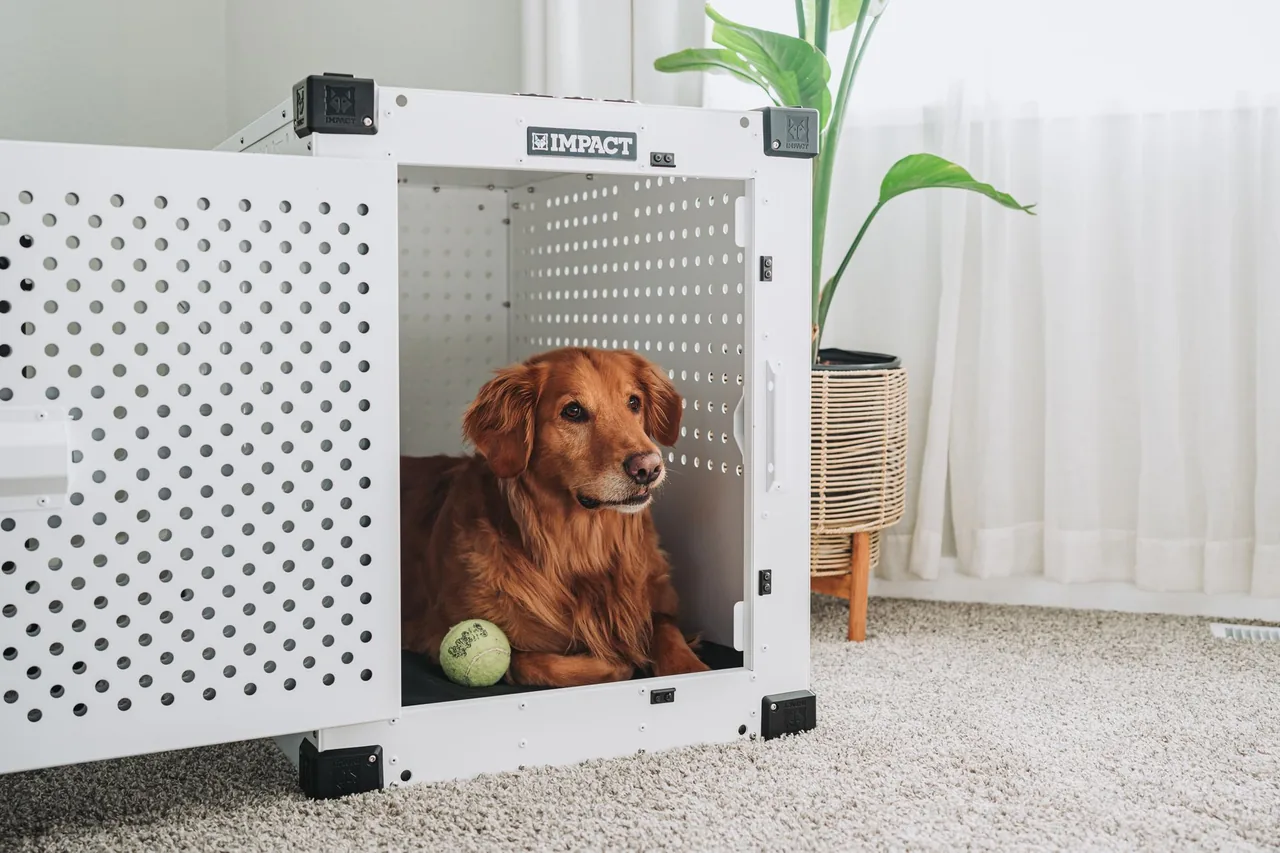
Four things: quiet, space, routine, and a short guest list.
Keep the house calm and skip the welcome party — however excited everyone is, week one is not the week to meet the dog. Give the dog one safe base, a small room or an open crate as a den (never used as punishment), where nobody reaches in. Set the routine on day one and keep it boringly consistent: same feeding, walk, and sleep times. Predictability is what tells a nervous animal the world is safe now, and the ASPCA and Fear Free both build their settle-in advice around it.
Walks stay short, leashed, and undemanding — a sniff around the block, not a hike. And treat every new dog as a flight risk for the first few weeks: nothing smells like home yet, so a spooked dog will bolt. Bideawee advises assuming that risk regardless of age or temperament — a martingale or two points of attachment, no retractable leashes, and never a door that opens straight to the street.
What’s the biggest first-week mistake?
Too much, too soon. It’s almost always this — the dog park on day three, the big family barbecue “so everyone can meet her,” the long car trips, the guests reaching over the head for a hug. All well-meant. All too much for a brain still running on stress hormones.
Here’s the part worth being blunt about: rushing a nervous dog into overwhelming situations doesn’t toughen it up — it can make the fear stick. A scary first outing can harden into a lasting association (cars are bad, that park is bad) that you’ll spend months undoing. With a new rescue, going slow isn’t coddling. It is the training.
So resist the milestones this week. Skip introductions to other dogs, hold off on formal training beyond the gentlest name game and a treat for coming near you, and let the dog be a little bored. Boredom is a luxury a decompressing dog can afford.
Is the 3-3-3 rule real, or just a nice idea?
It’s a useful map, not a scientific fact — and it’s worth being honest about which parts hold up. The 3-3-3 “rule” says a rescue dog needs roughly three days to decompress, three weeks to settle in, and three months to feel at home. As a way to set expectations and stay patient, it’s genuinely helpful, and plenty of shelters (the ASPCA among them) use it.
But only the first stretch has real evidence behind it. The “three days” lines up with what stress research actually shows — a real spike that eases over the first days in a calm home. The tidy “three weeks” and “three months” milestones are rules of thumb, not biology. Nothing flips at exactly week three, and plenty of dogs — shy ones, seniors, dogs with rough histories — take six months to a year to fully unfold. That’s normal, not a failure.
So use 3-3-3 as a rough guide and a patience prompt, not a deadline. If your dog needs a year, your dog is still right on time. For the fuller phase-by-phase version, our guide on how the 3-3-3 decompression timeline works walks through each stretch in detail.
When does a first-week behavior need a professional?
Most of what worries you in week one — hiding, light eating, sleeping a lot, a few accidents, some nervousness — is normal decompression and eases with time and quiet. This is educational content, not veterinary advice, but a few things are worth acting on sooner.
Call your veterinarian if the dog won’t eat for more than two to three days, won’t drink for a day, seems genuinely unwell, or shows any sudden change — a settled dog can mask illness, and a lot of behavior questions are medical questions first. Humane World for Animals recommends a wellness check within the first week anyway.
Loop in a credentialed, reward-based professional early — a certified trainer (CCPDT), a behavior consultant (IAABC), or a veterinary behaviorist (DACVB) — for anything involving teeth or real panic: growling or snapping over food, space, or handling; a bite or near-bite; or frantic, inconsolable distress when left alone, which can be the start of separation anxiety. None of these mean you adopted the “wrong” dog — they mean the dog is scared, and fear responds to help. Which behaviors you’re most likely to meet, and what they mean, is its own topic: our guide to common rescue dog behavior problems covers them one by one.
The first week asks less of you than you’d think — quiet, patience, and a routine the dog can count on. If you’d like that whole first stretch in one calm place — a day-by-day decompression plan, a week-one checklist, a stress-signal chart, and a vet-visit sheet — that’s what our Rescue Dog Decompression Kit is built for, in the same plain, sourced voice as these guides. New to all of it? The First-Time Dog Owner Guide picks up from there. Do less this week; it’s the most you can do.
Frequently asked questions
- My rescue dog won't eat. Should I worry?
- A little light eating in the first day or two is common — a stressed dog often has no appetite. Keep meals calm and on schedule, and don't hover. But if the dog eats nothing for more than two to three days, or won't drink, call your vet; that crosses from decompression into a medical question.
- My new dog is hiding and won't come out. Do I leave him or coax him?
- Leave him, mostly. Put water and a comfy spot within reach, sit nearby without reaching in, and toss the occasional treat without eye contact. Let him choose when to emerge. Dragging a frightened dog out of a safe spot teaches him that hiding doesn't work and that hands are unpredictable — the opposite of what you want.
- When can I introduce my rescue to friends, other dogs, or the family dog?
- Not in week one. Give it at least a couple of weeks of decompression first, then go slow — calm, one at a time, on neutral ground for dog-to-dog meetings, with an easy exit. A bad early meeting is hard to undo.
Educational content only — not veterinary or professional behavior advice. Consult your vet, or a certified trainer or behaviorist, for your pet. Read the full disclaimer →