Livestock Guardian Dogs for Beginners
A good livestock guardian dog can cut predator losses dramatically, but it isn’t a pet that happens to live outside. What LGDs do, the common breeds, the barking and roaming to expect, how many you need, and what the research says.
On this page
A livestock guardian dog (LGD) is a working dog that lives with sheep, goats or other stock and keeps predators away, mostly by its presence, patrolling and barking. Guarding breeds such as the Great Pyrenees, Akbash, Anatolian Shepherd, Maremma and Komondor were developed to protect livestock, and the instinct is bred in rather than trained. They work best in pairs or more, behind good fencing, and they expect a job, not a sofa. That’s the picture from USDA APHIS, university extension services and Cornell’s Small Farms Program.
They can be remarkably effective. They also bark at night, roam if they can, and take about two years to become fully reliable.
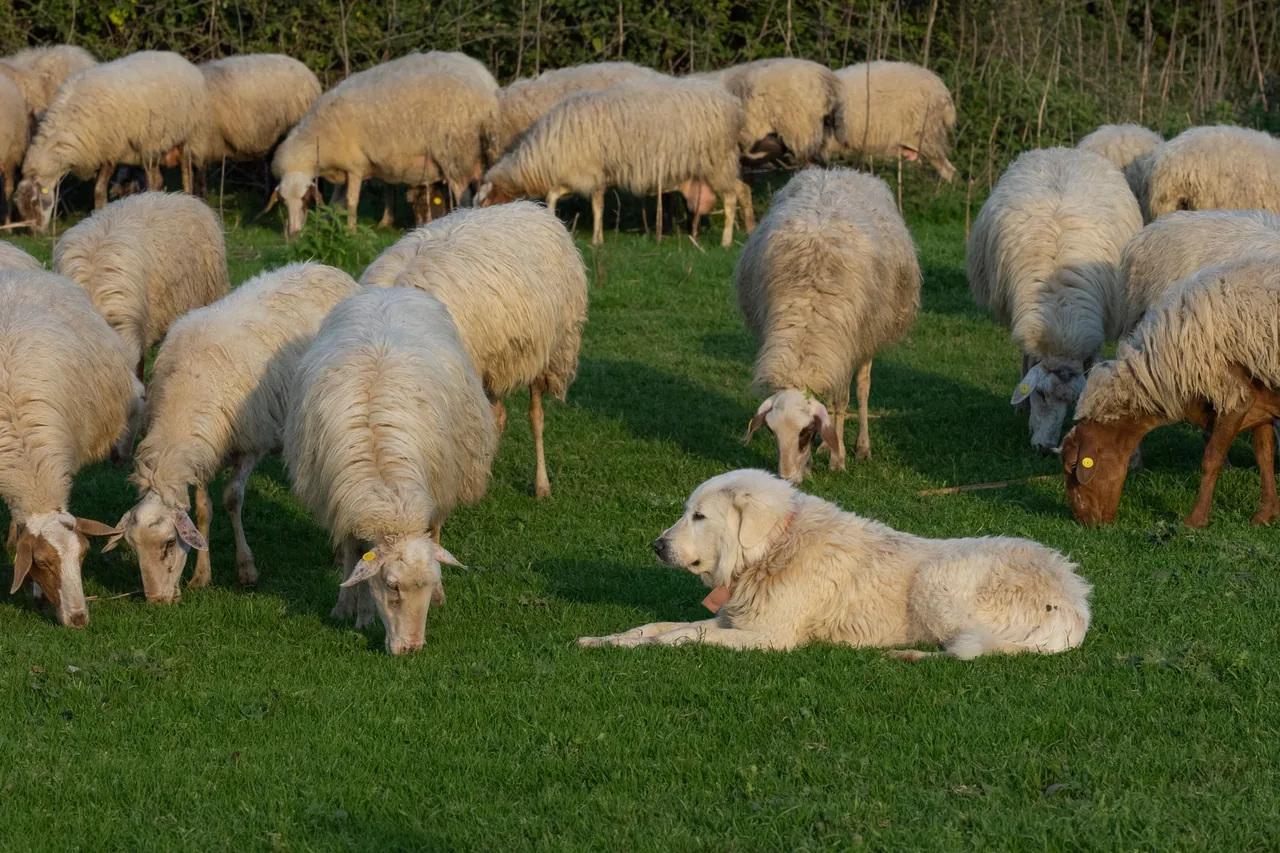
What a guardian dog does
USDA APHIS describes LGDs as dogs that live with the sheep and patrol the edges of grazing areas to ward off predators. UC Cooperative Extension notes the guardian breeds were developed in Europe and Asia to protect livestock from bears and wolves, and have been used for thousands of years.
They are not herding dogs. Cornell’s Small Farms Program explains that herding is essentially a controlled hunt, so herding dogs treat stock a bit like prey, while guardians treat the stock as their own group. The roles don’t overlap, and guarding instinct can’t be taught.
Common breeds
According to South Dakota State University (SDSU) Extension, the breeds most used in the US are the Great Pyrenees, Akbash, Anatolian Shepherd, Maremma and Komondor, with Kangal and Karakachan use rising where larger predators are a concern. One study in the northwestern US found little difference in how Kangals, Karakachans and traditional “white dogs” responded to wolves.
The AKC describes the Great Pyrenees as an independent thinker for whom obedience may not come easily, which is typical of guardian breeds: they were bred to make their own decisions in the field.
What to expect: barking, roaming and independence
Barking. The AKC notes Great Pyrenees were bred to guard flocks at night and often bark at night. Cornell’s Small Farms Program points out that barking is part of the deterrent, and that if constant barking would bother you (or your neighbors), an LGD isn’t a fit.
Roaming. Patrolling LGDs often range well away from the flock; SDSU cites an average of about a tenth of a mile or more. Texas A&M AgriLife calls roaming the main way LGDs are lost and a top reason they’re replaced, noting that almost half of purchased LGDs are lost within six years.
Fencing. Dogs don’t replace fences. Cornell recommends a sturdy perimeter fence plus well-charged electric netting, and SDSU notes LGDs may cross fences, so agree on a plan with your neighbors.
How many dogs do you need?
There’s no single number. Texas A&M suggests a starting baseline of about 1–2 dogs per 100 head, with more for spread-out flocks, brushy or hilly terrain, or heavy predator pressure. South Dakota producers surveyed by SDSU unanimously advised never running a single LGD, and also not raising two puppies at the same time. Texas A&M suggests adding a second dog only after the first is fully mature.
Does it actually work?
Predators are a real cost: USDA APHIS reports predators cause more than 30% of US sheep and lamb losses.
The research on guardian dogs is encouraging but thin. A 2017 review in Scientific Reports found guard dogs reduced coyote losses to zero in fenced pastures and sharply lowered them on open range, but only five LGD studies met its standards, so the evidence base is small. Field reports are strong too: the AKC notes that farms in Namibia using Anatolian Shepherds to reduce conflict with cheetahs reported 80–100% lower livestock losses.
Not every dog works out. UC Cooperative Extension’s cost example assumes about a two-in-three success rate, with roughly $1,567 invested per working dog and about $600 a year in upkeep. Treat those as planning figures, not promises.
Working dog, not porch pet
LGDs need people, but in moderation. USDA APHIS and UC Cooperative Extension note that dogs over-socialized to people may hang around the porch instead of staying with the stock. They also mature slowly: Texas A&M puts full effectiveness at about 18–24 months, up to around 30 months for some breeds. The bonding and training that make that happen are covered in raising an LGD puppy with livestock.
Warning signs and where to get help
- A dog that keeps leaving the stock or the pasture (Texas A&M suggests checking whether pups escaped pens before you buy).
- Rough treatment of livestock that isn’t outgrown; UC Cooperative Extension suggests rehoming such a dog to non-guarding work.
- Fights with herding dogs, bite liability and harassment of wildlife, all of which UC Cooperative Extension lists as risks.
Your county extension office, UC Cooperative Extension livestock advisors and the Texas A&M AgriLife LGD program are good places for local, practical help. And if your property sees hikers or cyclists, USDA APHIS asks visitors not to feed or pet working LGDs, which is worth posting at gates.
Frequently asked questions
- What’s the difference between a guardian dog and a herding dog?
- Herding is essentially a controlled hunt, so herding dogs treat stock a bit like prey, while guardians treat the stock as their own group, according to Cornell’s Small Farms Program. The roles don’t overlap, and guarding instinct can’t be taught.
- How many livestock guardian dogs do I need?
- It depends on the flock, the terrain and predator pressure. Texas A&M suggests a starting baseline of about 1–2 dogs per 100 head, more for spread-out flocks, brushy or hilly ground or heavy predator pressure. South Dakota producers surveyed by SDSU advised never running a single LGD, and not raising two puppies at the same time.
- Do livestock guardian dogs really work?
- The evidence is encouraging but limited. A 2017 review in Scientific Reports found guard dogs cut coyote losses to zero in fenced pastures and sharply reduced losses on open range, but only five LGD studies met its standards. In Namibia, farms using Anatolian Shepherds to deter cheetahs reported 80–100% lower livestock losses, according to the AKC.
- Do livestock guardian dogs bark a lot?
- Often, especially at night. The AKC notes Great Pyrenees were bred to guard flocks at night and often bark then, and Cornell’s Small Farms Program says barking is part of the deterrent. If constant barking would be a problem for you or your neighbors, an LGD may not be the right fit.
Educational content only — not veterinary or professional behavior advice. Consult your vet, or a certified trainer or behaviorist, for your pet. Read the full disclaimer →