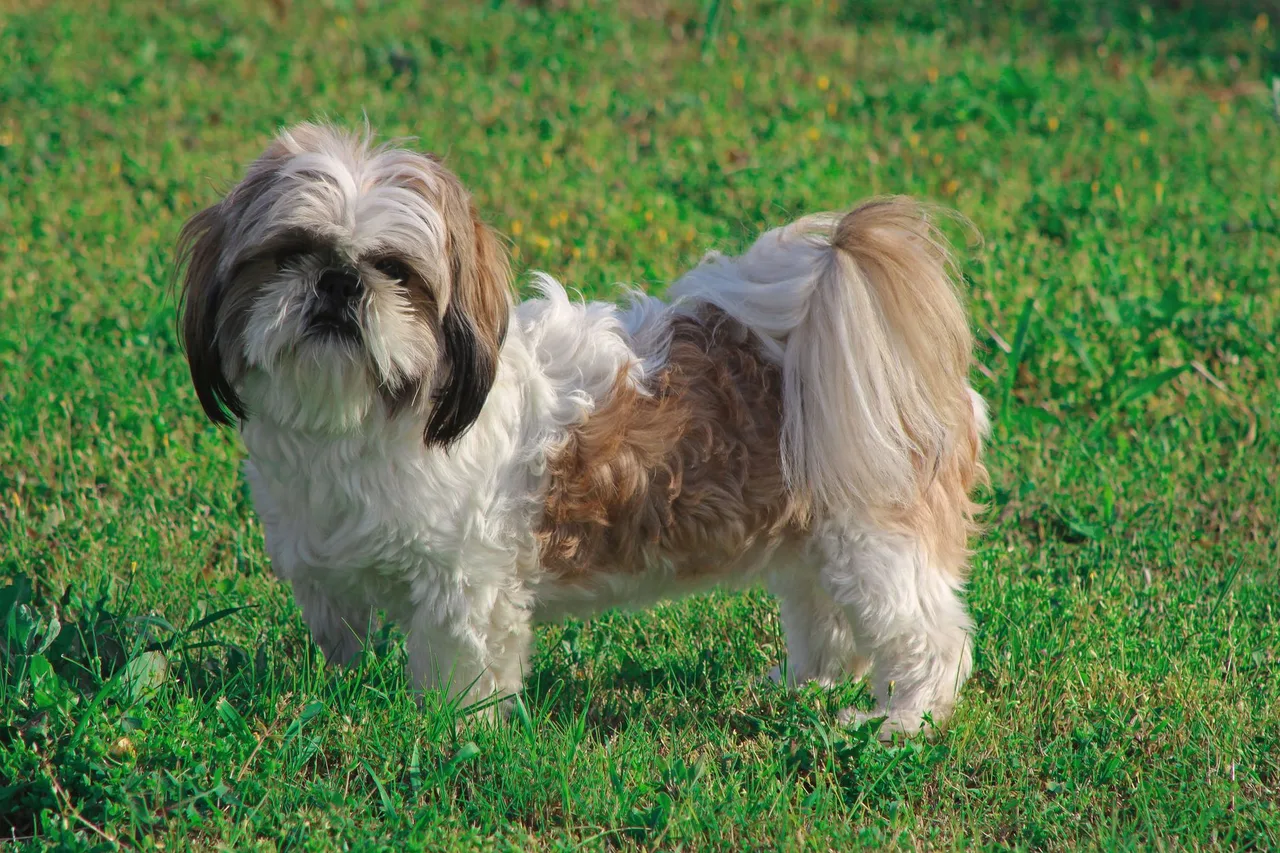
Personality
The breed standard says the Shih Tzu’s only job is to be a companion and house pet, so its temperament should be outgoing, happy, affectionate, friendly and trusting toward everyone. Owners have loved this little "lion dog" for a thousand years, the AKC notes. It rates the breed 5 of 5 with young children and other dogs, and 3 of 5 with strangers and for barking.
Exercise
Bred as a house companion, the Shih Tzu needs little exercise, the AKC says: short daily walks and indoor play cover it. Their heavy coats and short faces mean they don’t tolerate heat well and are not good swimmers, so keep walks short and cool in summer, and carry water and ice packs when you travel. VCA adds that flat-faced dogs overheat more easily because panting doesn’t cool them as well.
Grooming
A long coat needs daily brushing to the skin with a pin brush, the AKC says, and a bath about every three or four weeks. Comb the mustache and topknot daily, wipe the corners of the eyes with a damp cloth, and keep the hair on the head trimmed short or tied up so it doesn’t irritate the eyes. If you don’t want daily brushing, a groomer’s short "puppy trim" is the easy alternative. The breed rates 1 of 5 for shedding but 4 of 5 for grooming needs.
Health: what to know
- Breathing and heat. The AKC notes that the short face and heavy coat make the breed poor in heat, and that puppies often snort while teething; struggling for air is a reason to see the vet. VCA lists the Shih Tzu among flat-faced breeds prone to brachycephalic airway syndrome (narrow nostrils, a long soft palate), which is worse in heat and humidity and with extra weight, and raises the risks of anesthesia. Tell your vet before any procedure.
- Eyes. Large eyes with no muzzle to protect them are easy to injure, the AKC warns, so see a vet promptly about any eye problem; breeders screen for cataracts, progressive retinal atrophy, retinal detachment and dryness from eyelids that don’t close well. The American Shih Tzu Club names genetic eye problems among the conditions breeders should watch, and VCA notes that flat-faced dogs are prone to corneal ulcers.
- Kneecaps and hips. The AKC lists patellar luxation (a slipping kneecap) and hip dysplasia, and the American Shih Tzu Club names both among the conditions breeders should watch. Its optional CHIC health program asks for an eye exam by a veterinary ophthalmologist and a vet’s kneecap evaluation.
- Kidneys. Juvenile renal dysplasia, in which the kidneys don’t develop normally, is rare but serious, the AKC says, and the American Shih Tzu Club lists renal dysplasia among its concerns. The club’s owner flyer names a puppy that isn’t thriving and drinks a lot as signs to report to your vet.
Training
Training a Shih Tzu can be amusing and frustrating at once, the AKC admits: the breed charms its owners into letting it have its way, which can lead to a chubby, half-housetrained dog that is hard to groom. Praise and rewards work best, and the AKC says harsh corrections should not be used. Teach new behaviors a little at a time, and choose a puppy class that uses positive reinforcement.
Is this breed right for you?
- Apartment or city living with a companion who is home a lot
- Families with children, and homes with other dogs
- Owners who enjoy daily grooming or budget for a regular groomer
- Hot climates without air conditioning
- Owners who want a running, hiking or swimming partner
- People who want a no-grooming dog