
Is a Shih Tzu right for you?
Companionship is the one job the Shih Tzu was bred for. These dogs are affectionate, people-oriented, and generally calm indoors, which makes them a strong fit for apartments, quieter households, and owners who are home often. Many are friendly with strangers and other pets when socialized early.
Be honest about the trade-offs. The coat is high-maintenance, and skipping grooming leads to painful mats. The flat face means real heat sensitivity and noisy breathing. Some Shih Tzu are slow to house-train and need patient, consistent routines. They also dislike being left alone for long stretches and can become anxious or vocal.
This is not a low-effort dog despite the low exercise needs — the effort simply shifts to grooming, eye care, dental care, and daily attention. If you want a devoted lap companion and can commit to that care, a Shih Tzu rewards you with a loving, easygoing temperament.
Exercise, energy, and daily life
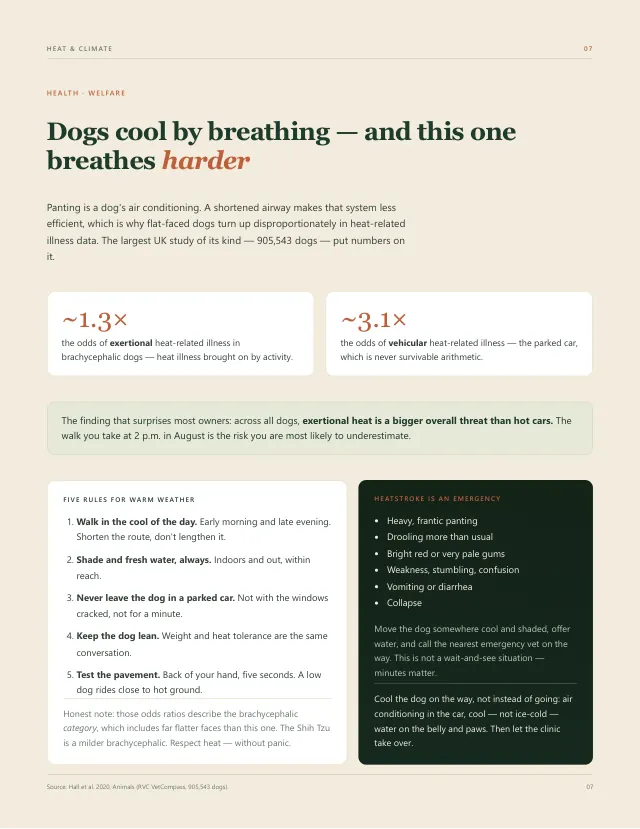
Exercise needs in this breed are modest. A couple of short daily walks plus indoor play usually keeps an adult content: think steady, gentle activity rather than long runs. Because they are brachycephalic (flat-faced), their airway is less efficient, so they tire and overheat faster than a longer-nosed dog of the same size.
Warm weather deserves real caution. Walk in the cool of the morning or evening, keep sessions short, and watch for heavy panting, loud breathing, or a dog that wants to stop. Never leave a Shih Tzu in a warm car or a hot yard, and provide shade and water. A harness rather than a neck collar reduces pressure on the airway.
Indoors, they are happy to lounge near you, but mental stimulation matters. Short training games, food puzzles, and gentle play prevent boredom. Their low-drive nature makes them easy to under-exercise, so keep them lean, because extra weight worsens both breathing and joints.
Grooming and the double coat
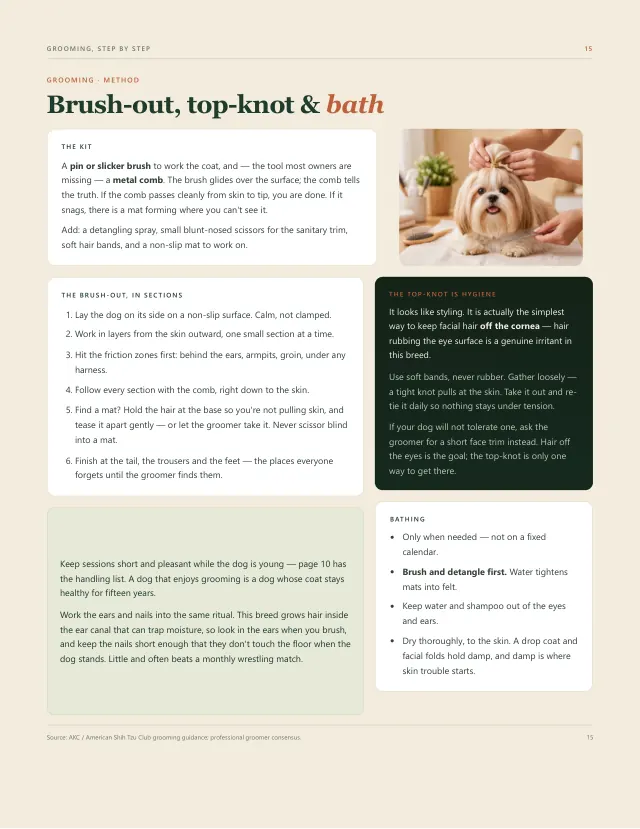
The Shih Tzu's long, flowing double coat is the breed's signature and its biggest daily commitment. Left in a full coat, it needs brushing and combing most days to prevent mats, especially behind the ears, in the armpits, and around the rear. Mats pull on the skin and can hide irritation, so they are not just cosmetic.
Many owners choose a short 'puppy cut' from a groomer every few weeks — it dramatically cuts the daily workload while keeping the dog comfortable. Either way, plan on regular professional grooming.
Two areas need extra attention. The face traps moisture and food, so wipe around the eyes and muzzle to prevent staining and skin infection, and keep hair out of the eyes. Ears are floppy and warm, which invites infection, so check and clean them routinely. Add nail trims and dental care, and you have the real grooming picture: not hard, but constant.
Shih Tzu health: what to watch for
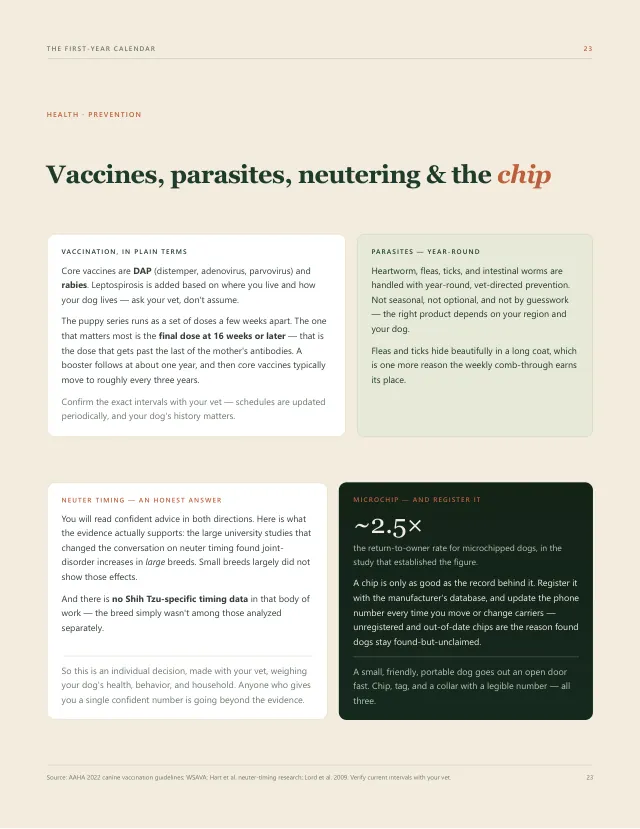
As a brachycephalic breed, the Shih Tzu can be affected by Brachycephalic Obstructive Airway Syndrome (BOAS), which the AVMA and veterinary literature link to noisy breathing, exercise and heat intolerance. Their prominent, forward-set eyes are vulnerable to corneal ulcers, dry eye, and (in trauma) proptosis, so eye pain, squinting, or cloudiness is always a same-day vet matter.
Other conditions reported in the breed include patellar luxation and, in some lines, hip issues screened through OFA evaluations; intervertebral disc disease (IVDD) affecting the back; chronic ear infections; and dental crowding that drives early periodontal disease. Renal dysplasia, a developmental kidney condition, is also recognized in Shih Tzu and discussed by the breed parent club (the American Shih Tzu Club).
Buy from breeders who health-test, keep up with dental and eye checks, and ask your veterinarian about weight, breathing, and joints at every visit. This is general information, not a diagnosis — your vet guides care for your individual dog.
Training your Shih Tzu
They are intelligent and eager to please the people they love, but they can also be independent and a little stubborn. Reward-based, force-free training works best: reinforce what you want with food, praise, and play, keep sessions short and upbeat, and never rely on intimidation or physical correction, which damages trust and rarely helps a small, sensitive dog.
House-training deserves patience. Some Shih Tzu take longer than average, so set a consistent schedule, reward outdoor success immediately, supervise closely indoors, and use crate or pen management to prevent accidents rather than punishing them. Consistency from every family member speeds things up.
Socialize early and gently (new people, sounds, surfaces, and calm dogs) so your Shih Tzu grows up confident. Teach handling for grooming from puppyhood, rewarding your dog for accepting brushing, ear checks, and nail trims. A dog that enjoys being groomed makes the breed's heavy care load far easier for both of you.
Living with a Shih Tzu day to day
This breed thrives on closeness. They tend to follow their people from room to room, settle happily in a lap, and adapt well to small spaces, which is exactly why they suit apartments and less mobile owners. That same devotion means they do not cope well with long hours alone, so plan company, enrichment, or a gradual routine that builds their comfort with short absences.
With children, supervise. A Shih Tzu is sturdy for a toy breed but still small, and rough handling can hurt its back or eyes; teach kids to sit with the dog rather than chase or grab. Around other pets, most Shih Tzu are sociable when introduced calmly.
Build a daily rhythm your dog can rely on: cool-hour walks, grooming touch-ins, dental care, eye and ear checks, and quiet company. Keep them lean, keep them cool, and keep the coat and eyes clean, and a healthy Shih Tzu is one of the most contented companions a home can have.