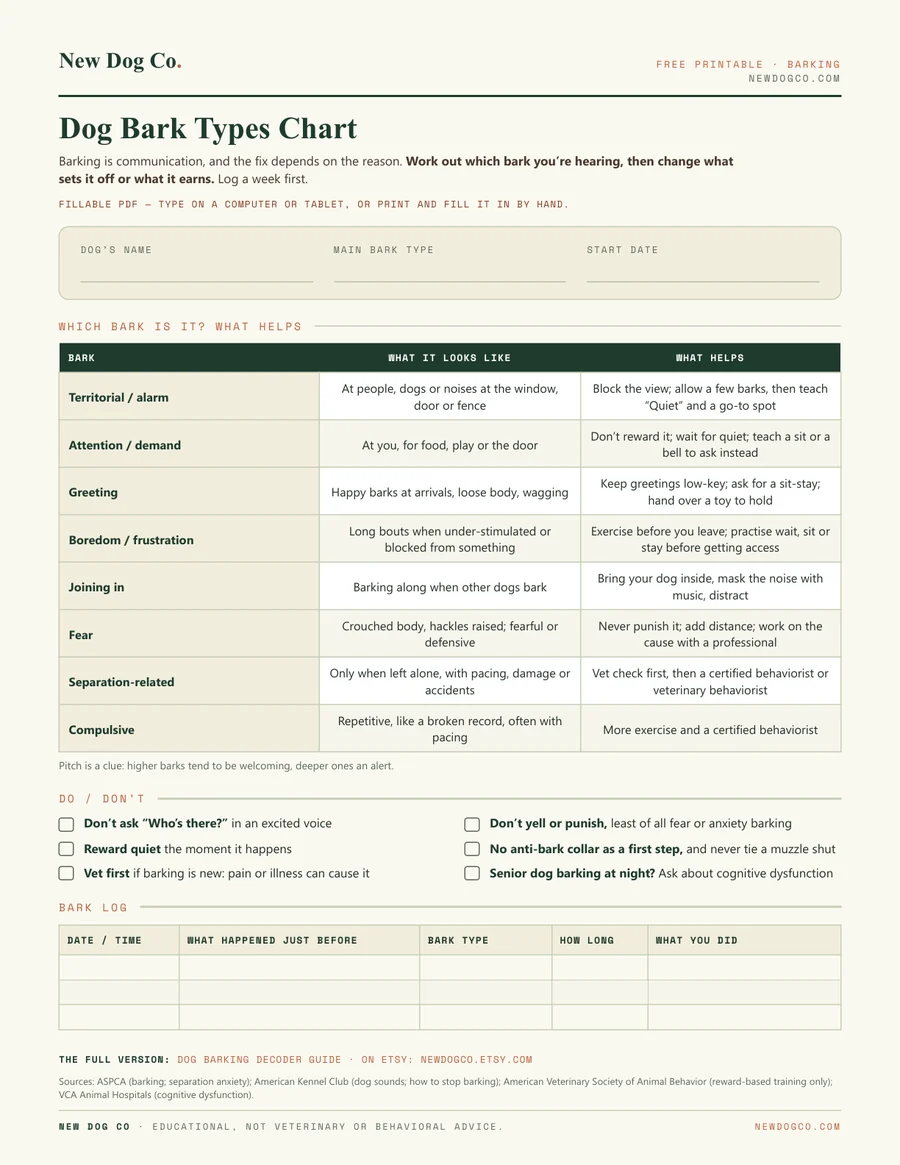
Dog Bark Types Chart
Why is my dog barking? The ASPCA groups barking by cause: territorial and alarm barking, attention-seeking, greeting, boredom and frustration, joining in with other dogs, fear, separation-related and compulsive barking. Each one has a different fix, from blocking the view at the window to more exercise or help from a certified behaviorist. This one-page chart lays out eight bark types with what they look like and what helps, adds the do’s and don’ts, and gives you a log so you can see when and why your dog barks.
Fillable · bilingual EN/ES · vet-sourced, not a scanned template.
 Got the free sheet? The full version → Dog Barking Decoder Guide $3.73
 What's inside
- Eight bark types: what each looks like and what helps
- Pitch clues: welcoming vs alert barks
- Six do’s and don’ts, including when to see a vet first
- A fillable bark log: time, trigger, type, length, what you did
How to use it
- Log every barking bout for a week before changing anything.
- Match the pattern to a bark type in the chart.
- Try the matching “what helps” step consistently for two weeks and keep logging.
- If barking happens only when your dog is alone, or is new, start with your vet.
New printables + calm, sourced dog-care tips
Join the Pack and the 25-printable bundle is your instant thank-you — then we email new printables and short, vet-sourced tips as they’re ready. A few times a month, no spam.
The 25-printable pack lands instantly — new printables and tips follow. Unsubscribe anytime. Privacy Policy.Frequently asked questions
- Do anti-bark collars work?
- The ASPCA does not recommend them as a first step, and the American Veterinary Society of Animal Behavior recommends reward-based training only, advising against shock and prong collars. Find the reason for the barking and work on that instead.
- Should I yell at my dog to stop barking?
- No. The ASPCA advises against yelling and punishment, and against punishing fear or anxiety barking in particular. It also suggests not asking an excited “Who’s there?”.
- My dog only barks when I leave. What does that mean?
- Barking only when alone, especially with pacing, destruction, escape attempts or accidents, can be separation-related. The ASPCA suggests ruling out medical causes, then working with a certified applied animal behaviorist or a veterinary behaviorist.
- My senior dog has started barking at night. Why?
- New barking can come from pain or illness, so see your vet. In older dogs, VCA notes that night-time pacing, getting lost or house-soiling can be signs of cognitive dysfunction, which your vet can assess.
Free educational printable. Not veterinary advice, and not a substitute for your vet's official records or an emergency call. Full disclaimer → · Leer en español →