How Do I Stop My Dog Barking at the Window?
Why the window barking is self-rewarding — and the fastest way to stop the rehearsal.
On this page
The barking keeps happening because it works — for your dog. He barks, the mailman or passing dog moves on every single time, so from his point of view it did its job, and he camps at the window waiting for the next one. The fastest fix is management: block the view — window film, blinds, furniture, a baby gate — so he can’t rehearse the bark, while you teach a calmer response underneath.
And it compounds. Every “win” — every time the thing outside leaves after he barks — wires the habit a little deeper, until guarding the window becomes his self-appointed job. That cuts both ways: a learned habit can be unlearned, but only once he stops getting to practice it all day long. (Window barking is reactivity at home; the complete guide to reactive dogs has the full method.)
Why does my dog bark at the window so much?
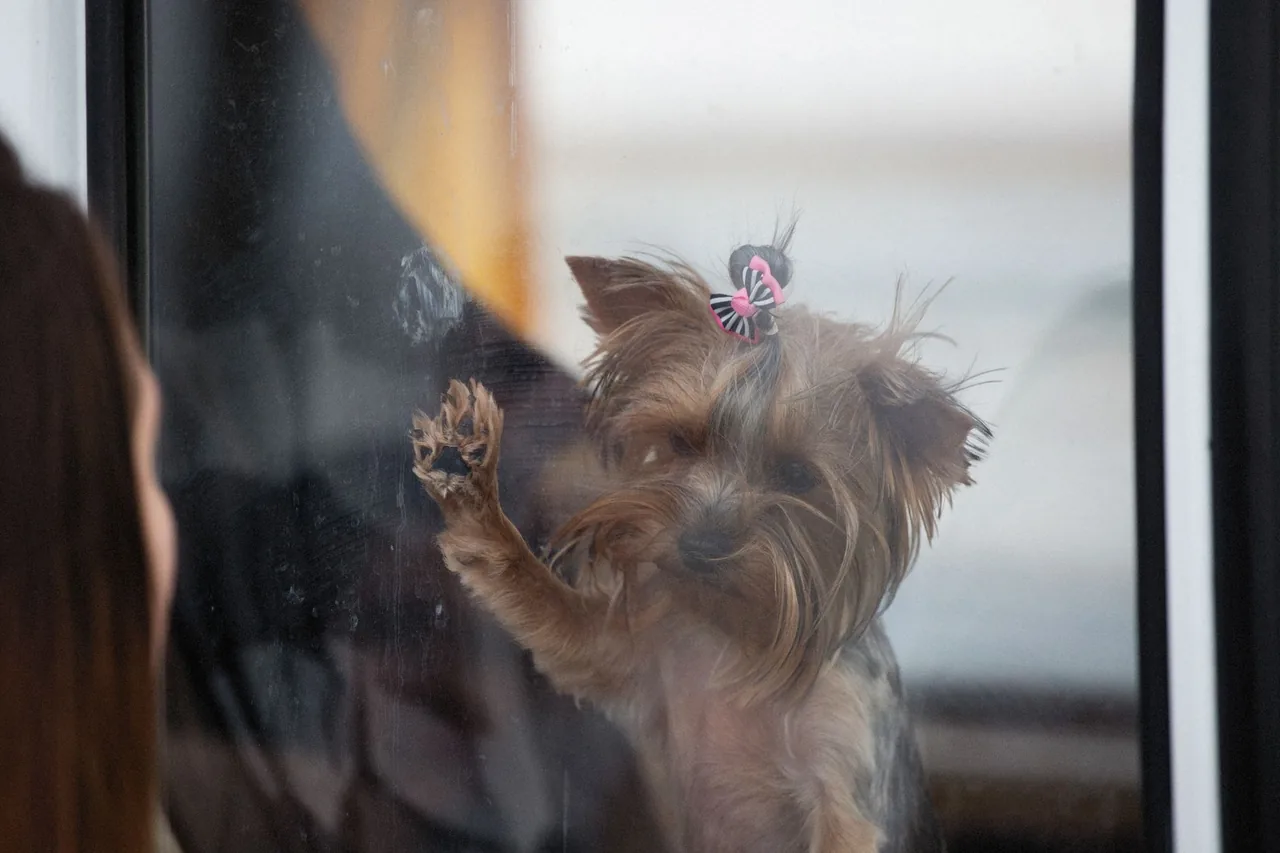
Because it pays off, over and over. Almost everything your dog barks at — the delivery driver, a dog on a walk, a jogger — was going to leave anyway. But to your dog, his barking made it leave. That’s a reward, delivered on a perfect schedule.
It’s also a job he gave himself. The window is a fixed lookout where the “work” always succeeds, so he patrols it. Many dogs spend hours a day on guard there, getting more wound up, not less.
Underneath the habit is usually arousal — and often a dash of fear or frustration at something he can see but can’t reach. The glass is a barrier, much like the end of a leash; it’s the same trapped feeling behind why a dog can be reactive on leash but calm off it.
Is he being protective, or just being bad?
Neither, really. It’s a learned, self-rewarding habit layered on top of normal watchfulness — not a moral failing, and not your dog “guarding” the house in any deliberate way.
Framing it as bad behavior leads straight to punishment, which is the one move that backfires. So it’s worth naming it accurately: an over-aroused dog repeating something that has always seemed to work.
Should I just yell at him to stop?
No — and here’s why it never sticks. Yelling adds noise and energy to a dog who’s already over-aroused. Some dogs read it as you joining the alarm; most just get more wound up.
Worse, if any of the barking is fear-based, punishment makes it worse — it pairs the trigger with something unpleasant and raises the anxiety. The American Veterinary Society of Animal Behavior (AVSAB) is clear that aversive methods increase fear, anxiety, and aggression.
And practically: scolding only happens after the bark, so it does nothing about the habit, the lookout, or the reward. You’re treating the symptom and skipping the cause.
How do I block the view?
This is the big lever, and it works the day you do it. If your dog can’t see the street, he can’t rehearse barking at it — and every un-rehearsed hour weakens the habit.
Quick options: frost the lower half of the window with cheap removable film, close the blinds at the times trouble passes (mid-morning mail, after-school dog walks), or pull a couch back from the glass so he loses his perch. A baby gate that keeps him out of the front-window room entirely is the simplest of all.
Management isn’t cheating or “giving up.” Every avoided bark-fest is one less rep of the behavior — the same principle behind the calm, under-threshold practice that helps any reactive dog. Plenty of dogs keep a permanent half-cover on one window for life, and that’s a perfectly good outcome.
What do I do instead of letting him bark?
Change what the trigger means, and give him a better job. With the view managed, you can work under threshold — at a window or distance where he notices something but can still take food and listen.
The backbone game is simple: the trigger appears and you feed, the trigger passes and the feeding stops. Done below his boil-over point, the passer-by starts to mean treats are coming, not a barking marathon.
Then build a positive interrupt. Teach a cheerful “let’s go” or a “go to your mat” with a chew, and reward him for choosing it when something passes. You’re handing him a new, rewardable response to replace the old one.
Keep sessions short and end on calm. Three quiet reps beat thirty frantic ones, and a tired, enriched dog has a longer fuse to begin with.
What about the doorbell and knocking?
The doorbell is its own trigger, and a big one — it reliably predicts “something is about to happen at MY door.” Treat it as a separate project.
Desensitize the sound: play a recorded doorbell at low volume, toss a treat, and only raise the volume as your dog stays relaxed. Pair the real bell with a job — a run to a mat for a treat — so the sound cues that instead of a charge at the door.
Manage in the meantime: a “please text, don’t knock” note for deliveries, or taping over the bell during training, spares you a hundred accidental reps while you teach the new routine.
When should I see a vet or a trainer?
See your vet first if the barking is new or suddenly intense — pain, vision or hearing changes, or canine cognitive decline in an older dog can all show up as more reactivity. This article is educational, not a substitute for veterinary care.
If the window barking comes with real fear, growling at people through the glass, or any escalation toward aggression, bring in a credentialed, reward-based professional — a certified trainer (CCPDT), a behavior consultant (IAABC), or a veterinary behaviorist (DACVB).
Window barking is one of the most fixable problems there is, because the biggest lever — stop the rehearsal — works the moment you pull the blinds. If you want the whole calm-practice plan in one place — reading your dog’s threshold, the trigger-appears-treats game, the gear, and the management that makes it stick — our Reactive Dog Toolkit is the step-by-step system to start working on it today.
Frequently asked questions
- Will an anti-bark collar fix it?
- No. Shock, vibration, and citronella collars punish the sound, not the cause — and for fear- or frustration-based barking they add stress and can make the whole problem worse. Skip them; manage the view and counter-condition instead.
- My dog only barks at the window, not on walks — why?
- The window is a fixed lookout where barking has "worked" hundreds of times, so it's become a location-specific habit. Change the location's setup (block the view, move the perch) and the habit loses its stage.
- Does covering the window forever mean I failed?
- Not at all. Management is a legitimate, permanent tool — lots of dogs keep a frosted lower pane or closed daytime blinds for life. It prevents rehearsal so the calm training can actually take hold.
- Will more exercise stop it?
- It helps — a well-exercised, sniff-satisfied dog is less trigger-happy — but exercise alone rarely undoes a deeply practiced window habit. Pair it with blocking the view and counter-conditioning.
Educational content only — not veterinary or professional behavior advice. Consult your vet, or a certified trainer or behaviorist, for your pet. Read the full disclaimer →