Reactive Dog Trigger Log
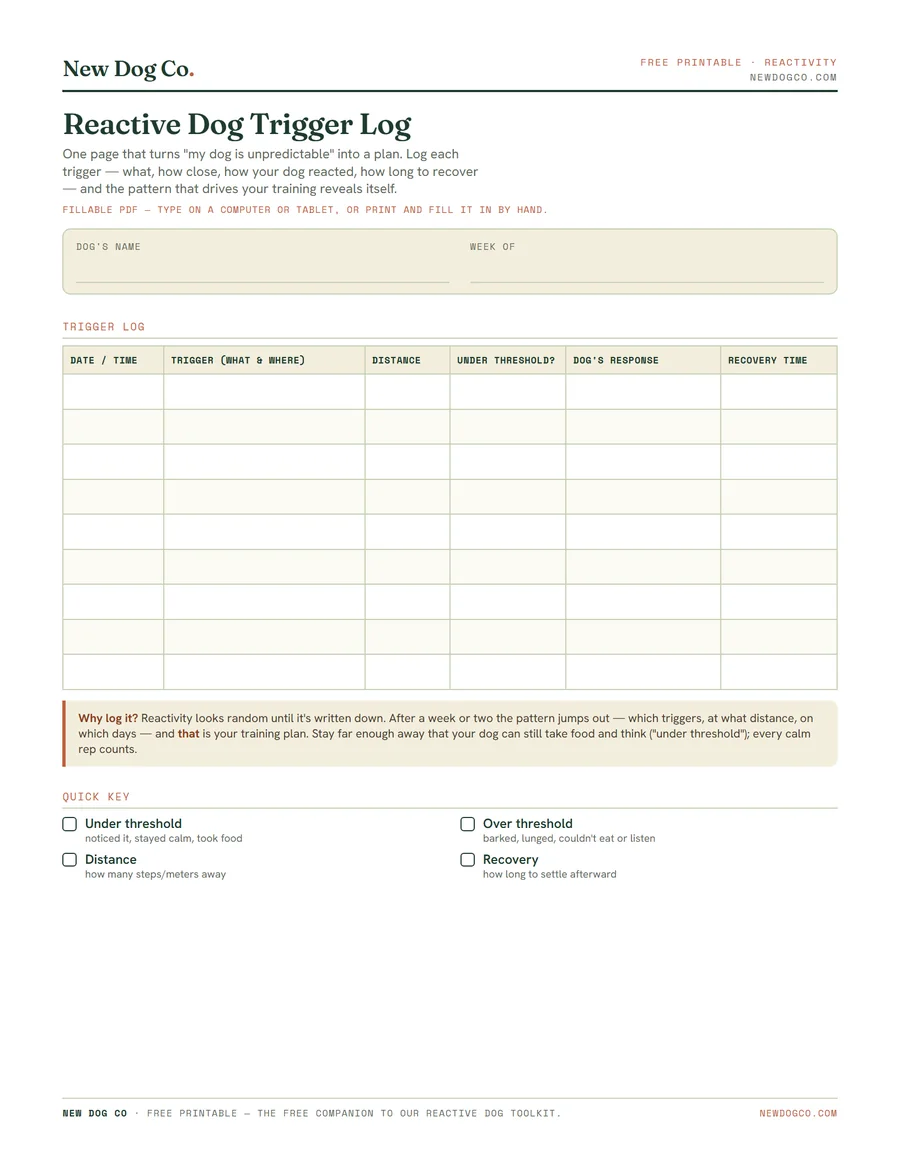
“My dog is unpredictable” almost always means the pattern hasn’t been written down yet. This trigger log finds it: on one page, record each trigger — what and where, how close, whether your dog stayed under threshold, its response, and how long recovery took. After a week or two the pattern jumps out, and that pattern is your training roadmap.
Genuinely fillable · bilingual EN/ES · vet-sourced — not a scanned template.
What's inside
- A trigger table: date/time, trigger (what & where), distance, under threshold?, response, recovery time
- A quick key explaining under vs over threshold, distance, and recovery
- A note on why logging reveals the pattern
- Nine rows per page for a week or two of data
- Both US Letter and A4 sizes
How to use it
- Print it and keep it handy on walks (a clipboard or phone photo works).
- Log each trigger as soon as you can after it happens.
- Note the distance and whether your dog could still take food (“under threshold”).
- After a week or two, read the pattern — that’s what to manage and practice.
New printables + calm, sourced dog-care tips
Join the Pack and the 18-printable bundle is your instant thank-you — then we email new printables and short, vet-sourced tips as they’re ready. A few times a month, no spam.
The 18-printable pack lands instantly — new printables and tips follow. Unsubscribe anytime.Frequently asked questions
- What is a reactive dog trigger log?
- It’s a simple record of what sets your dog off: each trigger, how far away it was, how your dog reacted, and how long it took to recover. Written down over a week or two, it reveals the specific triggers, distances, and “bad days” behind reactivity that feels random.
- What does “under threshold” mean?
- Your dog is under threshold when it notices a trigger but can still stay calm, take food, and respond to you. Over threshold, it’s barking or lunging and can’t learn. Almost all reactivity training happens under threshold — at a distance your dog can handle.
- How does the log help my training?
- It turns a vague problem into a concrete plan: once you can see “big dogs, head-on, under 15 feet, after a busy morning,” you know exactly what distance to keep and what to practice. Pair it with a force-free counterconditioning plan.
Free educational printable — not veterinary advice, and not a substitute for your vet's official records or an emergency call. Full disclaimer → · Leer en español →