The Complete Guide to Reactive Dogs: Triggers, Thresholds & the Reward-Based Fix
What reactivity is, why it happens, and the calm, reward-based method that actually changes it — the whole topic in one place.
On this page
- What is dog reactivity (and how is it different from aggression)?
- Why is my dog reactive?
- What are triggers, thresholds, and trigger stacking?
- The core method: desensitization and counterconditioning
- Key techniques: “Look at That,” engage-disengage, and BAT
- Management versus training (you need both)
- Tools and safety — and why no aversives
- When should I see a vet or a behaviorist?
- How long does it take, and what does progress look like?
- The reactivity library
- Sources & further reading
A reactive dog is one who over-reacts to a specific trigger — another dog, a stranger, a bike — usually with barking, lunging, and spinning, driven by fear, frustration, or over-arousal rather than a wish to harm. Reactivity is not aggression, and it is not disobedience. It is an emotional response, and the fix is to change the emotion: keep the dog far enough from the trigger to stay calm (under threshold), pair the trigger with something wonderful, and build up slowly. Done patiently, with reward-based methods and never punishment, most reactive dogs improve a great deal.
This guide is the whole topic in one place — what reactivity is, why it happens, the core method and its key techniques, how to manage day to day, and when to bring in a professional. Each section links to a deeper guide when you want more.
What is dog reactivity (and how is it different from aggression)?
Reactivity is an over-the-top reaction to a trigger the dog finds alarming or exciting. The classic picture is the leash meltdown: barking, lunging, spinning at the end of the leash. Underneath it is almost always an emotion — fear of the trigger, frustration at not being able to reach or escape it, or sheer over-arousal.
Aggression is different: it means intent to cause harm. Most reactive dogs don’t want to fight; they want the scary thing to go away, or they’re frustrated they can’t get to it. The behaviors can look similar from the outside, which is why telling them apart matters so much — the plan, and the risk, differ. We cover the tells in depth in leash reactivity vs aggression.
The American Veterinary Society of Animal Behavior (AVSAB) frames these as emotional and learned responses — which is exactly why they respond to changing the emotion, not to correction.
Why is my dog reactive?
Reactivity usually grows from one or more of four roots. Fear is the most common — the dog finds the trigger threatening and tries to drive it off. Frustration is next — a social or excited dog who’s blocked by the leash or a barrier boils over (this is why a dog can be calm off-leash but explosive on it). Under-socialization leaves a dog who never learned that everyday things are safe. And learning cements it: barking “works” — the mailman always leaves — so the behavior gets stronger.
Genetics and individual temperament matter too, as do a rough history and even a single bad experience. You usually can’t know the exact cause, and you don’t need to; the reward-based plan is the same. What does help is spotting the pattern — why a dog reacts to some triggers and not others is rarely random.
One thing to rule out first: pain. A sudden rise in reactivity in a previously-tolerant dog is a veterinary question before a training one, because discomfort lowers every animal’s tolerance.
What are triggers, thresholds, and trigger stacking?
Three ideas do most of the heavy lifting.
A trigger is whatever sets your dog off — a specific dog, a jogger, a skateboard. Triggers have features (size, speed, distance, angle) that change how intense the reaction is.
A threshold is the point at which your dog tips from “aware but coping” into “reacting.” Below threshold, the thinking brain is online and the dog can eat a treat and learn. Over threshold, it isn’t, and you’re just rehearsing the meltdown. Almost all real training happens under threshold — the distance where your dog notices the trigger but stays calm.
Trigger stacking is why some days are worse: stressors add up. A dog who saw two dogs, heard fireworks, and skipped a walk is running on a full stress bucket, so the next trigger tips him over at a distance that would have been fine yesterday. Stress hormones like cortisol can stay elevated for hours or days, which is why a “bad day” is real, not an excuse. Keeping a simple free trigger log turns that hidden pattern — which triggers, at what distance, on which days — into a plan you can actually work.
The core method: desensitization and counterconditioning
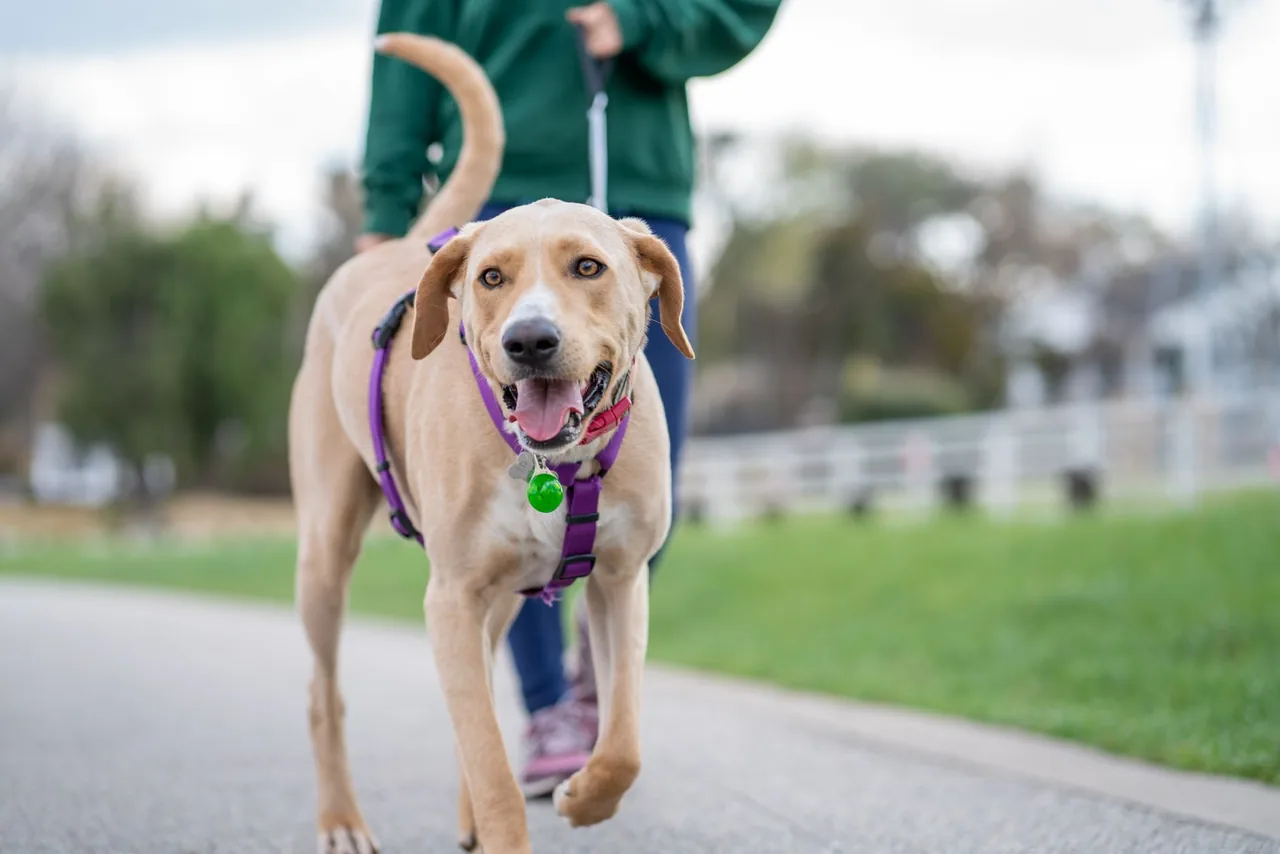
The heart of reactivity work is two techniques used together.
Desensitization means exposing the dog to the trigger at an intensity low enough that he stays under threshold — usually by adding distance — and only increasing intensity as he stays relaxed. Counterconditioning means changing the emotional association: every time the trigger appears, something wonderful (chicken, cheese) also appears, so over many reps the dog’s brain rewrites “dog = danger” into “dog = chicken rains from the sky.” Trigger appears, treats start; trigger leaves, treats stop.
Done together (often called DS/CC), they change how the dog feels, which is what changes the behavior. This is the engine under every reactivity guide on this site; how to counter-condition a reactive dog, step by step walks through the actual mechanics — distance, timing, criteria, and how to progress.
Key techniques: “Look at That,” engage-disengage, and BAT
A few well-known protocols make DS/CC easier to run in real life.
“Look at That” (LAT), from Leslie McDevitt’s Control Unleashed, turns the trigger into a cue: the dog looks at the trigger, you mark (“yes”) and treat, and looking calmly at the scary thing becomes a game with a happy answer. The related engage-disengage pattern rewards the dog first for noticing the trigger, then for choosing to turn back to you.
Behavior Adjustment Training (BAT), developed by Grisha Stewart, uses the dog’s own desire for distance as the reward: at a safe range, the dog gathers information and then chooses to move away, learning he can control the space calmly instead of exploding. Simple pattern games (predictable treat-scatters and rhythms) give an anxious dog something structured to do near a trigger.
You don’t need all of them — most owners build the habit around distance, LAT, and a happy U-turn. The point is that these are concrete, force-free tools, not vague advice.
Management versus training (you need both)
Management is preventing the reaction from happening at all — because every meltdown is a rehearsal that makes the next one easier. That means avoiding triggers you can’t work under threshold, crossing the street, using visual barriers at home, walking at quiet times, and blocking the window view for a window-barking dog. Management changes nothing on its own, but it stops the problem getting worse while you train.
Training is the DS/CC work that actually changes the emotion over time. Run in parallel, they’re the whole program: management buys you calm reps; training spends them. Even hard situations like a reactive dog meeting house guests come down to this pairing.
Tools and safety — and why no aversives
Good gear gives you control without adding fear: a well-fitted harness (a front-clip can help with a strong puller), a fixed six-foot or long line rather than a retractable, and — for any dog who might bite — a properly conditioned basket muzzle. The Muzzle Up Project has excellent guidance on training a dog to love the muzzle; a muzzle is a safety net, not a punishment.
What the plan never uses is aversive tools — shock, prong, or choke collars, or leash “corrections.” AVSAB is clear that these increase fear, anxiety, and aggression, and the AVMA likewise backs reward-based methods over aversive training. They’re especially risky with a reactive dog: punishing the bark can suppress the warning while leaving the fear underneath, producing a dog who reacts with less warning, not more calm. Reward-based methods are both safer and more effective.
When should I see a vet or a behaviorist?
See your veterinarian first for any reactivity that’s sudden, escalating, or new in a settled dog — pain, thyroid issues, and other medical causes lower tolerance and are worth ruling out before a training plan. AAHA and Fear Free both put a medical check early in the process.
For the training, bring in a credentialed, reward-based professional: a certified trainer (CCPDT), a behavior consultant (IAABC), or — for fear, anxiety, and aggression, or when medication might help — a veterinary behaviorist (DACVB). Medication is sometimes part of the plan, but it’s a veterinary decision, never a DIY one; for moderate-to-severe cases it can lower the baseline anxiety enough that the training finally works. Get help sooner rather than later for any bite, near-bite, or reaction that frightens you.
How long does it take, and what does progress look like?
Reactivity is managed and improved, not usually “cured” overnight — think months of consistent, under-threshold practice, not a weekend. Progress isn’t a dog who never reacts again; it’s reacting less often, recovering faster, and coping at shorter distances. Some dogs become bombproof; many become reliably manageable; a few always need thoughtful handling. All of that counts as success. How long it takes to fix leash reactivity sets honest expectations.
The dogs that improve fastest are the ones whose owners protect them from over-threshold rehearsals and keep the sessions short, calm, and happy.
The reactivity library
Deeper guides on each piece of the puzzle:
- Helping a leash-reactive dog: distance, thresholds, and calm practice — the plain starting point.
- How to counter-condition a reactive dog, step by step — the core protocol in detail.
- Leash reactivity vs aggression: how to tell the difference — read the signals right.
- How long does it take to fix leash reactivity? — realistic timelines.
- Why is my dog reactive on leash but not off? — the leash-frustration piece.
- Why is my dog reactive to some dogs but not others? — triggers and stacking.
- How do I stop my dog barking at the window? — at-home reactivity.
- How do I introduce my reactive dog to house guests? — visitors.
- Dog reactive to bikes, skateboards & scooters — motion and prey drive.
- How do I stop my dog jumping on people? — over-excited greetings.
Sources & further reading
New Dog Co is not affiliated with or endorsed by any of these bodies; we cite their public guidance so you can check us.
- AVSAB — Humane Dog Training Position Statement (reward-based methods; against aversive tools).
- AVMA — American Veterinary Medical Association (supports humane, reward-based training).
- AAHA — American Animal Hospital Association (behavior management guidelines).
- ASPCA — reactivity, fear, and behavior resources.
- Fear Free — low-stress handling and cooperative care.
- CCPDT / IAABC / DACVB — how to find a certified trainer, behavior consultant, or veterinary behaviorist.
- Kendal Shepherd — the Ladder of Aggression (BSAVA), on reading escalation.
- Leslie McDevitt — Control Unleashed and the “Look at That” game.
- Grisha Stewart — Behavior Adjustment Training (BAT 2.0).
- The Muzzle Up Project — humane muzzle conditioning.
Reactivity is one of the most workable behavior problems there is — it just needs the right method and honest patience. If you’d like the whole plan in one calm, step-by-step file — thresholds, a counterconditioning ladder, trigger tracking, and a progress log — that’s exactly what our Reactive Dog Toolkit is built for, in the same force-free voice as these guides. Keep your distance, keep it positive, and let the trigger start predicting good things.
Frequently asked questions
- Can a reactive dog be cured?
- "Cured" is the wrong frame, and honest trainers will tell you so. Reactivity is an emotional response — fear, frustration, or over-arousal — not a disease, so the goal is to change the emotion, not erase your dog's history. With desensitization and counterconditioning done under threshold (far enough away that your dog stays calm while the trigger predicts something wonderful), most reactive dogs improve dramatically. Many reach relaxed walks past their old triggers; some will always need a little extra distance on hard days, and that still counts as success. What the evidence — and groups like AVSAB — support is steady, reward-based work, never punishment. Think "managed and massively improved" rather than "cured," and you'll set fair expectations for both of you.
- Is my dog reactive or aggressive?
- The behaviors can look identical from the outside — barking, lunging, hackles up — so look at intent and context. A reactive dog is over-reacting to a trigger out of fear, frustration, or over-arousal; he usually wants distance (or is frustrated he can't get closer) and settles once the trigger is gone. Many leash-reactive dogs are perfectly friendly off leash. Aggression is different: it means intent to make contact and cause harm — hard staring, stiff body, escalating warnings, snaps or bites that connect. If you're seeing bites, resource guarding, or escalation beyond noise, bring in a credentialed professional (CCPDT, IAABC) or a veterinary behaviorist. Either way, the help looks the same: reward-based work under threshold, never punishment, which makes both problems worse.
- What should you NOT do with a reactive dog?
- Don't punish the outburst. Leash pops, yelling, and prong or shock collars can suppress the barking while making the underlying fear worse — AVSAB warns that punishment adds stress and can teach a dog to skip the warning and go straight to a bite. Don't flood: forcing your dog to "face his fears" up close pushes him over threshold, where no learning happens. Don't let strangers or other dogs approach to "say hi" — greetings are exactly what many reactive dogs can't handle yet. Don't rehearse the problem by walking the same trigger-heavy route at rush hour; every over-threshold meltdown makes the next one easier. And don't wait for him to "grow out of it." Manage distance, reward calm, and get force-free help early.
- How long does it take to fix leash reactivity?
- Expect months, not days — and be suspicious of anyone promising a quick fix. With consistent sub-threshold work (several short desensitization and counterconditioning sessions a week), many owners see real change in 8–12 weeks: the dog notices a trigger and checks in instead of exploding. Solid, reliable progress commonly takes three to six months, and tougher cases — long rehearsal histories, multiple triggers, big feelings — can take a year or more. Progress isn't linear, either: trigger stacking, a surprise encounter, or an off day can set you back a week. Measure success by shrinking distance and faster recovery, not by the calendar. Rushing your dog over threshold to "test" him is the single fastest way to slow everything down.
Educational content only — not veterinary or professional behavior advice. Consult your vet, or a certified trainer or behaviorist, for your pet. Read the full disclaimer →