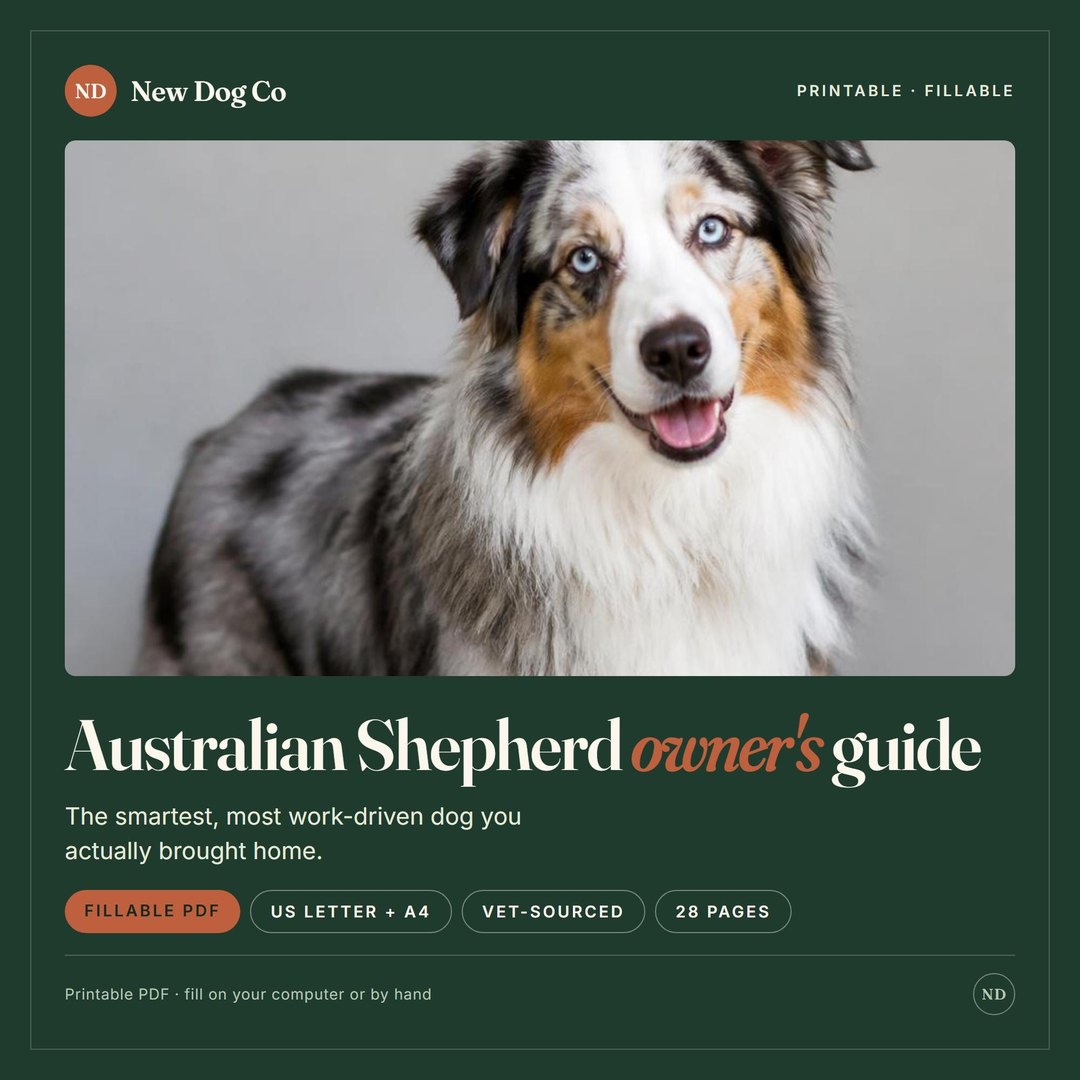
Is the Australian Shepherd right for you?
The Australian Shepherd is smart, athletic, and deeply bonded to its people, a dog that wants to work with you all day. That's the appeal, and it's also the catch. An Aussie is a herding dog bred to move livestock for hours, so it comes with a big engine and a busy brain that both need a job.
The downsides matter just as much. Without enough exercise and mental work, that energy turns into pacing, barking, destructive chewing, and herding behavior aimed at whatever moves, including children, cats, joggers, and bikes. Aussies can be wary of strangers and noise-sensitive, so early, positive socialization is essential. They shed, they're vocal, and they don't thrive left alone for long workdays.
If you're active, home enough to engage them, and love training, an Aussie is a brilliant companion. If you want a low-key dog that's happy with a short daily walk, this is the wrong breed, and choosing carefully now prevents heartbreak later.
Exercise, energy, and daily life
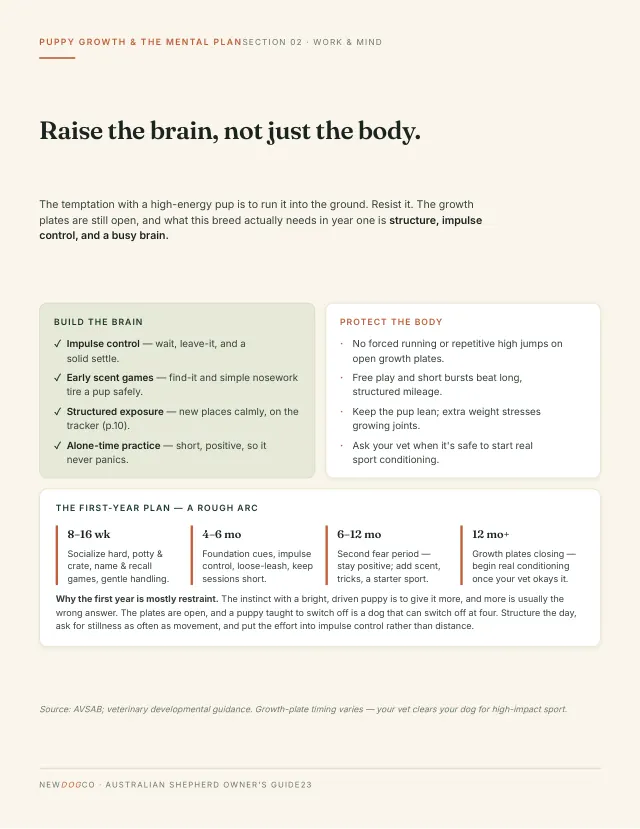
Plan for real daily work, not a token walk. Most healthy adult Aussies need well over an hour of solid physical activity plus separate mental work, and many happily do more. A tired body isn't enough; an Aussie that's exercised but bored will still find trouble.
Good outlets play to the breed's strengths: fetch and flirt-pole games, long hikes, running or biking alongside you, swimming, and structured dog sports. Aussies excel at agility, disc, rally, obedience, herding trials, and scent work, and these burn energy while satisfying the instinct to work with a handler.
Mental work is non-negotiable. Puzzle feeders, trick training, shaping games, snuffle mats, and short problem-solving sessions tire an Aussie as much as a run. Teach an off switch too: reward calm settling on a mat so your dog learns downtime, not just go. Rotate activities to prevent obsessive habits like light-chasing or fence-running, and always give a herding-drive outlet before you need one.
Grooming and the double coat
The Australian Shepherd wears a medium-length, weather-resistant double coat: a coarser outer layer over a soft insulating undercoat. It's built for the outdoors and generally handles heat and cold well, but it needs routine care to stay healthy and comfortable.
Brush thoroughly at least once or twice a week, more during the heavy seasonal sheds in spring and fall when the undercoat blows out. A slicker brush and an undercoat rake reach the dense underlayer and prevent mats behind the ears, in the armpits, and around the britches and tail. Regular brushing also cuts loose hair around the house; Aussies shed year-round and moderately, so this is a shedding breed, not a hypoallergenic one.
Bathe only as needed so you don't strip the coat's natural weatherproofing. Never shave a healthy double coat, as it can disrupt insulation and regrowth. Round out care with regular nail trims, ear checks, and dental care, and use grooming time to check skin, eyes, and coat condition.
Australian Shepherd health: what to watch for
Aussies are generally hardy, but the breed carries specific concerns worth discussing with your veterinarian. The most breed-critical is the MDR1 (ABCB1) gene mutation, common in herding breeds, which reduces the ability to clear certain drugs from the brain. Affected dogs can react badly to some common medications, including ivermectin at high doses and certain anesthetics and other drugs. A simple DNA test tells you your dog's status, and results guide safe dosing; tell every vet your dog is a herding breed and share the MDR1 result before any medication or anesthesia. Washington State University's veterinary pharmacology lab, which identified the mutation, offers this testing.
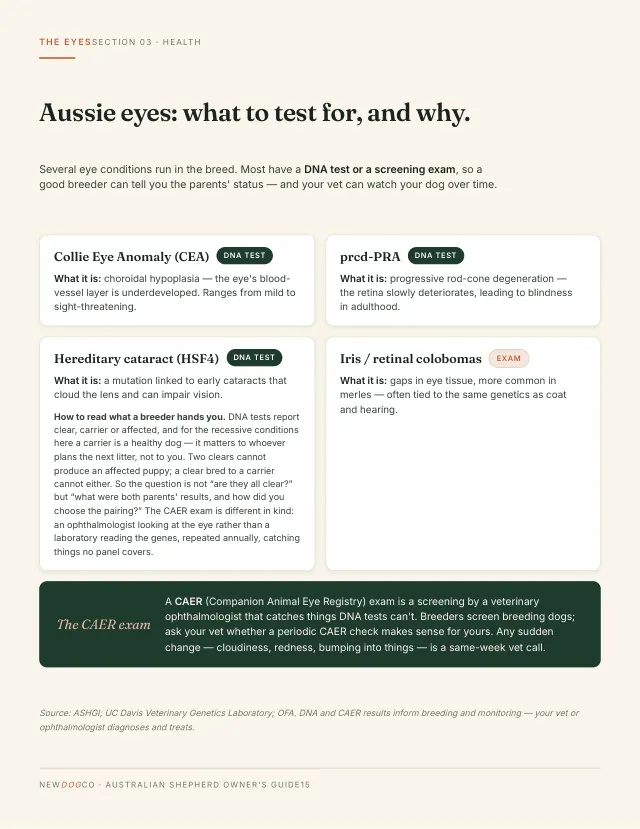
Other conditions the breed is screened for include collie eye anomaly, cataracts, hip dysplasia, and epilepsy. Responsible breeders test breeding dogs and register results with health databases such as OFA. For current, breed-specific health guidance, lean on your veterinarian, the AVMA and AAHA, veterinary ophthalmology and neurology specialists (ACVO, ACVIM), and the Australian Shepherd Club of America. This is guidance to support veterinary care, not replace it.
Training this breed
Aussies are among the most trainable dogs you'll meet, which cuts both ways: they learn good habits fast and bad ones just as fast. Use reward-based, force-free methods only. Positive reinforcement with food, play, and access to what your dog wants builds a confident, eager partner. Dominance, alpha rolls, prong or shock tools, and other aversive methods are unnecessary, damage trust, and can worsen fear and reactivity in a sensitive breed.
Start early and keep sessions short, upbeat, and frequent. Prioritize a rock-solid recall and impulse control, because a herding dog with speed and drive needs a reliable off-switch and a way to redirect chasing onto a toy or task. Channel the instinct into treibball, fetch with rules, or herding-style games rather than suppressing it.
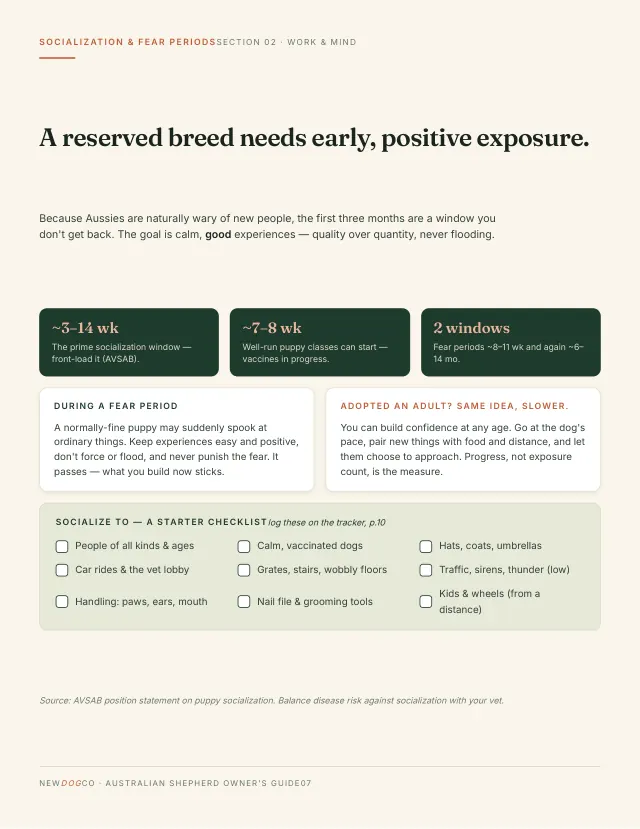
Socialize thoughtfully to new people, dogs, sounds, and surfaces so wariness doesn't harden into fear. If you see herding-related nipping at kids or pets, redirect calmly and reward the alternative; a certified reward-based trainer or behavior consultant can help early.
Living with the herding instinct
The trait that defines an Australian Shepherd, the drive to gather and control movement, doesn't switch off in a living room. Understanding it is the difference between a manageable dog and a frustrated one. That instinct is why an Aussie may circle, stare, crouch, and nip at heels when kids run, when the cat bolts, or when cyclists pass.
The goal isn't to erase the instinct but to give it a legitimate job. Provide a daily outlet before problems appear: a game of fetch with rules, a flirt pole, treibball with an exercise ball, or actual herding lessons if you have access. Teach a clear "leave it" and a settle cue, and reward your dog for choosing to disengage from moving triggers.
Manage the environment while you train. Supervise around young children and small pets, interrupt chasing early, and avoid situations that rehearse the behavior. With a real outlet and consistent, kind guidance, that famous drive becomes your Aussie's best feature instead of a daily battle.