
Is a Siberian Husky Right for You?
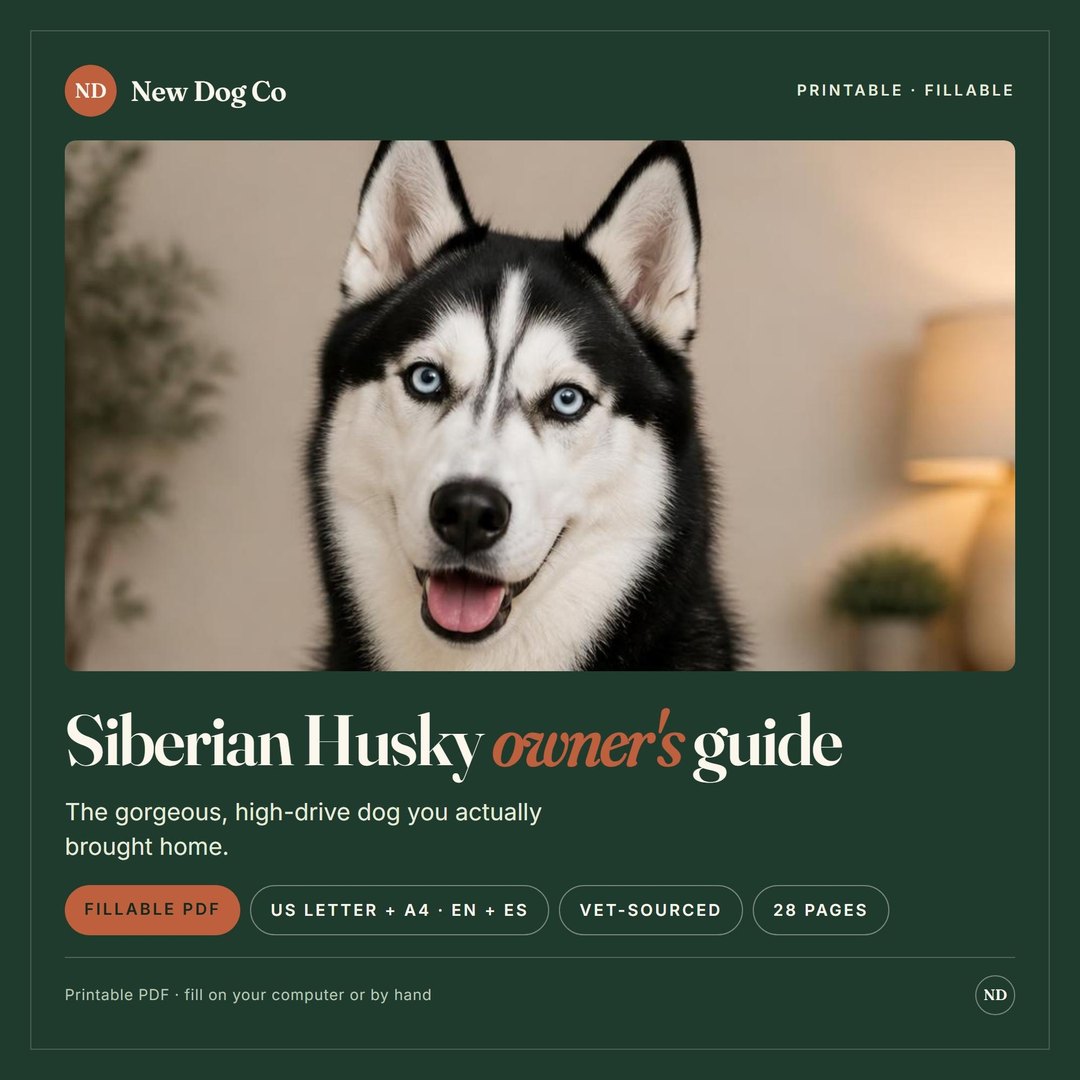
Siberian Huskies are friendly, sociable, and remarkably good-natured, which is exactly why they make a poor guard dog and a poor solitary pet. They were bred by the Chukchi people to pull light loads over long distances in a pack, and that heritage still drives their behavior: they want to move, they want company, and they make their own decisions.
The downsides are real. Huskies are notorious escape artists who dig under and climb over fencing, they are vocal and famously "talky" rather than barky, and they shed a great deal. Their independence means training takes patience and never produces robotic obedience.
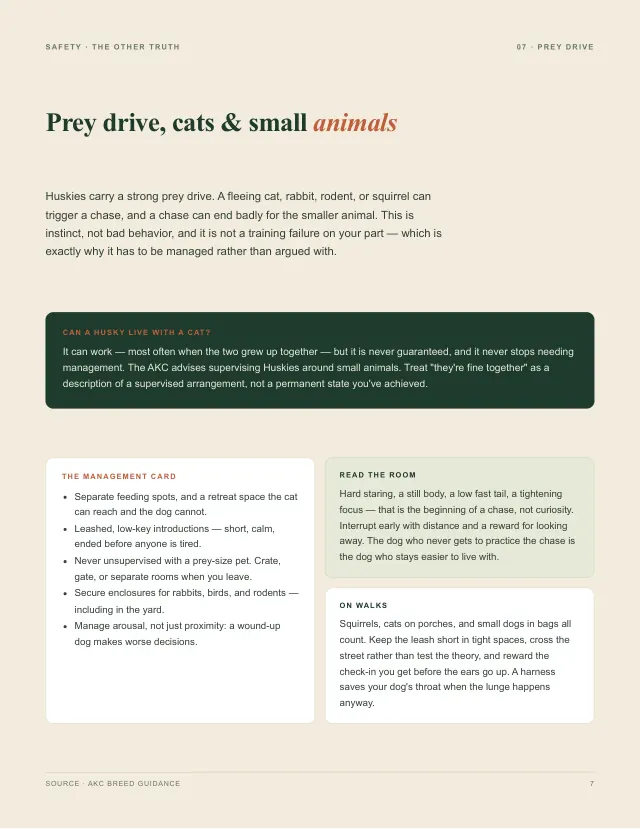
They are affectionate and generally great with people, including children when raised together, but their strong prey drive can make them risky around cats and small animals. This is a breed for someone who finds those traits charming, not exhausting. If you want a calm, off-leash, low-maintenance companion, a Husky will frustrate you.
Exercise, Energy, and Daily Life
The Siberian Husky is an endurance athlete, and no other trait shapes daily life more. A tired Husky is a manageable Husky; a bored, under-exercised one digs, escapes, howls, and dismantles your home. Plan on well over an hour of hard activity every day, and more for a young adult.
Running, hiking, biking alongside you, and dog sports like skijoring or bikejoring suit them beautifully. In warm climates, exercise in the cool of morning or evening, since their dense coat makes them prone to overheating.
Two rules never change. First, exercise them on leash or inside secure fencing, because their instinct is to run and their recall is famously unreliable. Second, add mental work: scent games, puzzle feeders, and training keep that busy mind occupied. Huskies also do best with company, whether human or canine, and struggle when left alone for long stretches. Match your lifestyle to a dog that needs a job, not a nap.
Grooming and the Double Coat
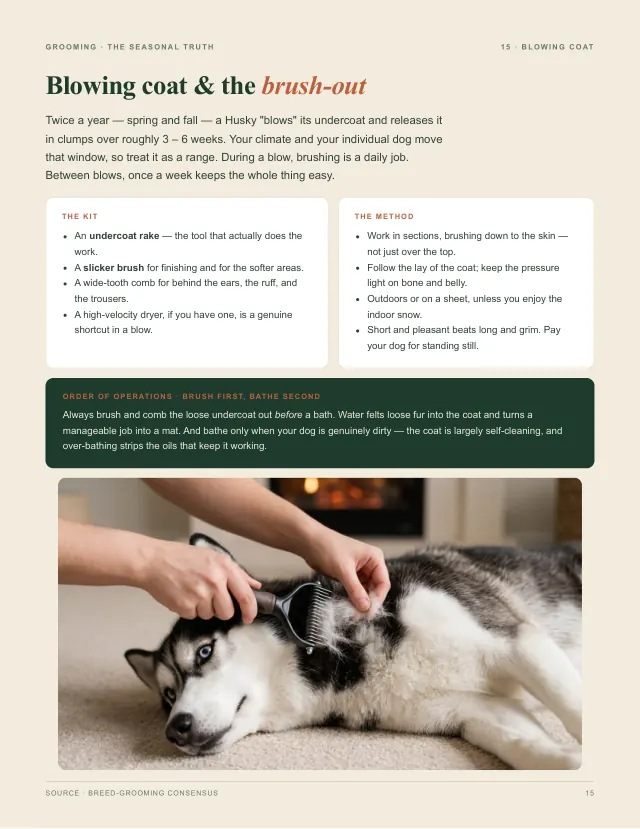
The Husky's thick double coat is built for arctic cold: a soft insulating undercoat beneath a straight outer guard coat. For most of the year, a weekly brushing keeps it healthy. Then, twice a year, the undercoat "blows" over a few weeks, and the shedding is dramatic. During those periods, daily brushing with an undercoat rake and a slicker keeps the fur under some control.
Never shave a Husky. The double coat insulates against heat as well as cold and protects the skin from sun; shaving it can disrupt regrowth and remove that protection. If your dog is ever clipped for a medical procedure, expect the coat to return unevenly.
Beyond coat care, keep to routine basics: trim nails, check and clean ears, and brush teeth regularly. Bathing is rarely needed, as the coat stays surprisingly clean and relatively odor-free. Establish grooming habits early so your Husky accepts handling calmly, using treats and short, positive sessions rather than force.
Siberian Husky Health: What to Watch For
Siberian Huskies are generally a hardy, athletic breed, but responsible ownership means knowing their specific risks and keeping up with screening. Guidance here supplements your veterinarian; it does not replace an exam.
Eyes are the standout concern. The breed is predisposed to several inherited eye conditions, including juvenile cataracts, corneal dystrophy, and progressive retinal atrophy (PRA). The Siberian Husky Club of America and OFA recommend regular eye evaluations by a veterinary ophthalmologist for breeding dogs, and owners should report cloudiness or vision changes promptly.
Skin and coat: Huskies are the classic breed for zinc-responsive dermatosis, which causes crusting skin lesions and responds to zinc supplementation under veterinary care. Hypothyroidism is also seen and can affect coat, weight, and energy; ACVIM and your vet can guide thyroid testing. Hip dysplasia occurs but is less common than in many breeds, and OFA screening of breeding stock helps. Choose a breeder who screens eyes, hips, and thyroid, and keep vaccinations and parasite prevention current per AAHA and AVMA guidance.
Training a Siberian Husky
Training a Husky means working with an intelligent, independent dog that was bred to think for itself, not to take orders. Reward-based, force-free methods are the only approach that works and the only one worth using. Dominance and aversive tools damage trust and backfire with a sensitive, clever breed.
Start early with socialization and short, upbeat sessions. Use high-value food rewards, keep things varied to hold their interest, and reward generously, because a Husky that finds you more interesting than the environment is a Husky that listens. Expect willing cooperation rather than crisp obedience.
Two priorities deserve extra work. Recall should be trained and rewarded relentlessly, but you should still never rely on it off leash in an open space, because prey drive can override any cue. Leash manners matter for a breed built to pull, so teach loose-leash walking patiently from puppyhood. Redirect digging and howling with enrichment rather than punishment, and remember that a well-exercised Husky is far easier to train.
Escape-Proofing and Prey Drive
No section matters more to a Husky's safety than containment, because this breed's defining flaw is a talent for getting loose. A Husky will dig under a fence, climb a chain-link one, slip a gate left ajar, or bolt through an open door, and once running, that endurance and prey drive can carry it miles before it thinks to stop.
Build your defenses deliberately. Use a fence at least six feet high, add a dig barrier or buried wire along the base, and secure gates with latches a clever paw cannot work. Never leave a Husky loose in an unfenced yard, and treat doorways as a management problem, using baby gates or careful routines to prevent bolting.
Because their prey drive is strong, small pets can trigger a chase, and off-leash freedom in open areas is simply unsafe. Microchip your dog, keep ID tags current, and always walk on a secure harness and leash. Escape-proofing is not overkill for this breed; it is basic responsible ownership.