
Read the whole dog, not one part
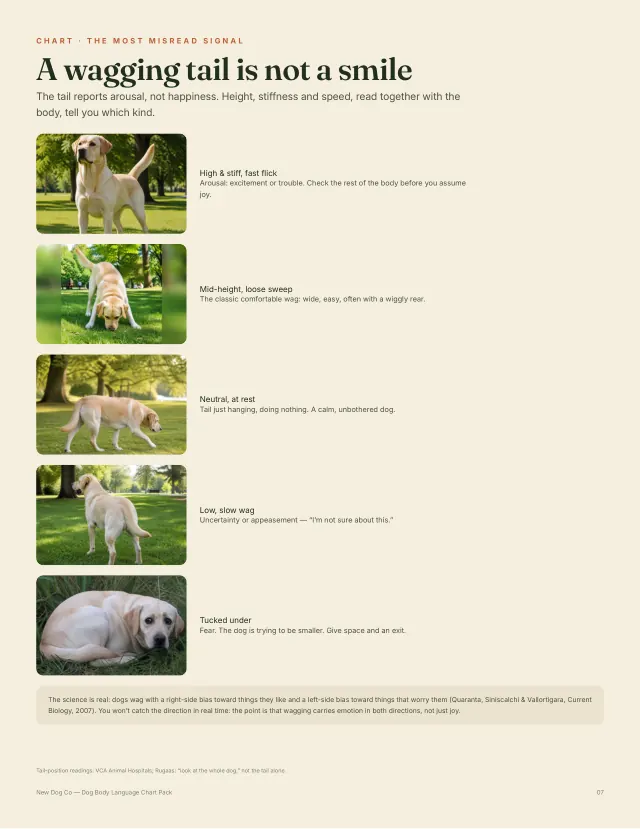
The single most common reading mistake is judging a dog by its tail. A wagging tail means arousal, not friendliness. A high, stiff, fast wag can sit right beside a hard stare and a closed mouth. The American Veterinary Society of Animal Behavior (AVSAB) and the ASPCA both stress that canine communication is a cluster: ears, eyes, mouth, tail, and overall posture read together, in context.
A useful habit is to scan five zones in order. Ears: forward and relaxed, or pinned back and flat? Eyes: soft and blinking, or wide with tension? Mouth: loose and slightly open, or tight and closed? Tail: neutral height and loose, or clamped low or flagged high and rigid? Body: weight even and loose, or leaning away, frozen, or lowered? One relaxed signal does not cancel three tense ones. When the parts disagree, believe the tense ones.
Calming and appeasement signals
Norwegian trainer Turid Rugaas popularized the idea of calming signals — small, easy-to-miss behaviors dogs use to defuse tension in themselves and others. These are worth knowing because they are the earliest, quietest requests for space.
- Lip licks and tongue flicks when no food is present
- Yawning outside of tiredness
- Looking away or turning the head and body aside
- Slowing down, moving in a curve rather than head-on
- Sniffing the ground suddenly during a social moment
A dog offering these is not being stubborn or distracted. It is asking the interaction to soften. The right response is to give a little space, drop your intensity, and let the dog reset. Reading these early is what keeps a situation from ever climbing toward a growl.
Stress and warning signs to respect
When calming signals do not work, dogs escalate to clearer distance-increasing signals. Learn these and you will rarely be surprised by a bite.
- Whale eye: the whites of the eyes show as the dog holds its head still but tracks you sideways
- A hard stare: fixed, unblinking, aimed at a person, dog, or resource
- A stiff freeze: the dog goes momentarily still and rigid; this often comes right before a snap
- Closed, tense mouth and a wrinkled muzzle
- A growl: clear, honest communication
The most important rule here comes from behavior professionals like the late Dr. Sophia Yin and is echoed by AVSAB: never punish a growl. A growl is a dog telling you it is uncomfortable and giving you a chance to fix the situation. Punish it and you do not remove the discomfort — you remove the warning, teaching the dog to go straight to a bite next time. Instead, calmly increase distance, end the trigger, and note what caused it so you can manage or work on it later.
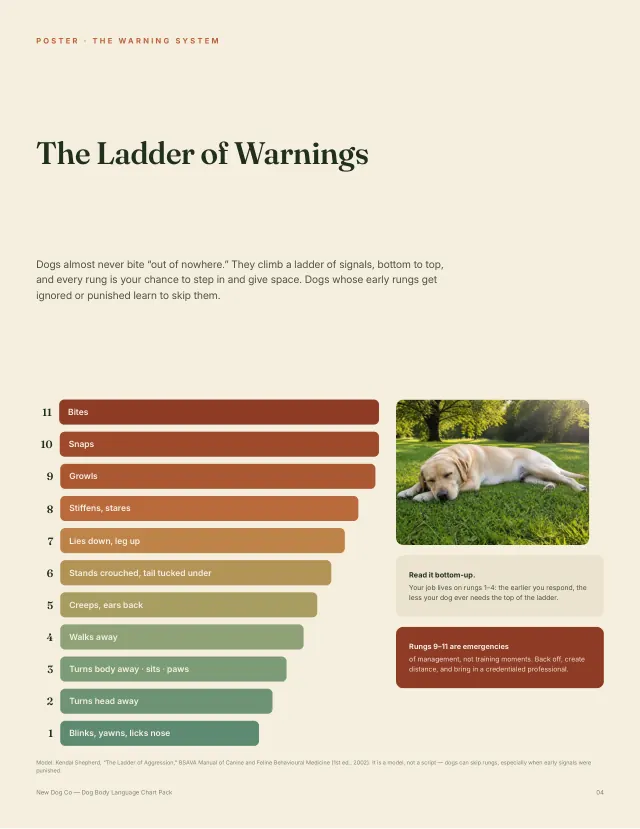
The ladder of aggression
Veterinary behaviorists describe a ladder of aggression (originally from Kendal Shepherd) to show how a dog moves from mild to serious signals when its earlier requests are ignored. The lower rungs are the calming signals: yawning, lip licking, turning away. The middle rungs add walking off, creeping with a low tail, and standing crouched. Only at the top do you get stiffening, growling, snapping, and finally biting.
The lesson is not that biting is unpredictable — it is that people usually miss the bottom of the ladder. Bites labeled "out of nowhere" almost always had a dozen quiet warnings first. If you respond at the lip lick, you never reach the growl. The chart pack lays these rungs out so the low, easy-to-miss signals get the attention they deserve.
Why this prevents bites
The AVSAB and the American Animal Hospital Association (AAHA) endorse reward-based, force-free handling precisely because fear and conflict drive most bites, and punishment increases both. When you can read the early signals, you change the situation before the dog feels cornered — you add distance, remove the pressure, and let the dog choose to disengage.
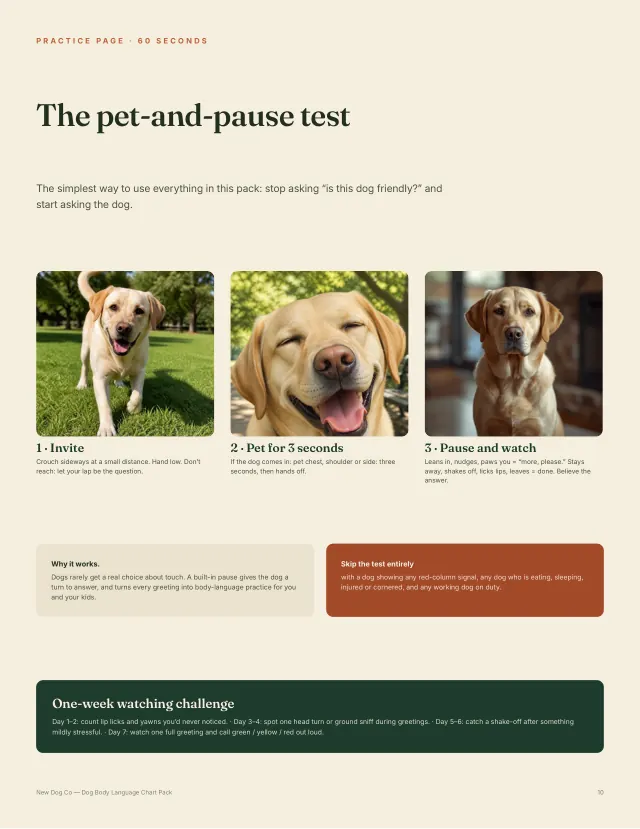
This matters most around children. The ASPCA notes that many child-directed bites happen during close, face-to-face contact: hugging, leaning over a resting dog, reaching into a crate. A dog showing whale eye, a lip lick, or a freeze in those moments is asking for space it cannot get. Teaching the whole household to spot that one signal is one of the highest-value things a dog owner can do. Keep the charts somewhere everyone sees them, practice naming signals out loud, and give the dog the room it is asking for.