Why Fireworks Hit Some Dogs So Hard
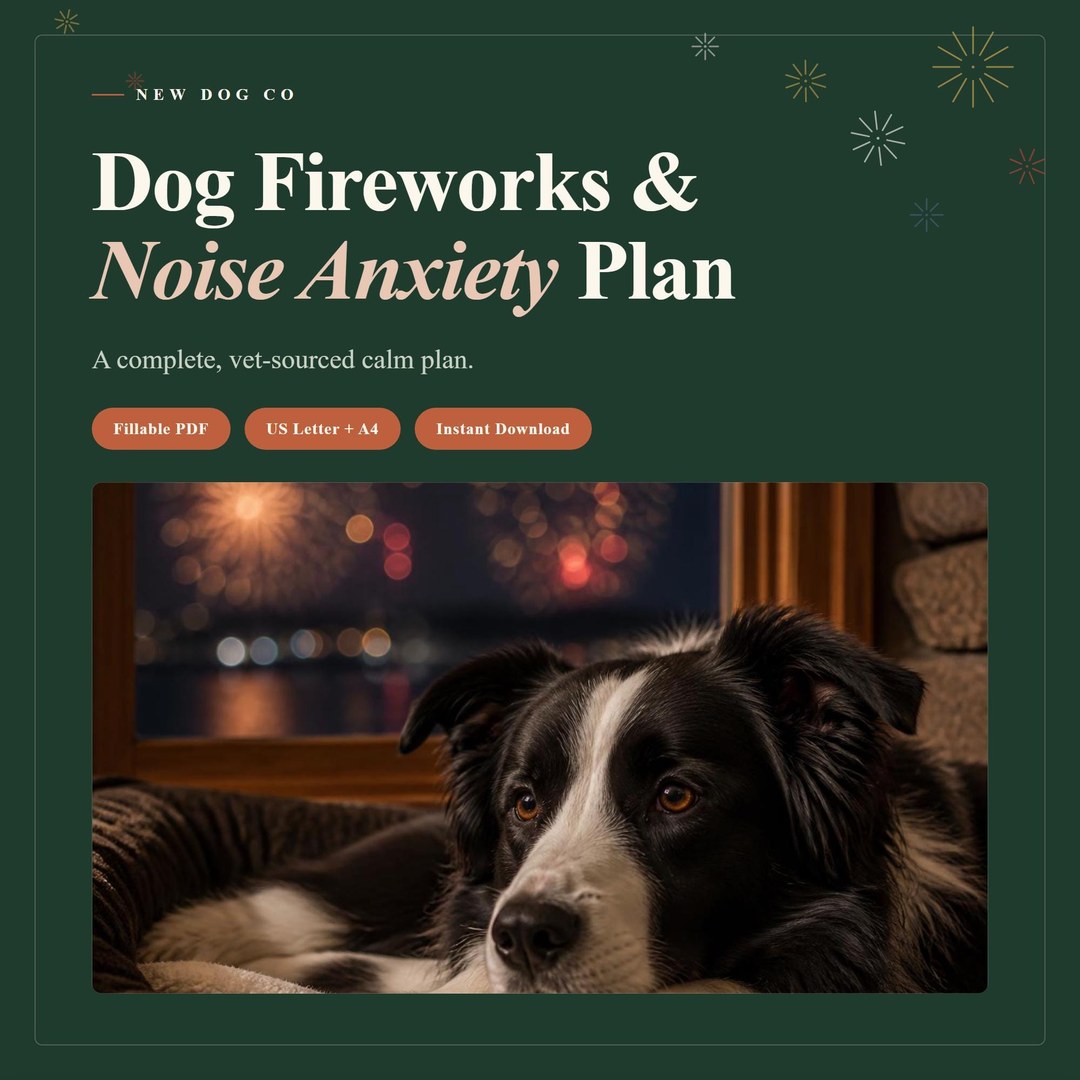
Noise fear is not stubbornness or a training failure. A 2023 review of the research by Stefanie Riemer in the journal Animals estimates that between a quarter and half of pet dogs are affected by noise fears, and calls it the most prevalent behavior problem in dogs. Most affected dogs show signs in their first or second year, and the fear often grows with age if nothing changes.
Fireworks stack several alarms at once: the bang is loud, sudden and impossible to predict, and it arrives with flashes, vibration and the smell of smoke. The AVMA warns that fireworks can startle animals badly enough to make them run away, which is why a noisy night is also a lost-dog night.
The plan opens with a one-page self-assessment. You tick the signs you see, from lip-licking and yawning, to trembling and hiding, to bolting, loss of bladder control or self-injury, and each column tells you what to do next: start the program early, go slow and consider the vet page, or talk to your veterinarian before the season begins. Knowing where your dog sits keeps you from under- or over-reacting.
Weeks Ahead: Desensitization and Counter-Conditioning
The long-term fix is gradual. VCA Animal Hospitals describes the standard method as systematic desensitization and counter-conditioning: play the frightening sound so quietly that your dog stays relaxed, pair it with something wonderful such as high-value treats, and raise the intensity only in small steps. VCA also advises starting at a time of year when fireworks and storms are unlikely, so a real bang does not undo the work.
The program pages turn that into something you can run. There are four rules (stay under threshold, keep sessions short, end on success, go slow), a 10-level volume ladder from barely audible to realistic, and a two-page session log for the date, sound source, volume, duration, a 1-to-5 calm score and the treat you paired. The plan suggests about three 5-to-10-minute sessions a week over six to eight weeks, moving up a level only when calm scores hold at 4 or 5 for about three sessions.
Recordings have limits. The 2023 review points out that a speaker cannot reproduce the full range of a real firework, the flashes are missing, and some dogs ignore recordings yet still panic on the night. That is why the plan pairs the practice with management and a night-of routine. In the same review, feeding or playing with a dog during real noise events was linked to improvement in owner reports.
A Safe Den and Steady Sound
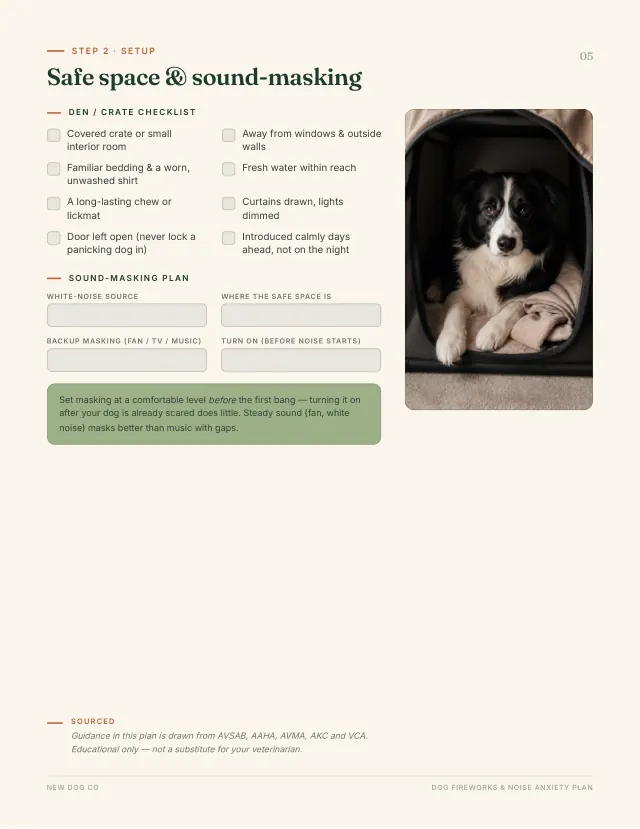
A frightened dog needs somewhere to go. The ASPCA suggests an interior room with no windows and some soft music, and the 2023 review recommends a comfortable crate, covered to block the flashes if your dog likes that, with curtains and blinds closed, as long as the dog can always go in and out freely. Shutting a panicking dog inside is the opposite of a safe space.
The setup page gives you an eight-point den checklist: a covered crate or small interior room away from windows and outside walls, familiar bedding and a worn, unwashed shirt, fresh water, a long-lasting chew or lick mat, curtains drawn and lights dimmed, the door left open, and an introduction days ahead rather than on the night. Below it sits a sound-masking plan with lines for your white-noise source, where the den is, a backup (fan, TV or music) and the time you will switch it on.
Timing matters more than the device. The plan has you start masking before the first bang, because switching it on once your dog is already scared does little, and it favors steady sound such as a fan or white noise over music with quiet gaps. VCA lists white noise and background music among the practical tools for storm and fireworks season.
The Night Itself: Before, During and After
The action-plan page is built for New Year's Eve, July 4th, thunderstorms and bonfire night. Before the noise: an early walk and potty break, dinner a little earlier than usual, windows and curtains closed, the den and masking ready, doors, gates and the yard secured, the ID tag and microchip double-checked, and any vet-prescribed medication given on its timing. The AKC suggests getting the long walk in before sunset and keeping a leash on even in a fenced yard.
During the noise, stay calm and let your dog hide where they feel safe. Comforting is fine. Older advice, still repeated on some clinic pages, says to ignore a scared dog, but the 2023 review concluded that ignoring a fearful dog who seeks contact is not advisable, and that calm stroking and talking lowered stress signs in studies. Never punish fear; VCA notes that punishment only confirms there is something to be afraid of. Keep the masking sound on, and keep your dog indoors while fireworks are going off.
Afterward, wait for quiet before the late potty trip, keep your dog leashed, and check the yard first. The AVMA recommends looking for fireworks debris before pets go out, and the ASPCA warns that fireworks contain chemicals and heavy metals that are dangerous if eaten. A calm-kit checklist on the same page covers chews or a lick mat, a favorite toy, a worn shirt, a white-noise device, a snug anxiety wrap, vet-approved medication, a water bowl and bags for the late walk.
When Medication Belongs in the Plan
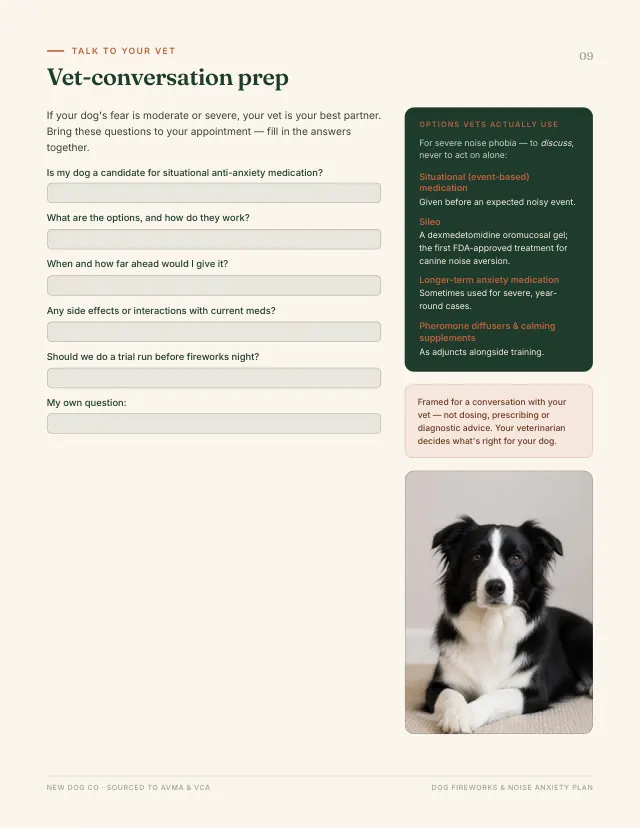
For moderate or severe noise fear, medication is ordinary, evidence-based care, not a failure. The AVMA advises that dogs with a history of fireworks anxiety may benefit from behavioral therapy to desensitize them, and that some may need medication from a veterinarian or veterinary behaviorist. VCA describes two broad approaches: an event-based medication given before an expected storm or fireworks display, and a daily medication such as a serotonin reuptake inhibitor for dogs whose fear lasts all season.
There are FDA-approved options for noise aversion in dogs, including a dexmedetomidine gel applied to the gums, and in May 2026 the FDA approved tasipimidine oral solution as the first drug for both noise aversion and separation anxiety. The ASPCA recommends giving a practice dose before the big night to see how your dog responds, and never sharing a prescription with another animal. The 2023 review adds that a sedative such as acepromazine on its own is the wrong tool, because it lacks any anti-anxiety effect.
The vet-prep page lists the questions to bring: whether your dog is a candidate for situational medication, what the options are and how they work, when and how far ahead to give it, side effects and interactions with current medication, and whether to do a trial run before the big night. You and your vet fill in the answers together. The plan never gives doses; that decision belongs to your veterinarian.
If Your Dog Bolts, and How Next Year Gets Easier
Prepare for the night you hope never comes. The emergency page holds your dog's name and description, microchip number, chip registry and phone, collar and tag details, your number, your vet, the nearest 24-hour emergency vet, and an alternate contact with the places your dog might run to. The AVMA's advice lines up: current ID tags, a microchip with up-to-date registry details, and a recent photo taken before the holiday. A ready-to-copy note asks neighbors for a heads-up on when they plan to set off fireworks.
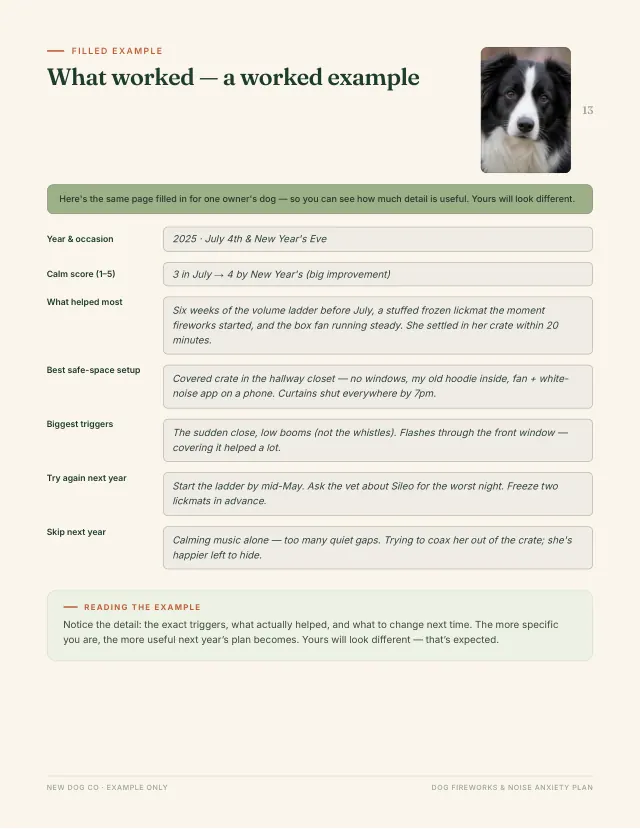
The last pages are about the long game. A reusable 'what worked this year' tracker records the occasion, a calm score, what helped most, the best den setup, the biggest triggers, and what to repeat or skip, with a filled-in example so you can see the level of detail that pays off. A year-to-year table lets you watch the calm score change across seasons, and a one-page quick reference keeps the essentials where you can find them.
The plan is candid that noise fear is rarely cured outright. It is managed, and good management gets easier every season. Every page follows reward-based, force-free principles, and the whole plan is designed to sit alongside your veterinarian's advice, never to replace it.