
Is the Miniature Poodle Right for You?
The Miniature Poodle is one of the most trainable companion dogs you can own. It is quick to learn, eager to work with you, and forms a strong bond with its household. That intelligence is the joy and the catch: a Miniature Poodle that is under-exercised, under-stimulated, or left alone too long often invents its own entertainment, which can mean barking, chewing, or anxious habits.
This breed wants to be near its people. It is not a dog that thrives ignored in a yard. Expect a shadow who follows you room to room and wants a job to do.
Honest downsides: the coat demands ongoing professional grooming and cost, the dog can be sensitive and reactive to a chaotic or harsh household, and boredom becomes a behavior problem fast. If you want a smart, affectionate partner and you enjoy the daily work, this breed rewards you. If you want low effort, look elsewhere.
Exercise, Energy, and Daily Life
Miniature Poodles are athletic and were bred to work. A short stroll around the block is not enough. Most do well with roughly an hour of activity a day, split across walks, play, and training, though your individual dog may want more or less.
Mental work matters as much as physical. This is a thinking breed, and a tired body with a bored brain still leads to trouble. Rotate through activities so the routine never goes stale:
- Brisk daily walks with time to sniff and explore
- Fetch and recall games in a safe, enclosed space
- Food puzzles, scent games, and short trick sessions
- Dog sports like agility, rally, or obedience, which this breed excels at
Because they are so people-focused, the best exercise usually involves you. Interactive play and training double as bonding and burn mental energy at the same time. Build a predictable daily rhythm and your Miniature Poodle will settle far more easily indoors.
Grooming and the Curly Coat
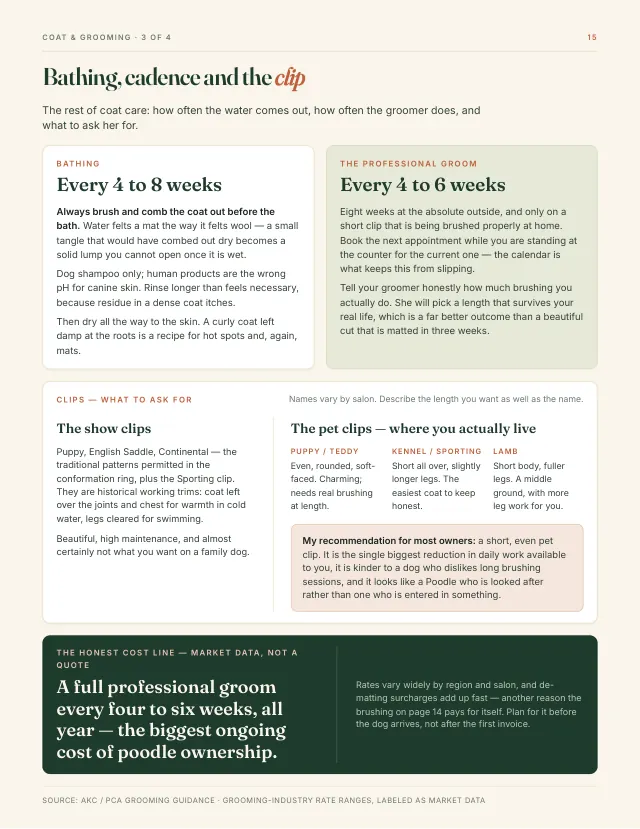
The single biggest ongoing commitment with this breed is the coat. A Miniature Poodle's curls grow continuously, like human hair, rather than shedding out seasonally. That means low shedding and low dander, but it also means the coat mats if it is not maintained, and matting is uncomfortable and can hurt the skin.
Plan on professional grooming or clipping every four to six weeks for the life of the dog. Between appointments, brush and comb regularly, ideally most days, working down to the skin so mats do not form near the surface. Pay attention to friction areas: behind the ears, the armpits, and the collar line.
Routine grooming also covers nail trims, ear cleaning, and keeping the hair around the eyes and paws tidy. Budget for this before you commit. Grooming is not optional upkeep for a Poodle, it is core care, and skipping it leads to painful mats, skin problems, and expensive shave-downs.
Miniature Poodle Health: What to Watch For
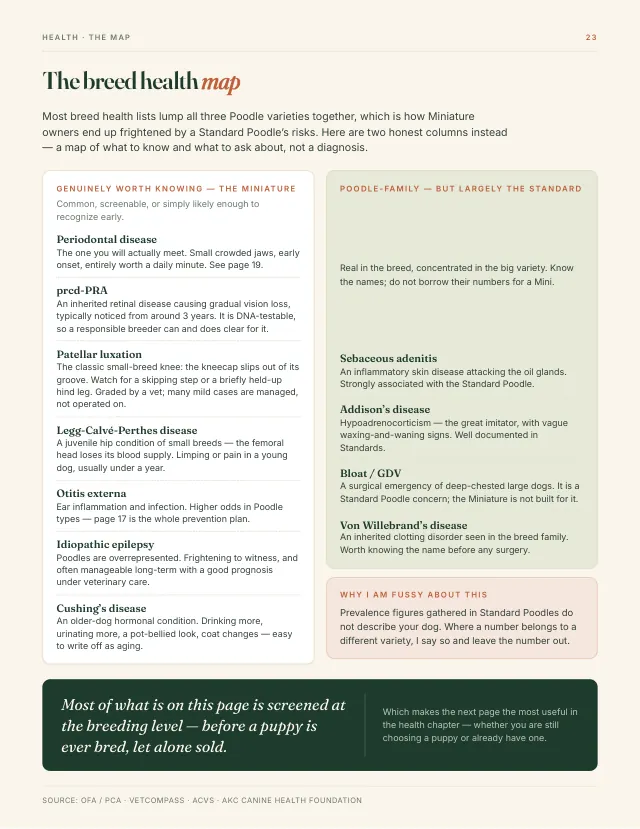
These dogs are generally long-lived, but the breed has known predispositions worth understanding. Choosing a breeder who screens breeding dogs, per the Orthopedic Foundation for Animals (OFA) and parent-club recommendations, meaningfully lowers risk.
- Patellar luxation (slipping kneecap) and Legg-Calvé-Perthes disease, a hip condition seen in small breeds
- Progressive retinal atrophy (PRA), an inherited eye disease that can lead to blindness; a genetic test exists
- Epilepsy, Addison's disease (hypoadrenocorticism), and sebaceous adenitis, a skin condition the breed is associated with
- Dental disease, common in smaller dogs and a reason home tooth care and vet dental checks matter
The American Veterinary Medical Association (AVMA) and American Animal Hospital Association (AAHA) support routine wellness exams, and specialty groups like the American College of Veterinary Internal Medicine (ACVIM) describe conditions such as Addison's. Use this guide's health log to track weight, dental care, and any changes, and bring concerns to your veterinarian promptly. This is guidance to support veterinary care, not a substitute for it.
Training This Breed
If you enjoy training, the Miniature Poodle is a gift. This breed learns fast, remembers well, and loves working with you, which is exactly why reward-based methods shine here. Mark and reward the behavior you want with food, play, or praise, and this dog will offer it again eagerly.
Keep sessions short, upbeat, and frequent. A few five-minute sessions across the day beat one long drill, and they suit the breed's quick, sensitive mind. Because Poodles read your mood, harsh corrections tend to backfire, creating a worried, shut-down dog rather than a cooperative one. Force-free methods are not just kinder here, they work better.
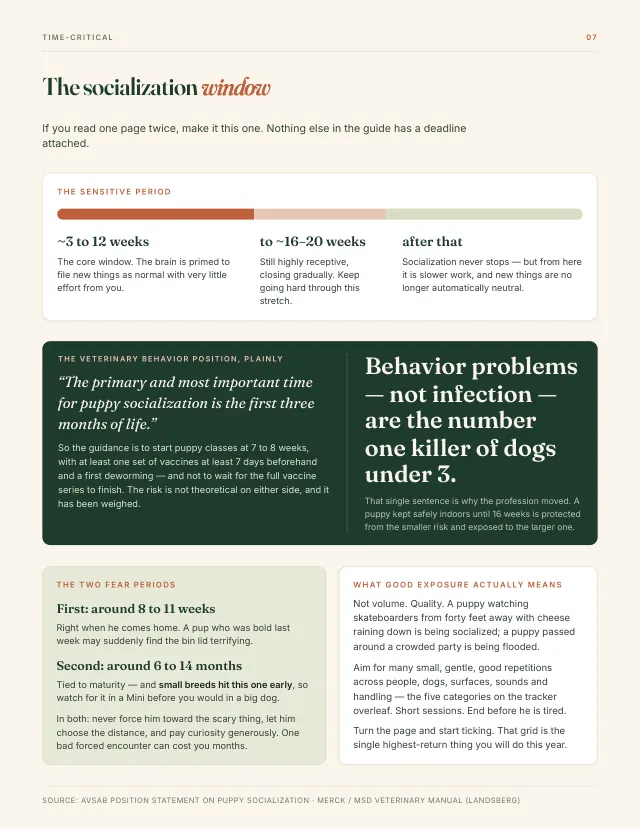
Prioritize early socialization, calm greetings, and settling on cue, since this attentive breed can wind up if the household is chaotic. Channel that clever brain into tricks, sports, and problem-solving games. A Miniature Poodle with a job and clear, consistent rewards becomes a delightful, easy companion. One left to freelance becomes a handful.
Living With a Miniature Poodle Day to Day
Beyond exercise and grooming, a Miniature Poodle shapes the rhythm of your home. This dog wants to be involved, so plan for company. Many struggle with being left alone for long stretches, and separation-related stress is a real risk in such a people-bonded breed. Gradual alone-time training and enrichment for when you are out help a great deal.
Apartments can work if the dog gets its daily exercise and mental work, though some Miniature Poodles are quick to bark at hallway noise, so teaching a quiet cue early pays off. With children, they often do well in gentle, supervised homes, but their sensitivity means rough handling is a poor fit.
Feed a quality diet in measured portions, since small dogs gain weight easily and extra pounds strain those vulnerable knees. Keep dental care and grooming on schedule. Give this breed structure, attention, and a job, and it becomes one of the most rewarding companions you can share a home with.