
Is a Chihuahua Right for You?
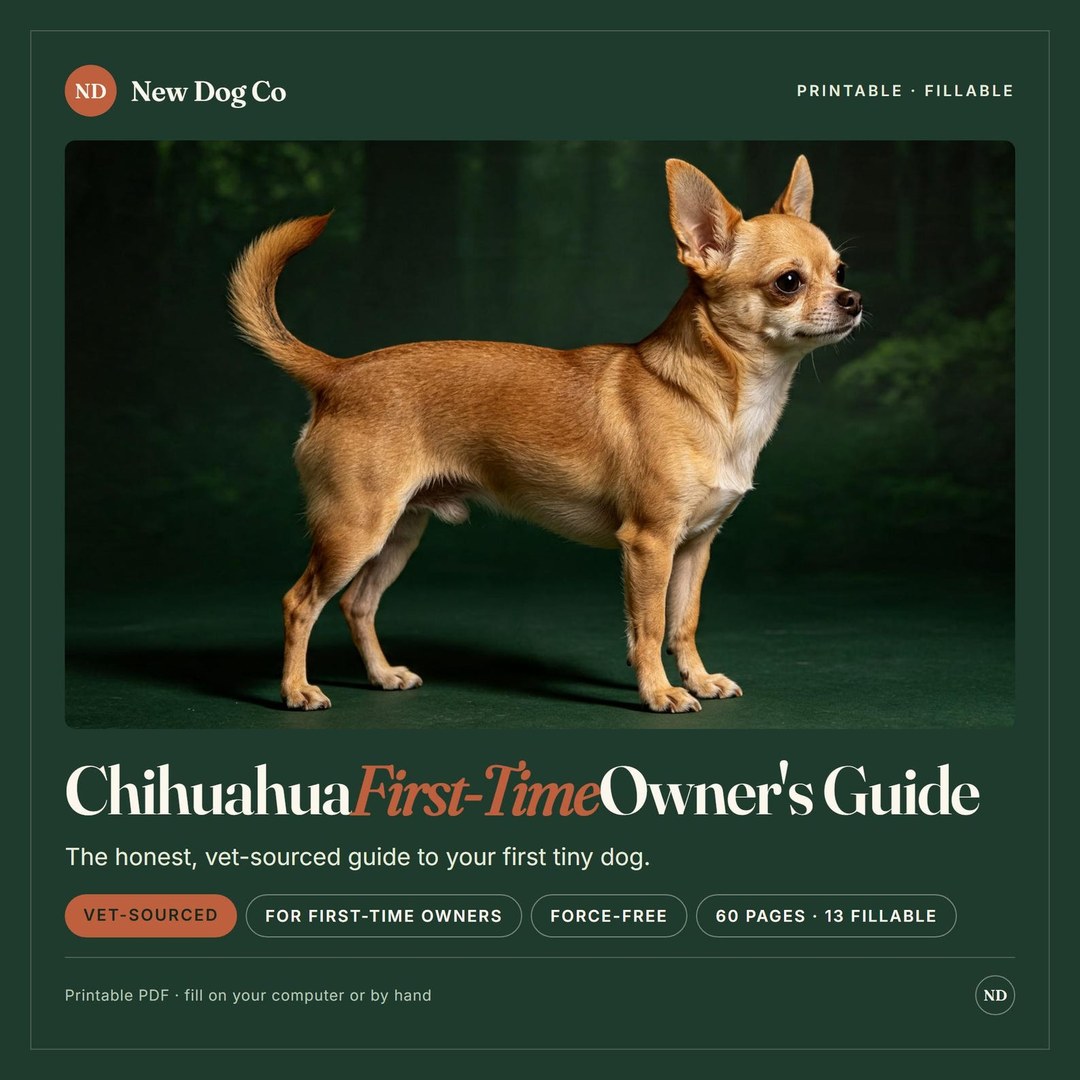
The Chihuahua is bold, alert, and deeply attached to its people, often bonding most closely with one or two family members. In a calm home with early socialization, a Chihuahua is curious and confident. The breed's yappy, snappy reputation is usually the result of under-socialization and fear, not a fixed personality, so the way you raise the dog matters enormously.
Honest downsides: Chihuahuas are physically fragile and can be seriously injured by a fall, a jump from the couch, or rough handling, so they are a poor match for homes with unpredictable toddlers or heavy foot traffic. They are cold-sensitive and often dislike being grabbed or picked up carelessly. Many are wary of strangers and can bark to create distance when frightened.
They fit best with patient owners who enjoy a small, close companion, can supervise interactions with children, and will protect the dog rather than hand it around. If you want a rugged, independent, or hands-off dog, this is not the breed.
Exercise, Energy, and Daily Life
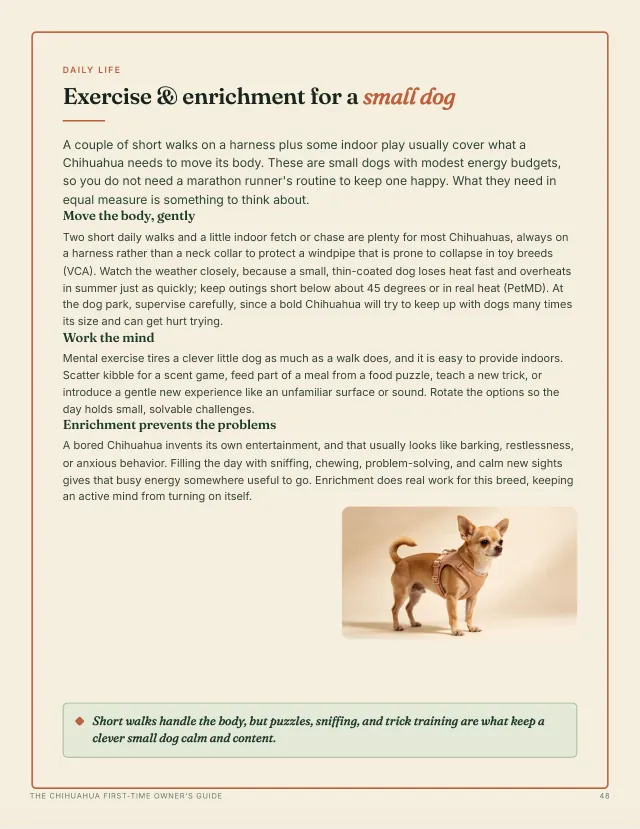
Chihuahuas are energetic in short bursts rather than endurance athletes. Two short daily walks plus indoor play and sniffing games usually satisfy their bodies and minds. A little structured activity goes a long way, and mental enrichment such as food puzzles and gentle training keeps a smart small dog from getting bored and vocal.
Because of their size, protect them from overexertion in heat and from chilling in cold. Many Chihuahuas really do need a sweater in winter and shade and water in summer. Use a harness rather than a neck collar on walks to keep pressure off a windpipe that can be prone to collapse.
Daily life is largely indoors, which is why this breed can thrive in apartments. Provide warm resting spots, keep them off high furniture unless they have a ramp or steps, and supervise stairs. Watch weight closely: even a small amount of extra fat is a large percentage of a tiny dog's body and adds strain to joints and the heart.
Grooming and Coat Care
Chihuahuas come in two coat types. Smooth-coat dogs have short, close fur and need only occasional brushing, while long-coat dogs have soft, slightly feathered fur that benefits from brushing a couple of times a week to prevent tangles. Both types shed, usually modestly, and a weekly brushing session helps manage loose hair and keeps you checking the skin.
Bathe only when needed with a gentle dog shampoo, and dry them fully because small dogs chill quickly. Trim nails regularly, since tiny nails grow fast and long nails change how the dog stands and moves. Check and gently clean ears, and watch for redness or odor.
The single most important grooming task is dental care. Chihuahuas have crowded teeth in a small jaw and are prone to plaque, tartar, and gum disease. Daily or near-daily tooth brushing with dog toothpaste, plus professional cleanings recommended by your veterinarian, protects both the mouth and overall health.
Chihuahua Health: What to Watch For
Chihuahuas are long-lived, often reaching their mid-teens, but the breed has recognized health concerns worth understanding. Reputable sources including the AVMA, AAHA, the Orthopedic Foundation for Animals (OFA), the American College of Veterinary Internal Medicine (ACVIM), and the breed parent club describe the patterns below. This is guidance to discuss with your veterinarian, not a diagnosis.
- Patellar luxation: the kneecap slips out of place, causing a skip or hop in the step; small breeds are commonly affected.
- Dental disease: crowded teeth make periodontal disease very common, which is why home brushing and cleanings matter.
- Tracheal collapse: a weak windpipe can cause a honking cough; a harness helps reduce pressure.
- Mitral valve disease: a common acquired heart condition in small breeds, often first noticed as a murmur by your vet.
- Hydrocephalus and an open molera: some Chihuahuas have a soft spot on the skull; discuss any concerns with your vet.
- Puppy hypoglycemia: tiny puppies can develop low blood sugar, so frequent small meals matter early on.
Choose a breeder who screens for knee, heart, and eye issues, and keep up regular veterinary checkups.
Training Your Chihuahua
Chihuahuas are intelligent and eager to work for rewards, so positive, reward-based training is both effective and essential. Harsh corrections, dominance approaches, and aversive tools only increase fear in a small dog that already tends to bark from anxiety. Keep sessions short, upbeat, and rich with tiny treats and praise.
Prioritize early socialization above all. Gently introduce your Chihuahua to new people, gentle handling, household sounds, and calm dogs, letting the dog approach at its own pace and pairing new things with treats. This is the best prevention for the fear-based reactivity behind the breed's barky reputation.
House-training can take patience because small bladders need frequent, consistent trips outside; a reliable routine and generous rewards work better than scolding. Teach a comfortable hand-scoop pick-up so your dog does not fear being lifted, and practice gentle body handling for vet and dental care. Avoid carrying the dog everywhere, which prevents it from learning confidence on its own four feet.
Protecting a Tiny, Fragile Companion
The defining challenge of Chihuahua ownership is managing a big personality in a very small, delicate body. A jump from a bed or a mis-step off a lap can fracture a leg, and even friendly rough handling from a child can cause serious injury. This is why supervision and gentle-handling rules are non-negotiable, especially around young children and larger dogs.
Build a safe environment: ramps or steps to favorite furniture, blocked gaps behind couches, and calm spaces where the dog can retreat. Teach everyone in the home to let the dog approach rather than snatch it up, and to support the chest and hindquarters when lifting.
Keep your Chihuahua warm, since heat-loss is real for a tiny body, and watch weather in both directions. Treat this dog as a real companion with needs, not a purse accessory. A Chihuahua that feels safe, warm, and understood becomes the affectionate, spirited, long-lived friend the breed is loved for.