Is a Pit Bull right for you?
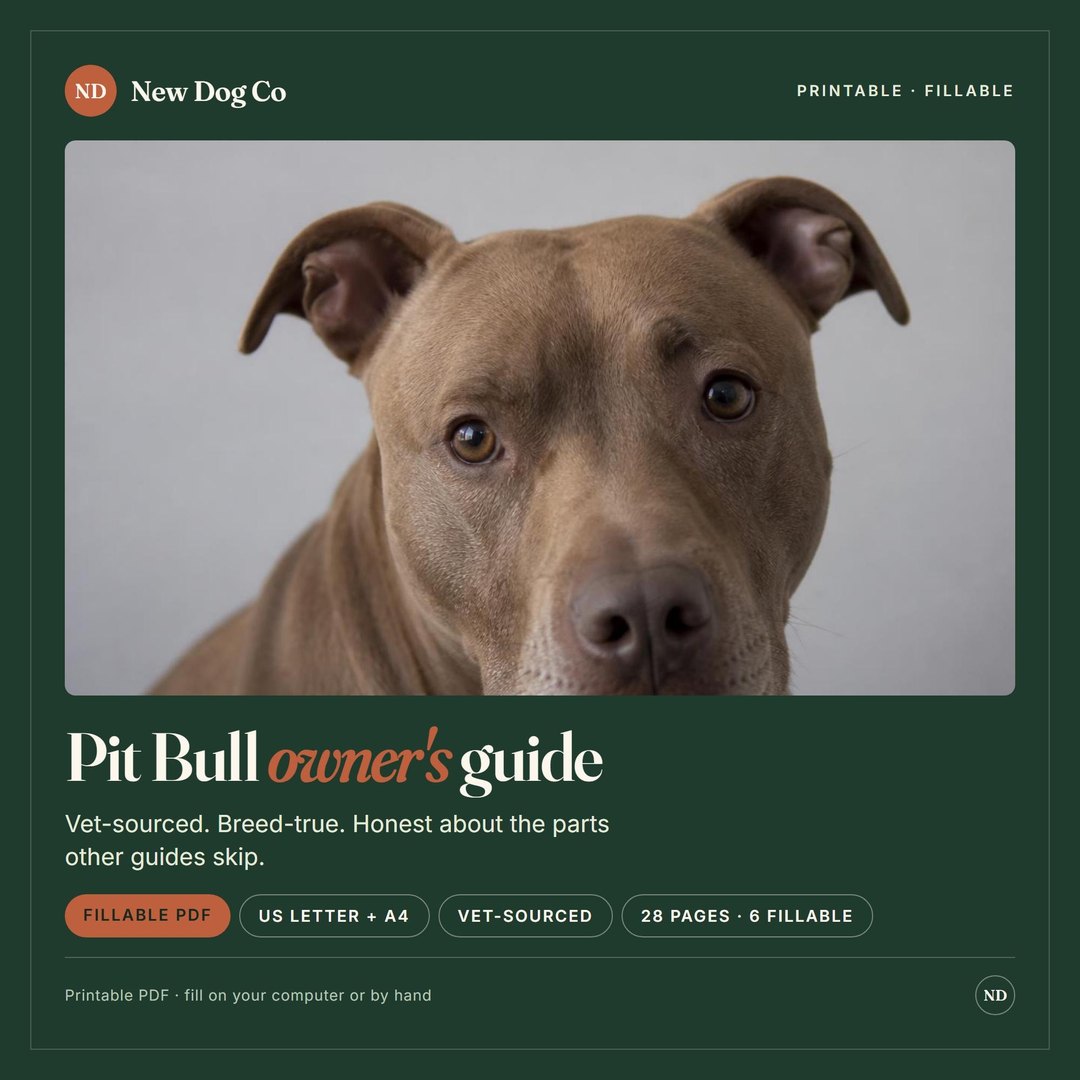
Pit Bull-type dogs are, by temperament, strikingly people-oriented. Bred from bull-and-terrier stock originally used for bull-baiting and, later, dog-fighting, and since kept widely as farm, catch, and companion dogs, well-bred and well-raised individuals tend to be affectionate, confident, and eager to be with their people. That history is also why these dogs can carry an innate, genetically influenced variability in tolerance toward other dogs: a tendency good socialization manages but does not erase.
The downsides are real. This is a strong, athletic dog that needs an owner who trains and manages, not one who leaves things to chance. Dog-dog tolerance varies considerably between individuals, so a Pit Bull is not a guaranteed dog-park dog, and you must supervise interactions. You will also navigate breed-specific legislation, breed clauses in some leases, and insurance questions. None of this is a dealbreaker, but it means this breed rewards a committed, present owner and frustrates a casual one.
Exercise, energy, and daily life
A Pit Bull is built to move. Muscular and powered by a strong work ethic, most adults need substantial daily physical exercise plus mental work to feel settled. Think brisk walks, structured play, tug done with rules, flirt-pole sessions, and safe off-leash running in secure areas rather than crowded dog parks.
Just as important is the mental side. These dogs are clever and thrive on having a job. Food puzzles, scent games, chew items, and short training sessions throughout the day drain energy that would otherwise turn into chewing, digging, or restlessness. A bored, under-exercised Pit Bull is where many so-called behavior problems begin.
Secure containment matters. A strong, athletic dog needs solid fencing and reliable leash habits, both for the dog's safety and to be a good neighbor. Plan your day around one or two real outings plus enrichment, and this breed becomes a calm, content housemate.
Grooming and coat care
The short, stiff, single coat is one of the easier parts of Pit Bull ownership. A weekly once-over with a rubber curry brush or grooming mitt removes loose hair and keeps the coat glossy. They do shed, more than people expect for a short-coated dog, but regular brushing and a quality diet keep it manageable.
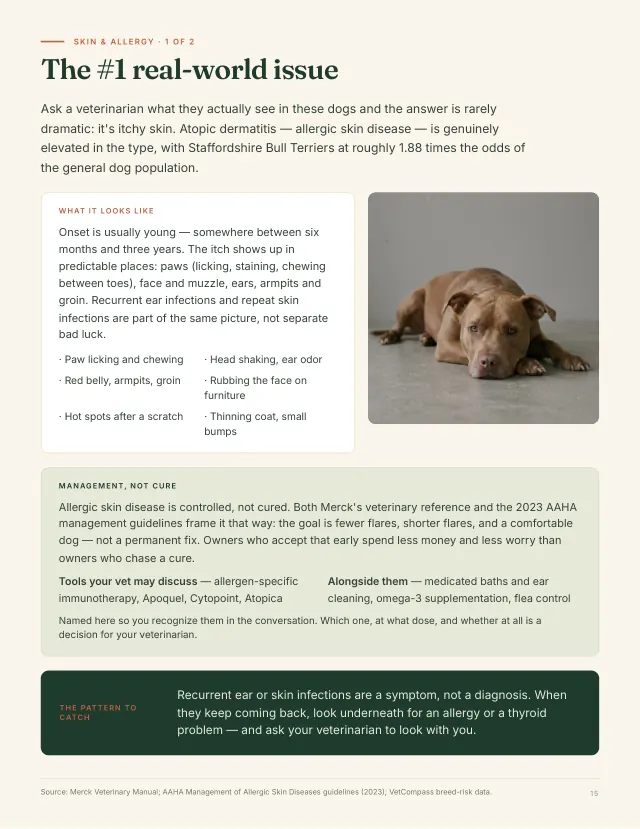
Baths are needed only occasionally, since over-bathing can strip natural oils and aggravate sensitive skin. Because this breed is prone to skin allergies, use a gentle shampoo and rinse thoroughly. Watch the skin closely during grooming: check for redness, hot spots, flaky patches, or thinning hair, which can signal atopy or demodectic mange and are easiest to catch early.
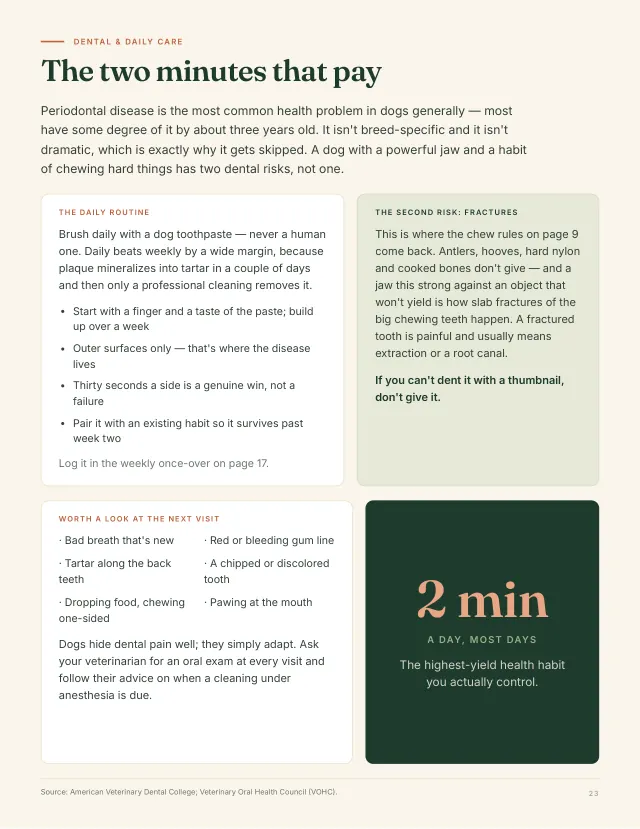
Round out the routine with regular nail trims, dental care through brushing or vet-approved chews, and a look inside the ears. Grooming time doubles as a weekly health check for a breed whose skin needs monitoring.
Pit Bull health: what to watch for
Hardy and athletic as these dogs tend to be, responsible owners should still know the breed's watch-points and work with a veterinarian on prevention. This guide supplements veterinary care; it does not replace it.
- Hip dysplasia: a heritable joint malformation. The Orthopedic Foundation for Animals (OFA) maintains hip screening programs, and reputable breeders test breeding stock.
- Skin allergies and atopy: among the more common issues in the breed, causing itching, recurrent ear or skin infections, and hot spots. AVMA and AAHA resources cover diagnosis and management.
- Cardiac disease, notably aortic stenosis: a congenital narrowing near the heart. The American College of Veterinary Internal Medicine (ACVIM) recognizes this condition, which a vet may detect as a murmur.
- Cranial cruciate ligament injury: athletic dogs are prone to knee ligament tears, a well-documented orthopedic problem in veterinary literature.
- Cerebellar ataxia / neuronal ceroid lipofuscinosis (in American Staffordshire Terriers): an inherited, progressive, and ultimately fatal neurological disease for which a DNA test exists. Choose Am Staff breeders who DNA-test breeding stock as clear, and discuss any loss of coordination or balance with your vet.
- Demodectic mange: caused by Demodex mites, more likely in young or stressed dogs and diagnosed by a vet.
Ask your veterinarian about appropriate screening, and choose breeders who health-test.
Training this breed
Because they are highly trainable and want to work with you, reward-based training is a natural fit. Use food, toys, play, and praise to teach and reinforce behavior. These dogs are sensitive and eager to please; harsh, dominance-based, or aversive methods like prong or shock collars are unnecessary, damage trust, and can worsen behavior. Force-free, reward-based training is the standard supported by modern veterinary behavior guidance.
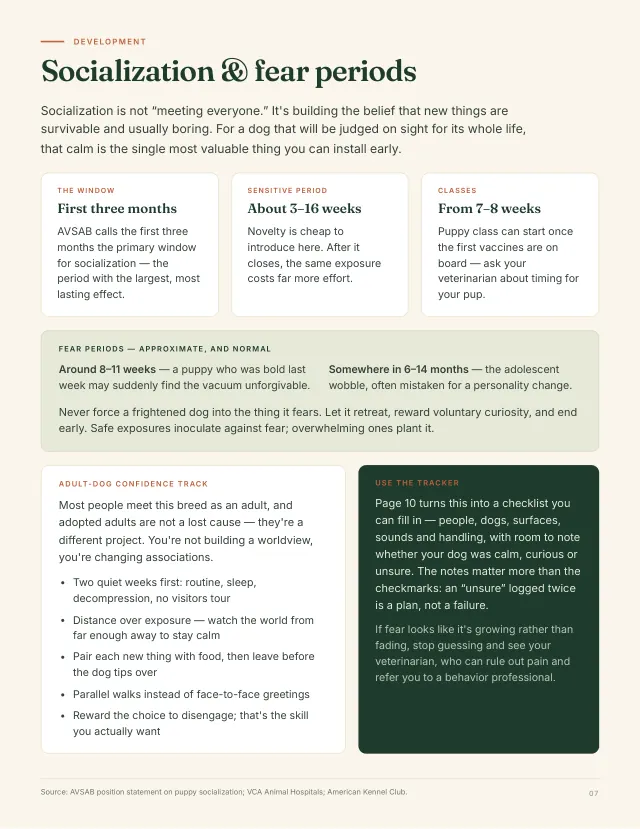
Socialization is the single highest-value investment. During the puppy weeks, and with steady patience for an adult, expose your dog calmly to new people, dogs, surfaces, sounds, and handling, always pairing new things with good outcomes. This builds the confident, friendly adult the breed is capable of being.
Prioritize a rock-solid recall, loose-leash walking, and settle-on-cue for a strong dog. Keep sessions short, upbeat, and frequent. Because dog-dog tolerance varies, teach focus and disengagement around other dogs rather than assuming your dog will love every one.
Responsible ownership: BSL, housing, and management
This is the section that sets Pit Bull ownership apart, and skipping it causes the most heartbreak. Some cities and counties have breed-specific legislation (BSL) that restricts or bans Pit Bull-type dogs. Many landlords include breed clauses in leases, and some homeowner or renter insurance policies exclude or surcharge the breed. Research all three before you commit, not after.
Responsible management is a daily practice. Keep your dog leashed in public, use secure fencing at home, and never leave dogs together unsupervised until you know them well. Make careful, gradual introductions to other dogs and read body language rather than forcing interactions.
Being a great ambassador for the breed also matters. A well-trained, well-managed, visibly happy Pit Bull changes minds. The AVMA and major welfare organizations oppose breed bans in favor of responsible-owner and individual-dog assessment, and you strengthen that case every time you manage your dog well in public.