Can Cats Eat Dog Food?
A cat raiding the dog's bowl is a common sight in two-pet homes. One stolen mouthful isn't the worry; a cat that lives on dog food is, because dog food doesn't cover what cats need, starting with taurine.
On this page
Not as their diet. The Merck Veterinary Manual says “cats have different dietary requirements than dogs and can develop nutritional deficiencies when fed diets formulated for dogs.” A bite stolen from the dog’s bowl isn’t what the sources warn about; the risk is a cat that eats dog food day after day.
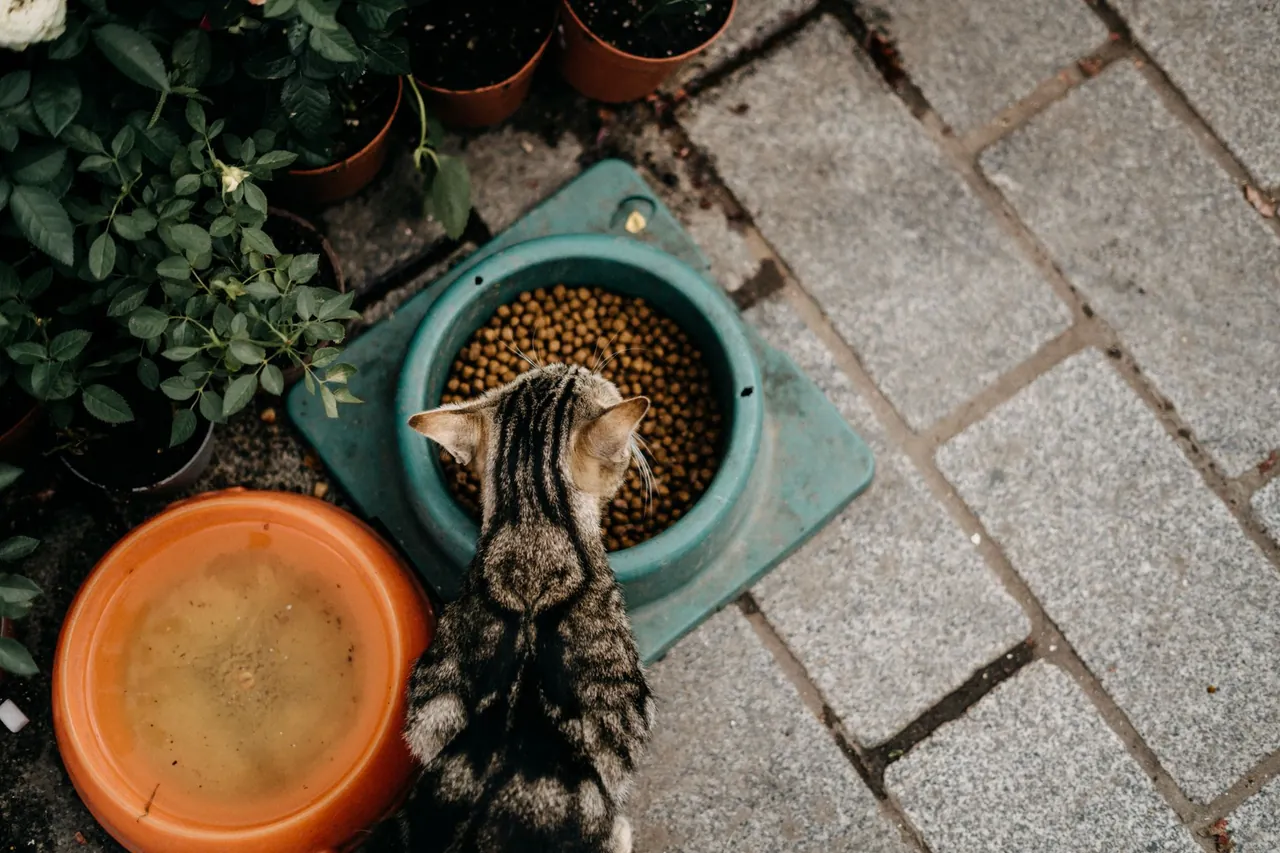
What cats need that dog food doesn’t cover
Merck explains that, unlike dogs, cats need vitamin A, arachidonic acid and taurine in their diet. International Cat Care lists the amino acids cats need as “taurine, arginine, methionine and cysteine.” Dog food is formulated for a dog’s needs, not these. The two foods can look alike in the bowl and still differ where it counts.
None of this makes dog food a poison. It makes it the wrong main course.
Taurine, the big one
VCA is plain about it: “Dog food does not contain enough taurine to meet the normal requirements for a cat.” And Merck spells out what that shortfall can do: “taurine deficiency can cause dilated cardiomyopathy and central retinal degeneration in cats.” In plain terms, that’s a heart-muscle disease and damage to the retina.
VCA calls the heart disease “a severe, potentially fatal heart disease called dilated cardiomyopathy.” Two more VCA points matter for owners:
- It’s slow. “Clinical signs of taurine deficiency are slow to develop.”
- Early helps the heart, not the eyes. “If caught early enough, dilated cardiomyopathy may be reversible with dietary supplementation,” but for the eyes, supplementation is “usually not successful in reversing the damage.”
How strongly the sources put it
All three point the same way, with different strength:
- VCA (taurine overview): cats eating dog food “will definitely become taurine deficient,” and the habit should be broken “as soon as possible.”
- VCA (Taurine in Cats): dog food “does not contain enough taurine.”
- Merck: cats “can develop nutritional deficiencies” on dog diets.
None of them addresses a one-off nibble. The warning is about dog food as the cat’s diet.
Living with a dog and a cat
Keeping each pet at its own bowl takes a few habits:
- Feed in separate places, with the cat’s bowl somewhere the dog can’t reach.
- Pick up the dog’s bowl after meals instead of leaving food out.
- Watch mealtimes for a while to see who eats from where.
If the two are still getting used to each other, the guide to introducing a dog and a cat and the free Dog & Cat Introduction Steps help set up the household.
When to call the vet
Book a vet visit if your cat has been eating dog food long term, even if your cat seems fine, since VCA says the signs are slow to develop. Call sooner for heart, breathing or vision problems. Bring a note of how long your cat has been eating dog food and how much of the diet it makes up, so your vet can judge the risk.
For other kitchen questions, see milk, tuna and onions and garlic.
Frequently asked questions
- My cat ate some dog food. Is that dangerous?
- A one-off bite isn't what the sources warn about; no source I checked addresses it. The evidence is about dog food fed as a cat's diet: Merck says cats can develop nutritional deficiencies on diets formulated for dogs, and VCA says dog food does not contain enough taurine for a cat. Make sure it doesn't become a habit.
- Why can dogs eat dog food but cats can't live on it?
- Merck says cats have different dietary requirements than dogs; unlike dogs, cats need vitamin A, arachidonic acid and taurine in their diet. International Cat Care adds that cats need taurine, arginine, methionine and cysteine. A food formulated for dogs isn't built around those needs.
- What happens if a cat eats only dog food?
- The sources differ in strength. VCA's taurine overview says cats eating dog food will definitely become taurine deficient, VCA's taurine article says dog food doesn't contain enough taurine, and Merck says cats can develop deficiencies. Merck says taurine deficiency can cause dilated cardiomyopathy and central retinal degeneration, and VCA calls the heart disease severe and potentially fatal.
- Can taurine deficiency be reversed?
- Partly. VCA says that if caught early enough, dilated cardiomyopathy may be reversible with dietary supplementation, but that for the eyes, supplementation is usually not successful in reversing the damage. That's why a cat with a long dog-food habit should see the vet sooner rather than later.
Educational content only — not veterinary or professional behavior advice. Consult your vet, or a certified trainer or behaviorist, for your pet. Read the full disclaimer →