Can Dogs Eat Onions or Garlic?
Onion, garlic, leeks, and chives, whether raw, cooked, or powdered, damage a dog's red blood cells and can cause a dangerous anemia that shows up days later.
On this page
No — dogs should not eat onion, garlic, leeks, or chives. Every member of the allium family is toxic to dogs — it damages red blood cells (anemia), whether raw, cooked, or powdered, including the onion/garlic powder hidden in seasonings, gravy and baby food. This isn’t a “maybe in moderation” food. It’s on every major poison list — ASPCA Animal Poison Control, Pet Poison Helpline, and the Merck Veterinary Manual all classify alliums as toxic to dogs — and the damage is the kind you often can’t see until days after your dog ate it.
If your dog just ate onion, garlic, or anything seasoned with them, skip ahead to What to do right now. If you’re checking before you share a bite, good instinct; that habit prevents most poisonings. The free Dog Toxic-Foods Checker covers this food and dozens more.
Why onions and garlic are toxic to dogs
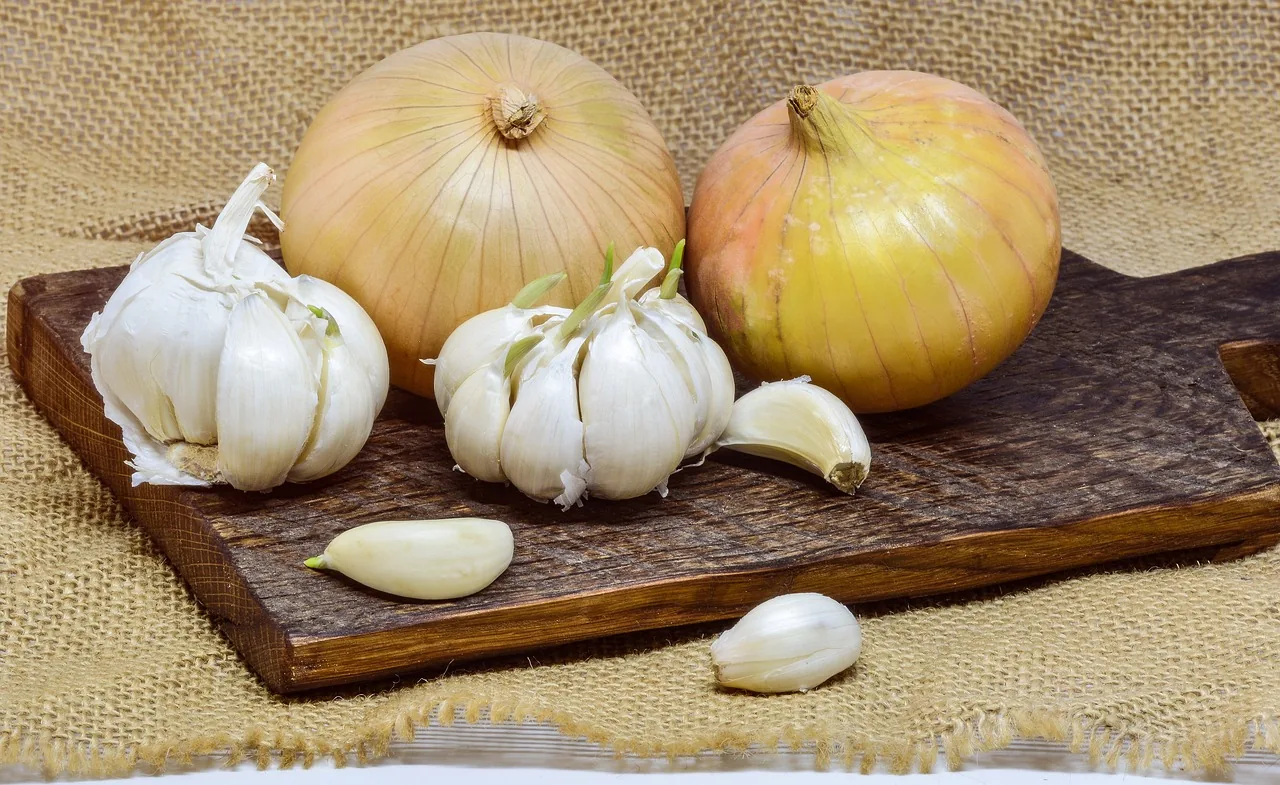
Onions, garlic, leeks, chives, shallots, and scallions all contain sulfur compounds (organosulfoxides, which break down into compounds like N-propyl disulfide) that dogs cannot safely process. According to the Merck Veterinary Manual, these compounds cause oxidative damage to the hemoglobin inside a dog’s red blood cells, forming clumps called Heinz bodies. The body then destroys those damaged cells faster than it can replace them. The result is hemolytic anemia — literally, blood cells bursting and being cleared away — which starves the body of oxygen.
Three things make alliums nastier than most toxic foods:
Cooking doesn’t help. Raw, sautéed, roasted, boiled, dehydrated, powdered: the toxic compounds survive all of it. A cooked onion in a stew is just as dangerous as a raw one, and per Pet Poison Helpline, the dried and powdered forms are more concentrated per gram than fresh.
Garlic is stronger than onion. Pet Poison Helpline notes garlic is roughly five times as potent as onion by weight. A little garlic goes a longer, worse way.
The dose is cumulative. This is the trap that catches loving owners. A small amount that causes no visible harm today still damages red blood cells, and repeated small amounts — a bite of seasoned chicken here, a lick of gravy there, every day — add up to the same anemia one big dose would cause.
How much onion or garlic is dangerous?
The published numbers are a range, not a single line. A toxicology review from the ASPCA Animal Poison Control Center (Cope, Veterinary Medicine, 2005) found poisoning consistently in animals that ate more than 0.5% of their body weight in onions at one time. For a 45-pound (20 kg) dog, that’s only about 100 grams, less than one medium onion. The Merck Veterinary Manual reports signs in dogs after 15 to 30 grams of raw onion per kilogram, which is 300 to 600 grams for that same dog. I go by the lower number, because repeated small helpings add up too. Smaller dogs hit either threshold with far less. And because powders are concentrated, a packet of onion soup mix or a heavily seasoned dish can deliver an onion’s worth of toxin in a couple of spoonfuls.
There is no established “safe” amount, and individual dogs vary — some breeds (including Japanese breeds like Akitas and Shiba Inus) are reported to be more sensitive. Treat any exposure as worth a phone call.
The hidden-powder trap
Most real-world allium poisonings don’t come from a dog crunching a raw onion. Dogs rarely want one. They come from onion and garlic powder hidden in prepared food:
- Gravy, stock, bouillon, and soup (including instant ramen seasoning)
- Rotisserie chicken skin, seasoned meats, taco meat, sausage
- Seasoning blends, marinades, and rubs (nearly all contain garlic or onion powder)
- Pizza, garlic bread, and takeout of almost any kind
- Baby food: some meat-based baby foods contain onion powder (check the label), which matters because owners often use baby food to hide pills or tempt a sick dog
If an ingredient label says “spices,” “natural flavors,” or “seasoning,” assume onion or garlic powder may be in it.
Signs of onion or garlic poisoning, often delayed
Early on you might see ordinary stomach upset: vomiting, diarrhea, drooling, a painful belly. But the anemia itself typically takes one to five days to show, per Pet Poison Helpline, which is exactly why owners don’t connect the dots. Watch for:
- Weakness, lethargy, tiring on short walks
- Pale gums (lift the lip — healthy gums are bubble-gum pink)
- Dark, reddish, or brown urine
- Rapid breathing or an elevated heart rate
- Loss of appetite, collapse in severe cases
A dog can seem completely fine the evening they ate the food and be seriously anemic three days later.
What to do right now
Call your vet; small repeated amounts add up, so mention any seasoned foods: not just the obvious onion, but the gravy, the seasoned leftovers, the baby food, anything from the table over the past several days. That history is what lets your vet judge the cumulative dose.
If it’s after hours or you want expert backup, the poison lines are staffed 24/7 (a consultation fee applies):
- ASPCA Animal Poison Control: (888) 426-4435
- Pet Poison Helpline: (855) 764-7661
Do not induce vomiting unless a veterinary professional tells you to. If the exposure was recent, your vet may induce vomiting safely at the clinic; for later or larger exposures they can run bloodwork to check red blood cells and support your dog through the anemia. Most dogs recover well when treated early.
About the “garlic is healthy for dogs” myth
You’ll find blogs and even supplement labels claiming small amounts of garlic boost immunity or repel fleas. The veterinary consensus says otherwise: there’s no proven flea-control benefit, garlic is a documented cause of hemolytic anemia in dogs, and because the damage is cumulative and invisible until it isn’t, “a tiny daily dose” is precisely the pattern that causes poisoning. ASPCA Animal Poison Control lists garlic as toxic to dogs, full stop. Whatever marginal benefit is claimed, it is not worth gambling with your dog’s red blood cells.
Prevention that works
The fix is less about willpower and more about setup. Keep seasoned leftovers, stock, and soup out of reach and off the counter edge — counter-surfing is a skill, not a sin. Never share seasoned table food; if you want to share your dinner, set aside a plain, unseasoned portion of meat or vegetable before the onions and garlic go in the pan. Read labels on anything you use to hide pills. And brief the household, including kids and guests, that “just a bite” of seasoned food isn’t harmless for the dog. If your dog begs at the table, teach a mat-settle with rewards instead; it’s kinder and it works.
Safe alternatives to share instead
When you want to hand something over, these are dog-safe in sensible amounts: carrot sticks, apple slices (no seeds or core), blueberries, plain cooked green beans, cucumber, and plain cooked pumpkin. They make excellent low-calorie training rewards too.
Not sure about another food? Look it up in the free Dog Toxic-Foods Checker before it leaves your plate. And keep the numbers on the fridge before you need them: the Dog Safe Food List in the shop sorts common foods eat / limit / avoid and includes a fillable poison-emergency card.
This article is for information only and isn’t a substitute for veterinary care. When in doubt, call your vet.
Frequently asked questions
- My dog ate a small piece of onion — will he be okay?
- A single small piece is unlikely to cause visible illness in a medium or large dog, but it isn't zero-risk, and 'small' is relative — for a Chihuahua, a few grams matters far more than for a Labrador. The right move is a quick call to your vet or a poison line (ASPCA Animal Poison Control (888) 426-4435, Pet Poison Helpline (855) 764-7661) with your dog's weight and what was eaten; they'll tell you whether it's a watch-at-home situation. Also think back over the past few days: because allium damage is cumulative, a small piece today on top of seasoned leftovers yesterday changes the math. Watch for weakness, pale gums, or dark urine for the next several days, and go in if any appear.
- Is cooked onion or garlic in food less dangerous than raw?
- No. Cooking does not destroy the toxic sulfur compounds in alliums. Sautéed onions in a stir-fry, roasted garlic in a sauce, and simmered onion in soup or gravy are all just as capable of damaging red blood cells as the raw vegetable. In fact, the dried forms are worse per gram: onion and garlic powder are concentrated, so a heavily seasoned dish, a bouillon cube, or a packet of soup mix can deliver a surprising dose in a small volume. This is why 'a bit of my dinner' is the most common real-world exposure — the dog never sees a whole onion, just the seasoned chicken, the gravy-soaked bread, or the pizza crust. Treat any allium-seasoned food as off-limits, cooked or not.
- Are garlic supplements or garlic flea remedies safe for dogs?
- Skip them. The claim that small daily doses of garlic repel fleas or boost immunity circulates widely, but there's no solid evidence garlic controls fleas, and there is well-documented veterinary evidence that garlic causes hemolytic anemia in dogs. ASPCA Animal Poison Control lists it as toxic, and Pet Poison Helpline rates it roughly five times as potent as onion. Because the red-blood-cell damage is cumulative, a 'tiny daily dose' is exactly the dosing pattern most likely to build up to real harm while showing nothing on the outside. If fleas are the problem, talk to your vet about proven preventives that are tested for safety in dogs; they're inexpensive, effective, and don't gamble with your dog's blood.
- How long after eating onion or garlic do symptoms appear in dogs?
- There are often two waves. Within the first hours you may see ordinary GI upset — vomiting, diarrhea, drooling — or nothing at all. The dangerous part, the anemia, typically develops one to five days later as damaged red blood cells are destroyed faster than the body replaces them. That's when weakness, exercise intolerance, pale gums, rapid breathing, and dark or reddish urine appear. This delay is exactly why owners often miss the connection: the dog seemed fine the night of the barbecue and is lethargic on Wednesday. If you know or suspect your dog ate alliums, call your vet now rather than waiting for signs — early bloodwork and monitoring are far better than treating a collapsed, anemic dog. Most dogs treated promptly recover well.
Educational content only — not veterinary or professional behavior advice. Consult your vet, or a certified trainer or behaviorist, for your pet. Read the full disclaimer →