Can Dogs Eat Ham?
A thin sliver of lean ham won't poison a dog, but the salt, the fat, the sugary glaze and the cooked bone make holiday ham a poor thing to share.
On this page
Not as a treat you plan on. Ham isn’t poisonous, and one thin sliver of lean meat is unlikely to hurt a healthy dog, but ham sits under caution in the Dog Toxic-Foods Checker for three stacked reasons: salt, fat and the bone. Add a sugary glaze, or a raisin sauce on the side, and holiday ham moves further from anything I’d put in a dog bowl.
Already missing a slice? The section on what to do if your dog stole the ham covers who to call and when.
Salt: the part you can’t trim off
Ham is cured meat, and curing means salt. The AKC notes that store-bought ham contains a great deal of sodium, and the ASPCA advises against processed meats like lunch meat and bacon for the same reason. You can cut away fat and glaze; the salt runs all the way through.
A dog’s body handles a salt spike badly. ASPCA Animal Poison Control lists increased thirst and urination as the first effects, and vomiting, diarrhea, depression, tremors and seizures as signs of real salt toxicity. Scale matters here: the FDA notes that a 10-pound pet can get sick after eating just half a teaspoon of table salt, which is why a ham theft that barely registers for a Labrador can be a real problem for a Chihuahua.
Fat and pancreatitis
Ham carries more fat than most meats, especially in the rind and the trimmings people leave on their plates. Pet Poison Helpline lists fatty meat scraps among the foods that can trigger pancreatitis, a painful inflammation of the pancreas, and describes the signs as vomiting that can start one to four days after the fatty meal, belly pain, diarrhea, poor appetite and lethargy. The FDA gives the same warning about fat trimmings from holiday meats.
The Merck Veterinary Manual names large amounts of table scraps and eating trash as a common risk factor for pancreatitis in dogs, and lists breeds such as Miniature Schnauzers, Yorkshire Terriers, Cocker Spaniels, Dachshunds and Poodles among those affected more often. VCA Animal Hospitals notes that dogs with severe pancreatitis are commonly hospitalized for two to four days, which is a steep price for a plate of trimmings.
Glazes, sauces and what’s served alongside
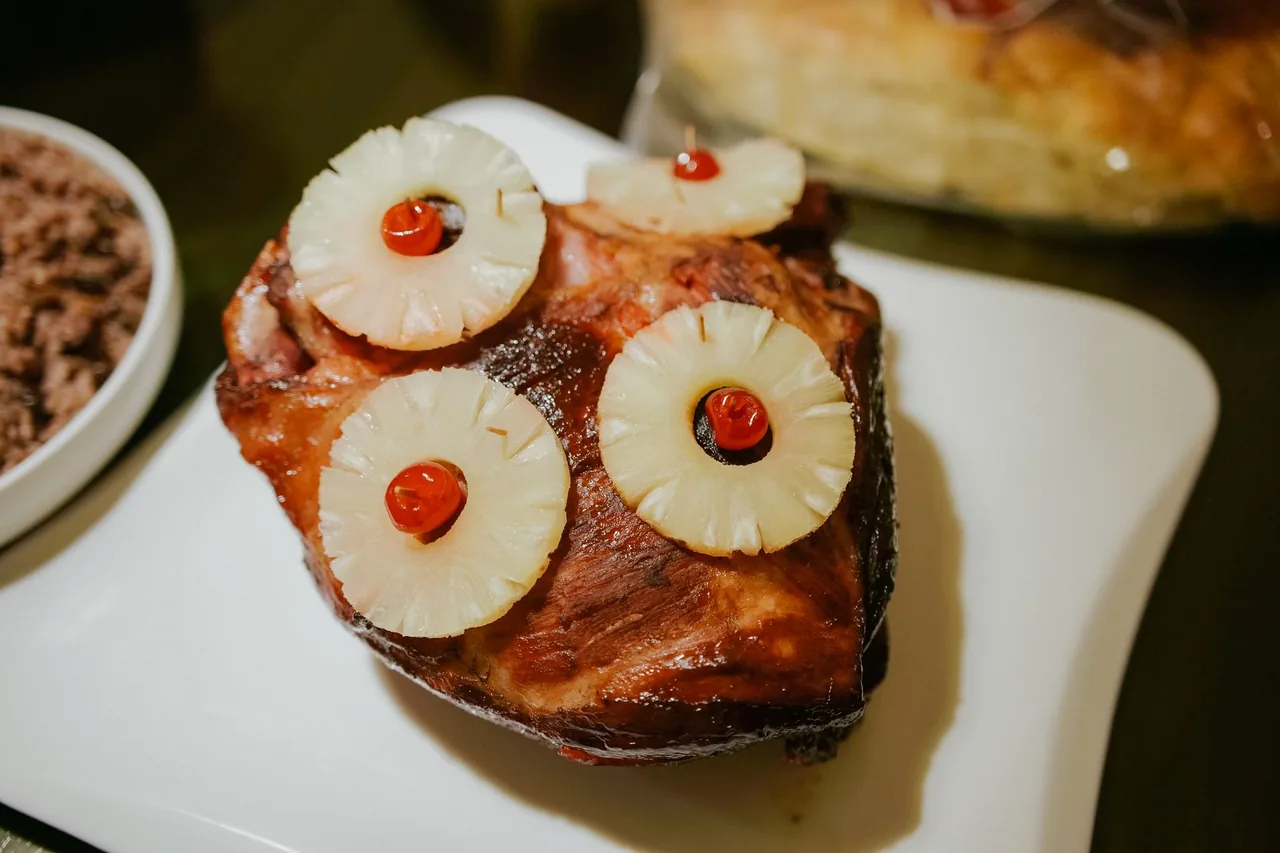
Holiday hams rarely arrive plain. Honey, brown sugar and fruit glazes add sugar, and the ASPCA points out that too much fat or sugar can lead to pancreatitis. Rubs and seasoning packets sometimes include garlic or onion powder, the concentrated form of the allium family that damages red blood cells; my onion and garlic guide explains why the powders matter most.
Then there’s the raisin sauce. Ham with raisin sauce is a traditional pairing in plenty of American kitchens, and raisins can cause sudden kidney injury in dogs at an amount no one can predict. Pet Poison Helpline’s advice is to take any raisin ingestion seriously, whatever the amount, so a slice of ham that was sitting in raisin sauce is a call-your-vet situation. The grapes and raisins guide has the details.
The ham bone
A ham bone is a cooked bone, and cooked bones splinter; the ASPCA’s veterinary guidance lists them among its four harmful Thanksgiving foods for exactly that reason. The FDA adds that bones can lodge in the esophagus, stomach or windpipe, or break into sharp pieces that cause severe internal injuries. The ham bone that goes into a pot of split pea soup is no safer afterward. Keep it, and the fat trimmings, in a closed bin your dog can’t open or knock over.
What to do if your dog stole the ham
- One ordinary slice, medium or large dog: usually a mild stomach upset at most. Offer fresh water, skip treats for the day, and watch.
- A small dog, a large amount, or the fatty trim: call your vet. Watch for vomiting, diarrhea, unusual thirst, a hunched posture or belly pain over the next several days.
- The bone: call your vet now, before any signs appear, and don’t try to make your dog vomit.
- Ham with raisin sauce, or a garlic-heavy glaze: call your vet or a poison line right away.
Keep your dog’s weight, what was eaten and roughly when in front of you as you dial ASPCA Animal Poison Control, (888) 426-4435, or Pet Poison Helpline, (855) 764-7661. Both run around the clock, and a consultation fee may apply.
Better ways to share the holiday
For a holiday treat, plain turkey is the easier meat to share safely; my turkey guide covers which parts and how much. The Thanksgiving foods guide sorts the rest of the plate, and the Dog Toxic-Foods Checker is there for anything else that ends up within nose reach.
Frequently asked questions
- Can dogs eat a ham bone?
- No. A ham bone has been cooked, often smoked and baked, and cooked bones splinter; the ASPCA's veterinary guidance notes that splintered bones can even damage the esophagus if a dog is made to vomit them back up, which is why you shouldn't try that at home. The FDA warns that bones can get stuck in the esophagus, stomach or windpipe and that sharp pieces can cause severe internal injuries, with signs such as vomiting, diarrhea, lethargy, refusing food and belly pain appearing hours to days later. If your dog swallowed a ham bone or chewed pieces off one, call your vet now rather than waiting to see what happens.
- My dog stole a slice of ham. Should I worry?
- A single ordinary slice is unlikely to cause more than an upset stomach in a healthy, medium or large dog. The AKC's take is that a little sliver of ham once in a while probably won't hurt, even though it isn't a food worth sharing. Offer fresh water, skip other treats for the day, and watch for vomiting, diarrhea or unusual thirst. Size changes the math: salt and fat hit a small dog much harder than a large one. Call your vet if a small dog ate a big slice, if any dog ate a large amount or the fatty trim, or if the ham came with a raisin sauce.
- What are the signs of too much salt in a dog?
- Early on, it's mostly thirst. ASPCA Animal Poison Control lists increased thirst and urination as the early effects of excessive salt, and vomiting, diarrhea, depression, tremors and seizures as signs of salt toxicity, which can be fatal. The FDA notes that a 10-pound pet can get sick after eating just half a teaspoon of table salt. Ham alone rarely delivers that kind of dose to a large dog, but a small dog who eats a lot of ham, or gets into salty brine, cured meats and gravy on the same day, is a reason to call your vet or a poison line promptly rather than wait for symptoms.
- Can dogs eat honey-glazed or spiral ham?
- The glaze makes ham a worse choice, not a better one. Honey, brown sugar and fruit glazes add sugar on top of the fat, and the ASPCA points out that too much fat or sugar can lead to pancreatitis. Some glazes and rubs include garlic or onion powder, which damage a dog's red blood cells, and spiral hams often come with a glaze packet, so read its label. The safest version, if you share at all, is one thin piece of lean meat from the inside of the ham with the glazed edge and fat cut off.
Educational content only — not veterinary or professional behavior advice. Consult your vet, or a certified trainer or behaviorist, for your pet. Read the full disclaimer →