Can Dogs Eat Mashed Potatoes?
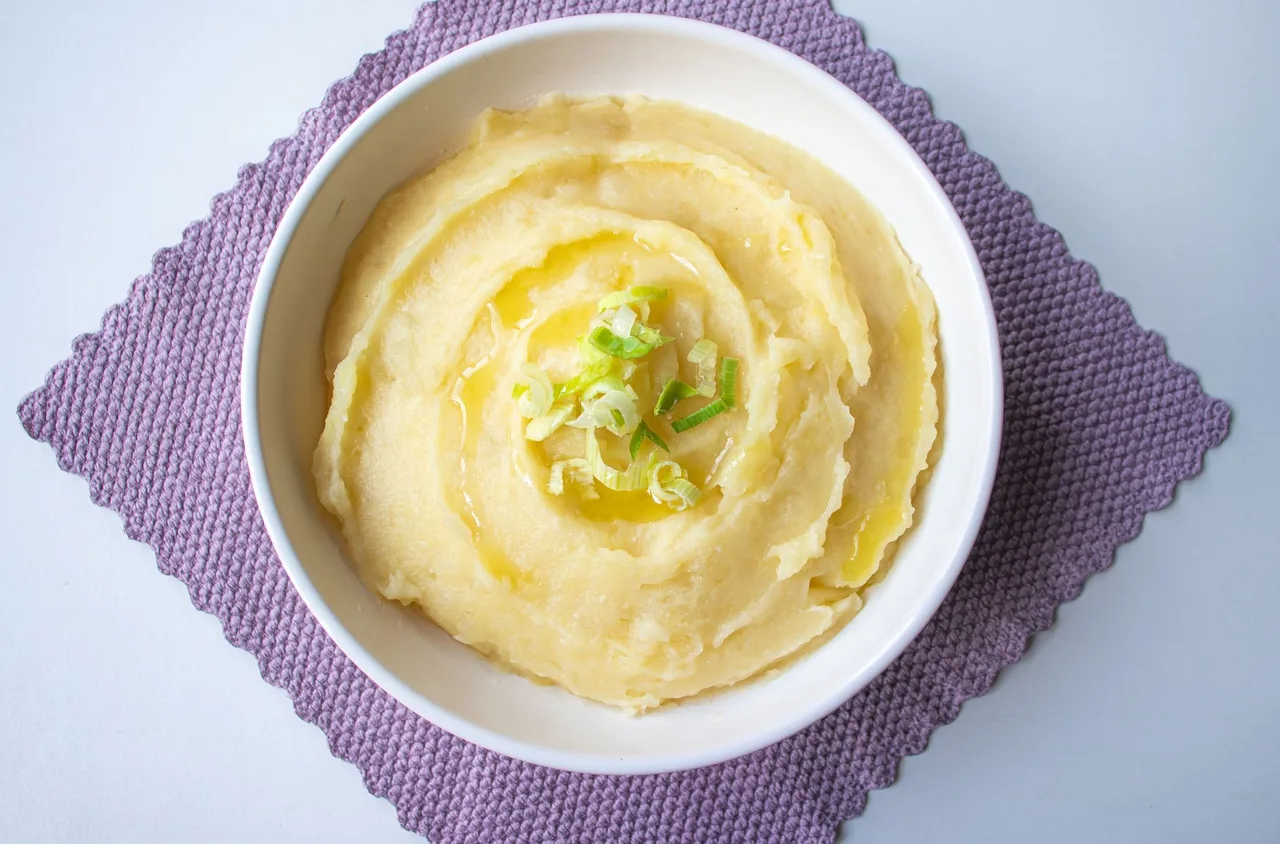
Plain cooked potato is fine for most dogs. The holiday bowl usually isn't: butter, cream, salt, and often garlic, onion or chives.
On this page
Plain, yes. Seasoned for the holiday table, usually no. A spoonful of boiled potato mashed with nothing added is a harmless, soft treat for most dogs; a veterinarian quoted by the AKC puts it simply, saying plain mashed or soft cooked potatoes are fine in small amounts without the butter and spices. The catch is that the bowl on the Thanksgiving table is almost never plain. In the Dog Toxic-Foods Checker, holiday mashed potatoes are a caution because of what gets stirred in, not because of the potato.
So the useful question isn’t whether dogs can eat potatoes. It’s what’s in this particular bowl.
What’s usually in the bowl
A typical holiday batch is potatoes plus several of these: butter, milk or cream, sour cream or cream cheese, salt, and a flavoring such as roasted garlic, sautéed onion or fresh chives. Some recipes finish with shredded cheese and bacon. Each addition pushes the dish in the wrong direction for a dog: more fat, more salt, more dairy, and in the case of garlic, onion and chives, a real toxin.
Garlic, onion and chives: the real reason for caution
Onions, garlic, chives and scallions are some of the most common additions to Thanksgiving foods, according to Pet Poison Helpline, which calls out mashed or scalloped potatoes by name. The ASPCA’s guidance for veterinarians lists mashed potatoes too. These plants belong to the allium family, and VCA Animal Hospitals explains that every form is poisonous to dogs: raw, cooked, dried, powdered and liquid. Garlic is the most toxic of the group; the Merck Veterinary Manual puts it at three to five times more toxic than onion.
The damage is to red blood cells, and it’s slow to show. Merck describes oxidative injury that begins within 24 hours but visible anemia (weakness, pale gums, yellowing, collapse) that usually takes several days to appear. That’s why a dog who licked the garlic mashed potato bowl on Thursday can seem fine until Sunday. Small amounts from several dishes, the potatoes plus the gravy plus the stuffing, add up; my onion and garlic guide walks through how the doses combine.
Butter, cream and a rich meal
Even without garlic, a bowl of buttery, creamy potatoes is a lot of fat for a dog who normally eats kibble. The AKC’s veterinarian specifically warns that potatoes with lots of butter can trigger pancreatitis, and Pet Poison Helpline lists butter among the fatty Thanksgiving foods behind the calls it gets that week, with signs that can appear up to four days later. Dairy adds its own problem: ASPCA Animal Poison Control explains that pets don’t make much lactase, the enzyme that digests milk sugar, so milk and cream commonly cause diarrhea. For a dog that tends toward pancreatitis, the cheese guide covers the same fat-and-dairy logic in more detail.
Plain potato, done right
If you’d like your dog to have some, make hers first. Boil or bake the potato until it’s soft enough to mash (the AKC’s veterinarian notes that undercooked chunks can be a choking risk), cut away any green patches, and set aside a small spoonful before anything else is added. Stir it into her regular food. Potatoes are starchy, so this is a treat rather than a side dish; all extras together should stay around 10% of her daily calories, and the Dog Feeding Calculator gives you her number.
Never share raw potato or potato with green skin. The Dog Toxic-Foods Checker lists raw or green potato as a caution because it contains solanine; plain cooked potato is the version that’s fine.
If your dog got into the mashed potatoes
- Plain or lightly buttered, a few licks: usually nothing, or a soft stool. Offer water and watch.
- A big helping of buttery, creamy potatoes: call your vet if your dog is small, has had pancreatitis, or starts vomiting, and watch for belly pain or a hunched posture over the next few days.
- Made with garlic, onion or chives: call your vet or a poison line now, and mention every other seasoned dish she might have eaten.
Around the clock, you can reach ASPCA Animal Poison Control at (888) 426-4435 or Pet Poison Helpline at (855) 764-7661 (a fee may apply). Don’t make your dog vomit unless a veterinary professional tells you to.
Where mashed potatoes sit on the plate
Mashed potatoes are one of the milder risks at Thanksgiving, as long as you know what’s in them. Stuffing is a much bigger one, and plain turkey is the easiest thing to share safely. My Thanksgiving foods guide sorts the whole table in one place, and the checker handles anything else on the day.
Frequently asked questions
- Can dogs eat instant mashed potatoes?
- Instant flakes made with water are just dried potato, but that's rarely how they're served. Most boxes are prepared with butter and milk, and the flavored versions (roasted garlic, sour cream and chive, loaded) are seasoned with exactly the ingredients dogs shouldn't have. VCA Animal Hospitals points out that dried and powdered alliums are more concentrated than fresh ones, with a teaspoon of garlic powder equal to about eight fresh cloves, so a seasoning packet matters more than its size suggests. Read the label: if it lists garlic, onion, chives or 'natural flavors' you can't confirm, skip it, and if your dog already ate some, call your vet with the box in hand.
- Can dogs eat mashed sweet potatoes?
- Yes, if they're plain. Cooked, unseasoned sweet potato is on the safe list in the Dog Toxic-Foods Checker, and a veterinarian quoted by the AKC calls soft, well-cooked sweet potato a good source of fiber. The holiday casserole version is another matter: butter, brown sugar, marshmallows and sometimes pecans turn it into a rich dessert, and a big helping of fat and sugar is the kind of meal that can upset a dog's stomach or trigger pancreatitis. Set aside a spoonful of plain mashed sweet potato before the toppings go on.
- My dog ate garlic mashed potatoes. What should I do?
- Pick up the phone before she looks sick: your veterinarian, ASPCA Animal Poison Control at (888) 426-4435 or Pet Poison Helpline at (855) 764-7661. Give them your dog's weight, roughly how much she ate, and a list of every other seasoned dish she might have gotten into, since garlic and onion from several dishes add up. The Merck Veterinary Manual explains that the red-blood-cell damage starts within a day but visible signs of anemia, such as weakness, pale gums and collapse, usually take several days to appear. Pet Poison Helpline lists lethargy, vomiting, diarrhea, pale gums, yellowing and a fast heart rate among the signs to report.
- Can dogs eat potato skins?
- Cooked skins are fine as long as they aren't green. A veterinarian quoted by the AKC says potato skins are okay unless they have green areas, which signal a build-up of solanine, a natural toxin in the nightshade family; the Dog Toxic-Foods Checker lists raw or green potato as a caution for the same reason. Restaurant-style loaded skins are a different food, piled with cheese, bacon, sour cream and chives, and they belong on the skip list with the holiday mashed potatoes.
Educational content only — not veterinary or professional behavior advice. Consult your vet, or a certified trainer or behaviorist, for your pet. Read the full disclaimer →