Can Dogs Eat Tuna?
A little plain tuna is a safe, high-value treat most dogs adore — but mercury, salt, and oil are the reasons to keep it small and occasional.
On this page
In small amounts, yes — dogs can eat tuna, and most are thrilled to get it. A little plain tuna is safe, high in protein, and one of the more irresistible treats you can offer a fussy dog. But tuna comes with a real caveat that fruit and vegetables don’t: mercury. That’s why it lands in the caution column — safe as an occasional treat, not something to feed freely. Our free Dog Toxic-Foods Checker flags raw fish as a Caution food for parasites and bacteria, and the mercury point pushes even cooked tuna into “a little, sometimes” territory.
Below is why mercury sets the limit, which tuna to buy, and how to give a safe amount.
Why tuna is a treat, not a staple
Tuna is genuinely nutritious — lean protein, plus omega-3 fatty acids that support skin, coat, and joints. If that were the whole story, tuna would sit happily on the safe list. The catch is mercury. Tuna is a larger, longer-lived, predatory fish, and those accumulate more mercury than small fish do. Mercury builds up in the body over time, so the concern with tuna isn’t a single serving — it’s a steady habit. That’s exactly why it’s a now-and-then treat rather than a daily food, and why smaller fish like sardines are often suggested when owners want to add fish for the omega-3s.
So the honest framing is: a small amount of tuna occasionally is a fine, high-value treat; tuna as a regular meal component is a mercury question for your vet.
Which tuna, and how to serve it
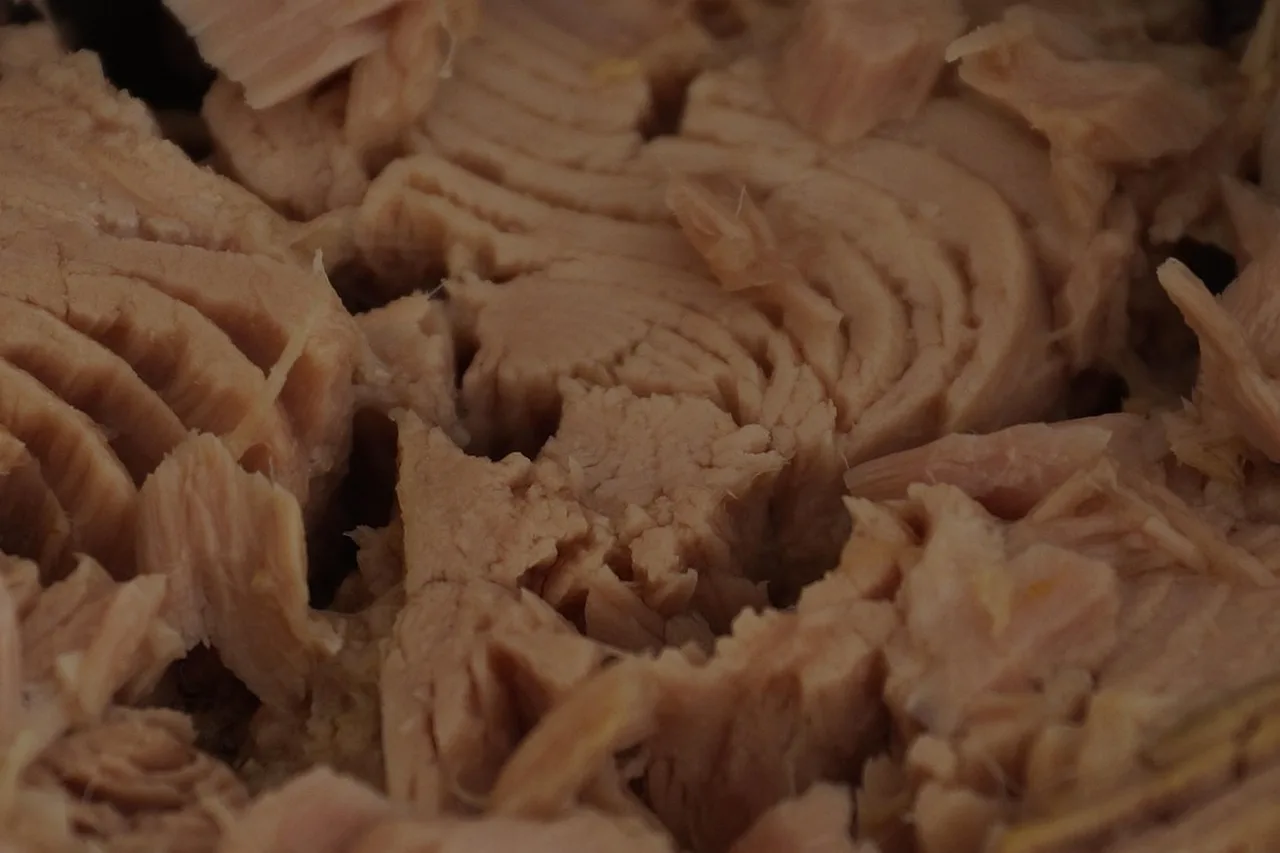
If you’re giving tuna, choose tuna canned in water, well drained, with no added salt. Skip the two common cans that cause trouble: tuna in oil adds unnecessary fat that can upset a stomach or feed a pancreatitis flare, and tuna in brine is too salty for a dog. Flavoured pouches, tuna “salad”, and anything mixed with mayo, onion, or garlic are out — onion and garlic are toxic to dogs, and mayo is just fat.
Fresh tuna must be cooked fully; never feed it raw. Raw fish can carry parasites and bacteria, a risk the FDA and AVMA both flag, so no sashimi, no sushi-grade scraps, and nothing off a poké bowl.
Serve a small amount: a teaspoon for a small dog up to a spoonful for a large one, drained well, on its own or mixed into food. Because tuna is so high-value, it’s excellent for hiding a pill or rewarding a genuinely hard training moment — just keep it occasional.
How much, and how often
Portion is easy; frequency is the real rule. A small serving no more than about once a week, kept inside the 10% treat budget, keeps the mercury concern comfortably in check. Daily tuna is the pattern to avoid. Our free Dog Feeding Calculator gives you the daily calorie number that keeps all your dog’s treats honest, and if you want fish to play a bigger role, your vet can point you to a lower-mercury option and the right amount.
When to ask your vet or call for help
Loop in your vet before making fish a regular part of the diet, especially for a small dog where amounts matter more, and for any dog with kidney disease or a sodium-restricted plan. Call your vet if your dog got into a large amount of salty or oily tuna and is drinking heavily, vomiting, or seems unwell, or if they ate a tuna dish containing onion or garlic. Our Dog Toxic-Foods Checker lists the relevant verdicts and the ASPCA and Pet Poison Helpline numbers, staffed around the clock.
The bottom line on tuna
A little plain, water-packed tuna is a safe, high-value treat your dog will love — the mercury just means “small and occasional” rather than “help yourself.” Choose the right can, skip the oil, salt, and seasonings, never feed it raw, and keep it to the odd spoonful inside the 10% the feeding calculator gives you. Run any new food past the checker first.
Frequently asked questions
- Is tuna high in mercury for dogs?
- Yes — tuna is one of the higher-mercury fish, which is the main reason to keep it occasional rather than regular. Mercury builds up in the body over time, and a steady diet of tuna could contribute to mercury accumulation, so it's best treated as a now-and-then treat rather than a daily food. This is why smaller, lower-mercury fish like sardines are often suggested over tuna when owners want to add fish. An occasional small serving of tuna is not a poisoning risk; the concern is cumulative, so the rule is 'a little, sometimes', not 'never'.
- Can dogs eat canned tuna, and which kind?
- Plain tuna canned in water is the one to choose — well drained, with no added salt. Skip tuna canned in oil (unnecessary fat that can upset the stomach or feed a pancreatitis flare) and tuna in brine (too much salt). Flavoured pouches and tuna 'salad' are out too, since they often contain onion, garlic, or mayo. Give a small amount as a treat: roughly a teaspoon for a small dog up to a spoonful for a large one, occasionally. Drain it well and mix a little into food or offer it on its own.
- Can dogs eat raw tuna or tuna sashimi?
- No — cook fish for dogs. Raw fish can carry parasites and bacteria like Salmonella, a risk the FDA and AVMA both flag, and some raw fish poses a specific parasite danger to dogs. Cooking removes those concerns. So no sushi-grade tuna, no sashimi, and no scraps off your poké bowl (which usually also carry soy sauce, onion, and other add-ins dogs shouldn't have). If you want to give tuna, use plain cooked or water-canned tuna instead of anything raw.
- How much tuna can I give my dog?
- Small and occasional is the whole rule. A teaspoon for a small dog up to a spoonful for a large one, no more than about once a week, kept inside the 10% treat budget. Tuna is high-value and most dogs adore it, which makes it useful for hiding a pill or rewarding something hard — but the mercury and the sodium in anything but plain water-packed tuna mean it shouldn't become a habit. If you'd like fish to be a regular part of your dog's diet for the omega-3s, talk to your vet about a lower-mercury option and the right amount for your dog.
Educational content only — not veterinary or professional behavior advice. Consult your vet, or a certified trainer or behaviorist, for your pet. Read the full disclaimer →