Can Dogs Eat Carrots?
Low-calorie, crunchy, and cheap — carrots are one of the few 'people foods' that make an ideal everyday dog treat.
On this page
Yes — dogs can eat carrots, and honestly they’re one of the best treats you can hand your dog. Low in calories, satisfyingly crunchy, cheap by the bag, and safe raw or cooked, a carrot ticks nearly every box a good treat should. Our free Dog Toxic-Foods Checker lists carrots as Safe: “A low-calorie, crunchy snack — raw or cooked — that many dogs love for teeth and training,” with the one sensible caveat to “cut to size for small dogs to avoid choking.” That caveat is the entire catch.
Below is why carrots punch above their weight as a treat, how to serve them, and the one rule — cut to size — that keeps them safe.
Why carrots are an ideal everyday treat
Most “people foods” dogs can eat are treats you tolerate; carrots are treats you can feel good about. They’re low in fat and calories, carry fibre plus beta-carotene (which the body converts to vitamin A), and deliver the crunch a lot of dogs crave. That combination is rare. It means a carrot can stand in for a richer, more calorific treat without the guilt — a real advantage given how many dogs are carrying extra weight, per AVMA body-condition data.
They’re also endlessly practical. Tiny cubes make excellent low-calorie training rewards, so you can run a long reward-based session without blowing the calorie budget. A cold carrot from the fridge is a cheap, satisfying chew. And for a teething puppy, a chilled large carrot can take the edge off sore gums — supervised, and swapped out as it shrinks. The AKC lists carrots among the vegetables dogs can safely eat, raw or cooked.
The one real risk: choking
There’s exactly one thing to get right with carrots, and it’s mechanical, not toxic: size. A whole carrot or a big chunk can lodge in the throat of a dog who inhales food rather than chewing it — and that’s most dogs. Cut carrots into coins or short sticks sized to your dog: small pieces for small dogs, larger sticks are fine for big dogs who actually chew.
If you like giving a whole large carrot as a chew, that’s fine for many dogs, but treat it like any chew — supervise it, and take it away once it’s gnawed down to a piece that could be swallowed whole. Get the size right and carrots move from “safe with a caveat” to simply safe.
How much carrot, and how to serve it
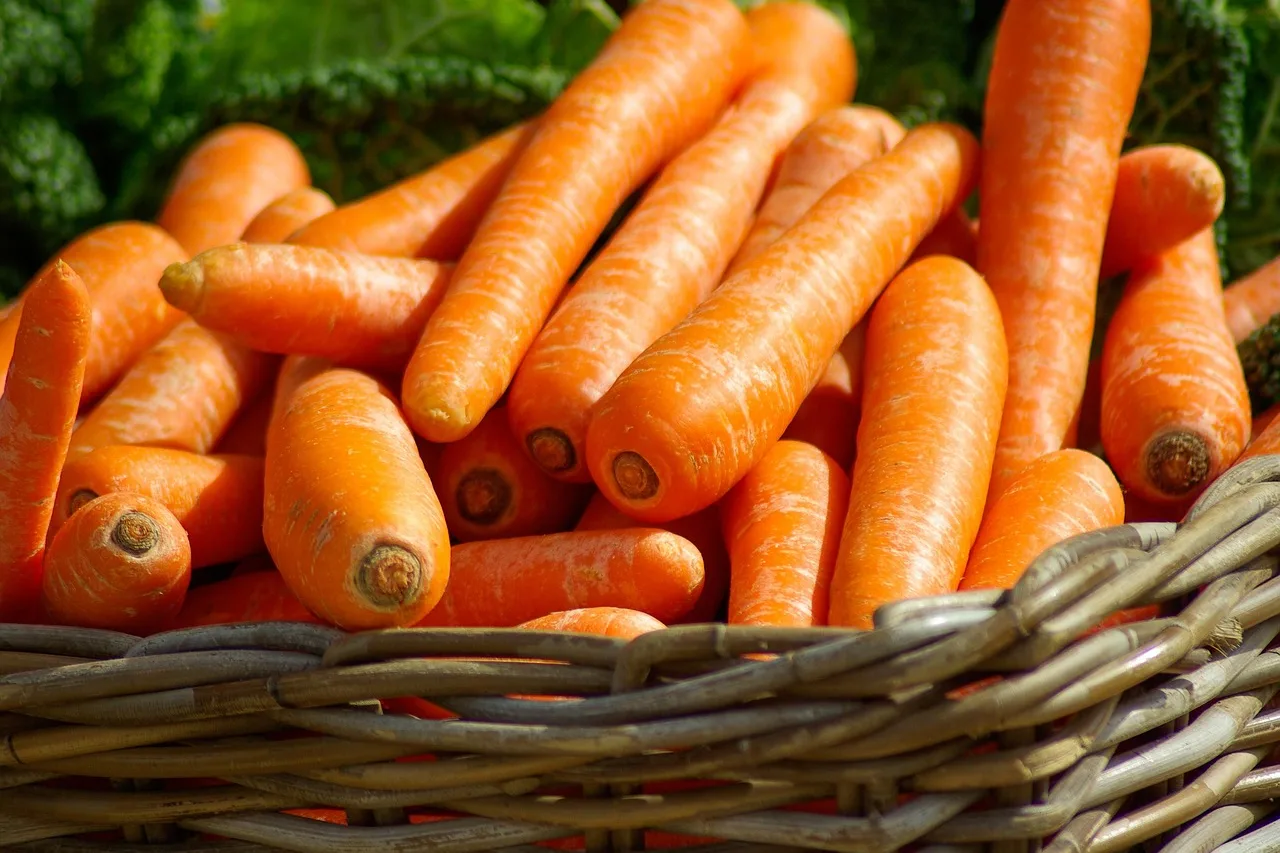
Wash the carrot, then cut it to size. Raw keeps the crunch; a light steam with nothing added softens it for older dogs or dogs with dental issues. Either way, serve it plain — the trouble with carrots only ever comes from what people add to them, so skip glazed carrots, buttered carrots, and anything from a seasoned side dish.
A few coins or a couple of sticks a day suits most dogs, inside that 10% treat budget. Carrots are low-calorie enough to be forgiving, but the fibre isn’t — introduce them gradually, because a sudden big serving can bring gas or loose stools. A lot of carrot can also tint the stool faintly orange, which looks alarming and is completely harmless. If you want the daily calorie number that makes the 10% budget precise, our free Dog Feeding Calculator works it out from weight and activity.
When to go easy or ask your vet
Carrots are safe for nearly every dog, but a couple of notes apply. They do contain natural sugar — modest, but worth knowing if your dog is diabetic or on a vet-directed diet, in which case check before adding any new food. Dogs with a history of digestive upset can react to the fibre, so start small. And a dog who has swallowed a large chunk whole and is gagging, drooling, or retching needs help fast. For anything you’re unsure a dog ate, our Dog Toxic-Foods Checker lists verified verdicts and the poison-control numbers.
The treat jar’s most useful vegetable
If you’re trying to treat your dog well without expanding their waistline, carrots are the easiest win in the fridge: cheap, crunchy, low-calorie, and versatile enough to be a training reward, a chew, and a snack all at once. They rotate nicely with other checker-verified options like apple and blueberries. Cut to size, keep the total inside the 10% the feeding calculator gives you, run anything new through the checker, and hand over the carrot.
Frequently asked questions
- Are raw or cooked carrots better for dogs?
- Both are safe and healthy; the choice comes down to your dog. Raw carrots keep their satisfying crunch, which is part of the appeal and gives the jaw something to do, and a cold raw carrot doubles as a cheap chew. Lightly steamed carrots are softer and easier on an older dog or one with dental issues, and gentle cooking makes some of the nutrients a little more available. Neither is 'wrong'. What matters more than raw-versus-cooked is that they're plain — no butter, glaze, salt, or seasoning — and cut to a size your dog can handle.
- Can carrots be a choking hazard for dogs?
- They can, and it's the one real risk with carrots. A whole carrot, or a large chunk, can lodge in the throat of a dog who gulps rather than chews — which is most dogs around food. The fix is simple: cut carrots into coins or short sticks sized to your dog, small pieces for small dogs. If you're offering a whole large carrot as a chew for a teething puppy, supervise it and take it away once it's worn down to a swallowable size. Cut sensibly, carrots are one of the safest treats there is.
- How many carrots can a dog eat a day?
- Carrots are low in calories, so they're one of the more generous treats — but the 10% rule still holds: treats of all kinds should stay within about 10% of daily calories. For most dogs a few carrot coins or a couple of sticks a day is very reasonable, and because they're so low-cal they're a smart swap for richer treats when you're watching weight. The main limit is fibre: a big serving can cause gas or loose stools, and a lot of carrot over time can occasionally tint the stool orange, which is harmless. Start modest and see how your dog does.
- Are carrots good for a dog's teeth?
- Chewing a firm raw carrot gives the teeth and gums a workout and can help scrape away some soft plaque, so it's a mild dental positive — and a far better idea than many hard chews that crack teeth. But be honest about what it is: a carrot is a helpful supplement to dental care, not a replacement for toothbrushing or a vet's dental plan. It won't remove hardened tartar. Think of a cold carrot as a healthy, low-calorie chew your dog enjoys, with a small dental bonus, rather than a cleaning tool.
Educational content only — not veterinary or professional behavior advice. Consult your vet, or a certified trainer or behaviorist, for your pet. Read the full disclaimer →