How to Dog-Proof Your Christmas Tree
A tree in the living room changes the rules of the house for a dog. Here is how I set one up so it stays standing, the water, wires and ornaments stay out of reach, and the dog learns to leave it alone.
On this page
To dog-proof a Christmas tree, anchor it so it can’t tip, cover the water, leave off the tinsel, put breakable and edible ornaments up high, hide the cords and batteries, and fence the tree off while your dog learns the new rules. Then teach a calm “leave it” and a mat near the tree, so the dog has something to do besides investigate. If your dog does chew something off the tree, call your vet or a poison line: ASPCA Animal Poison Control (888) 426-4435 or Pet Poison Helpline (855) 764-7661 (a fee may apply).
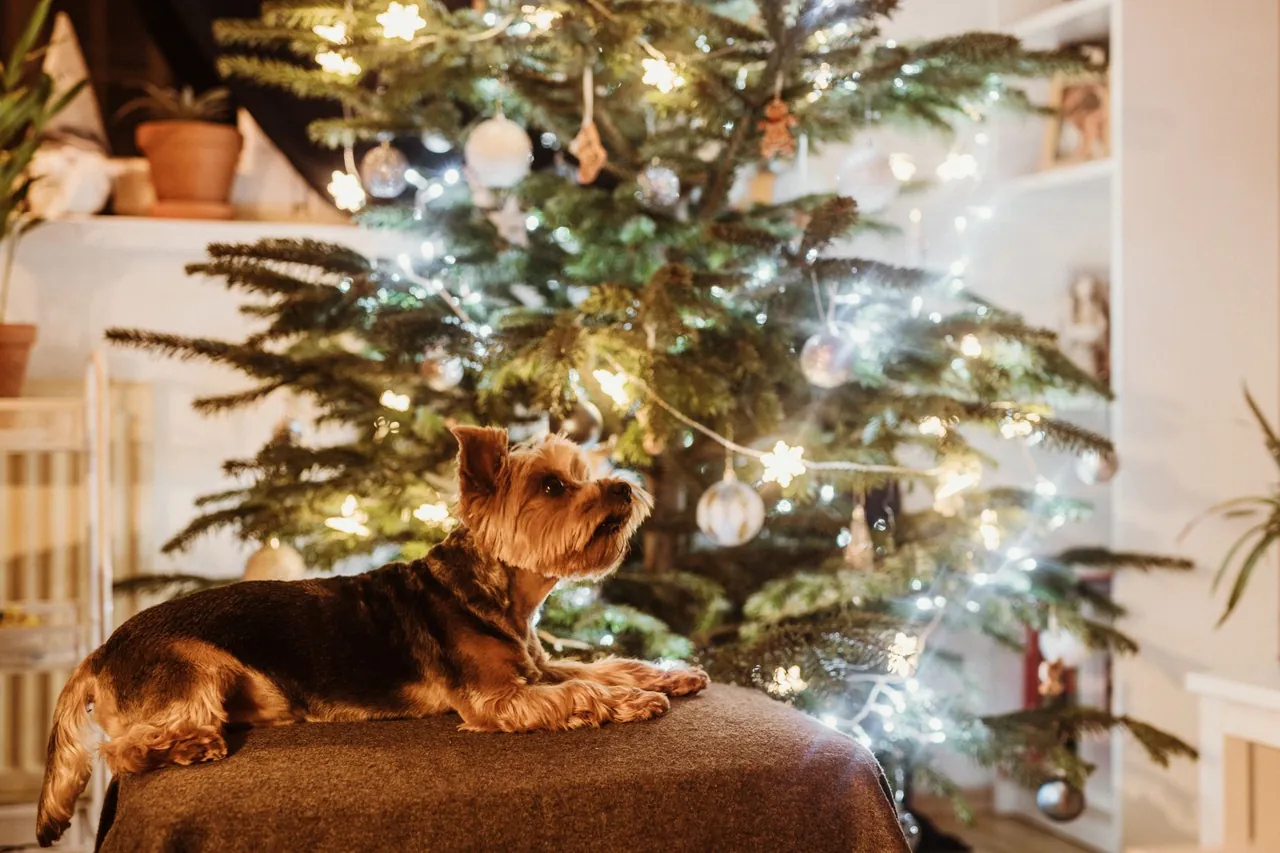
My Christmas foods and plants guide covers what’s dangerous on the table. This page is about the tree itself: the setup, the decorations and the training that keeps it standing until January.
Pick the spot and anchor the tree
Put the tree in a corner, out of the path your dog uses to run laps or meet the door. The ASPCA says to make sure the tree “is tightly secured so there is no chance it can tip over and hurt any pets nearby.” The AVMA notes that trees “can tip over if pets climb on them or try to play with the lights and ornaments,” and suggests tying the tree to the ceiling or a doorframe with fishing line.
I like to let the dog meet the bare tree for a day before anything goes on it. Sniffing a plain tree is boring, and boring is what you want the tree to be by the time it’s covered in shiny things.
Cover the water and add nothing to it
A tree stand is a bowl of water at nose height. The ASPCA says “tree water is a breeding ground for bacteria that could cause nausea, diarrhea or stomach upset,” and the AVMA warns that “water additives for Christmas trees can be hazardous to your pets if swallowed,” so its advice is to add nothing to the water if you have pets. A tree skirt pulled tight over the stand, or a stand with a lid, keeps tongues out.
With a real tree, sweep up fallen needles. The AVMA lists balsam, pine and cedar among the common holiday plants that can be dangerous to pets who eat them.
Decorate from the top down
- No tinsel. The ASPCA says swallowed tinsel “can cause severe vomiting, obstructed digestive tract, dehydration and could even require surgery.” Pet Poison Helpline adds that “even small amounts” of garland and tinsel can lead to a blockage and rupture, and that some tinsel contains zinc, which is toxic.
- Breakables up high. Shards of broken ornaments “can damage your pet’s mouth and digestive tract” (ASPCA), and the AVMA warns that swallowed ornaments can cause intestinal blockage.
- Salt-dough and food ornaments out of reach. The AVMA says to keep ornaments “made from salt-based dough or other food-based materials” away from pets, and the ASPCA warns that salt-dough ornaments, even dry ones, can cause life-threatening electrolyte imbalances. The FDA puts it in numbers: a 10-pound pet (about 4.5 kg) can get sick after eating just ½ teaspoon of table salt.
- Wrapped food stays off the floor. “You can’t see the contents of a wrapped present, but pets might smell it,” the ASPCA notes. Chocolates and nut tins belong on a table until they’re opened.
A low branch hung with plain, unbreakable ornaments (or nothing at all) is the easiest compromise for a curious young dog.
Lights, cords and batteries
- The ASPCA warns that “a wire can deliver a potentially lethal electrical shock and a punctured battery can cause burns to the mouth and esophagus.” The AVMA adds that chewed cords can cause burns.
- Run cords along the wall, tape them down or cover them, and unplug the decorations whenever you leave the house, as the AVMA advises.
- Keep spare batteries and battery packs in a drawer. Pet Poison Helpline says a dog that swallowed a battery should not be made to vomit, needs a vet right away, and that mouth ulcers may not show for hours.
- Bubble lights and snow globes hold liquids. Pet Poison Helpline says bubble lights contain methylene chloride and that certain snow globes have been found to contain ethylene glycol, the chemical in antifreeze. Put both well out of reach and clean up any breakage straight away.
Fence it off while the dog learns
For the first weeks, the simplest setup is an exercise pen or a baby gate around the tree, especially for puppies, young dogs and dedicated chewers. It costs nothing in effort once it’s up, and it means every mistake that can’t happen is one you don’t have to train away. You can open the pen up later, when the dog walks past the tree without a second look.
Teach tree manners
Management keeps the tree safe today. Training makes it boring for good.
- Leave it. The AKC builds it in stages: a treat under your hand, then on the open floor, then with a leash on, always rewarding the dog for looking away with a better treat from your other hand. Once that works on the kitchen floor, practice beside the tree with a plain ornament on the floor.
- A mat near the tree. The AKC’s “go to your place” method rewards the dog for getting on a mat and lying down until released. Put the mat a few feet from the tree and reward calm there, so lying near the tree pays more than poking at it.
- Reward the quiet moments. When your dog walks past the tree or settles in the room on their own, drop a treat between their paws. The calm you reward is the calm you get more of.
- Give the mouth a job. A chew toy or a stuffed food toy on the mat gives a chewer something better to do than the lowest branch.
All of these cues, and the ones that help with guests and the door, are in my guide to cues to teach before the holidays.
If your dog chews or swallows something from the tree
Call your vet or a poison line right away, and have the packaging or a photo of the item ready. The AVMA’s first-aid advice is not to induce vomiting or give any medication unless a veterinarian or poison control center tells you to, and with batteries in particular, vomiting can make the injury worse. If you see a strand of tinsel or ribbon hanging from the mouth or the rear end, don’t pull it. The Merck Veterinary Manual warns that a string in the mouth “must never be pulled” because it may be embedded and pulling can cause a perforation, and a veterinarian quoted by the AKC says the same about anything protruding from the rectum. My step-by-step guide to what to do if your dog ate something toxic covers the first ten minutes, and the free pet poison emergency card keeps the numbers on the fridge. Before the boxes come down from the attic, a walk through the house with the puppy-proofing checklist catches most of the low-hanging trouble.
Frequently asked questions
- Is a real or an artificial Christmas tree safer for dogs?
- Neither is risk-free. The AVMA lists balsam, pine and cedar among the holiday plants that can be dangerous to pets who eat them, so a real tree means sweeping up needles and covering the water. An artificial tree removes the water and the needles, but it still has to be anchored, and the lights, cords, ornaments and tinsel carry the same risks on both.
- Is Christmas tree water bad for dogs?
- It can be. The ASPCA says tree water is a breeding ground for bacteria that could cause nausea, diarrhea or stomach upset, and the AVMA warns that water additives for Christmas trees can be hazardous if swallowed and advises adding nothing to the water in a home with pets. Cover the stand with a tree skirt or a lid so the dog can't drink from it.
- What happens if a dog eats tinsel?
- The ASPCA warns that swallowed tinsel can cause severe vomiting, a blocked digestive tract and dehydration, and may need surgery. Pet Poison Helpline adds that even small amounts of garland and tinsel can lead to a blockage or rupture, and that tinsel coated with zinc is also toxic. If a strand is hanging from the mouth or the rear end, don't pull it: the Merck Veterinary Manual warns that pulling a string that is anchored inside can perforate the gut. Call your vet.
- Should I keep presents under the tree?
- Not food presents. The ASPCA points out that you can't see what's inside a wrapped gift, but a dog can smell it, so keep wrapped chocolates, nuts and baked goods off the floor until they're opened. Ribbon and wrapping are a separate problem: the FDA advises collecting all ribbons and string once gifts are opened.
Educational content only — not veterinary or professional behavior advice. Consult your vet, or a certified trainer or behaviorist, for your pet. Read the full disclaimer →