Helping a Dog Who Is Going Blind
Vision loss is often harder on the owner than the dog, but the first job is the right diagnosis, because some causes are emergencies and some are treatable. Then: how to set up your home and talk to a dog who can’t see.
On this page
To help a dog who is going blind, start with the right diagnosis, quickly if the change was sudden or the eye looks red, cloudy or painful, because some causes such as glaucoma are emergencies and others such as cataracts can often be treated. Then make life predictable: keep furniture and bowls exactly where they are, gate off stairs and water, talk before you touch, and teach a few simple cue words. Dogs lean heavily on smell and hearing, and many blind dogs live full, happy lives.
Vision loss is often harder on the owner than on the dog. Your calm, steady voice becomes your dog’s best guide.
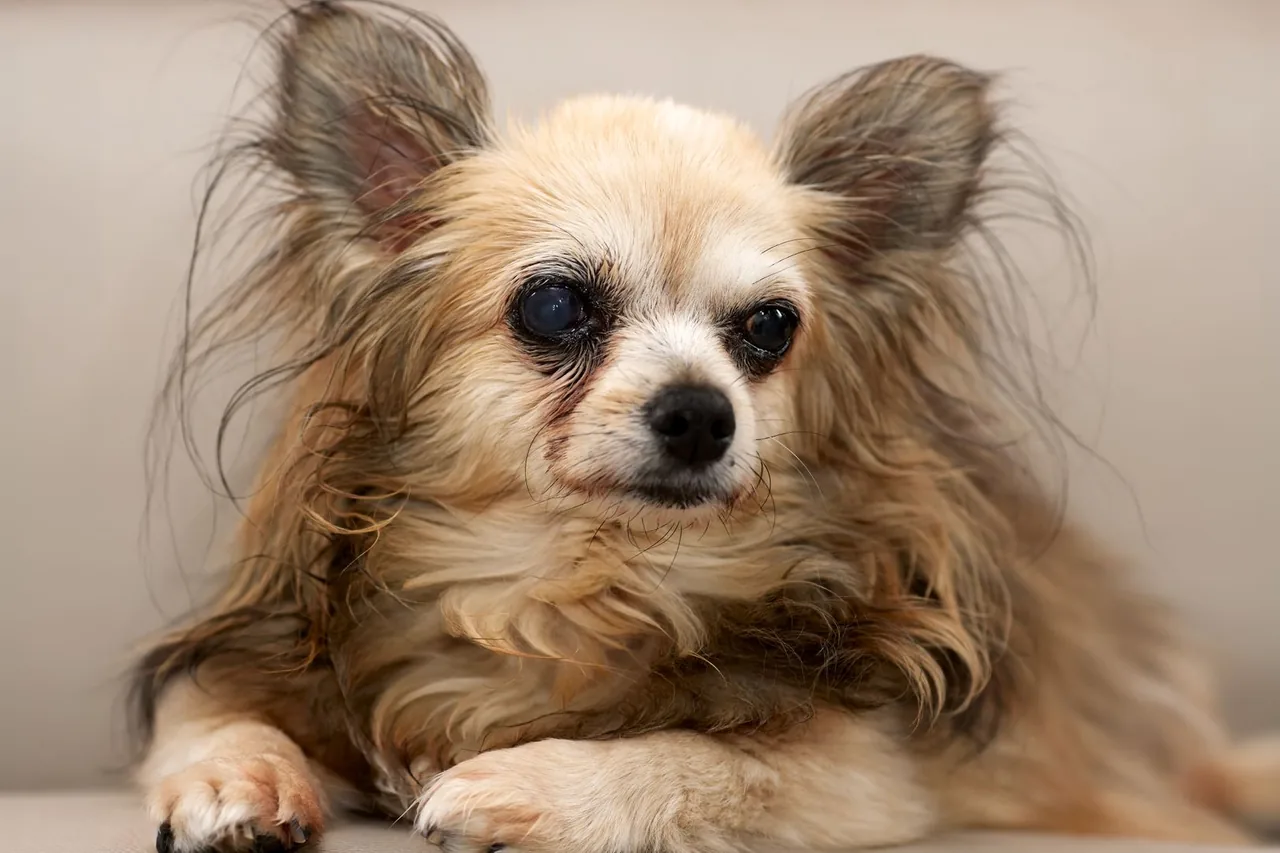
First: is it an emergency?
The Merck Veterinary Manual says any sign of glaucoma needs an immediate veterinary visit. Sudden (closed-angle) glaucoma comes on with severe pain, redness and vision loss. Signs Merck lists include a dilated pupil that barely moves, red whites of the eyes, a cloudy or discolored cornea and a firm eyeball. Pain often shows as a change in behavior rather than blinking.
Even painless, sudden vision loss deserves a prompt vet exam. Some causes are treatable, and sight loss can be the first visible sign of a problem elsewhere in the body. Your vet may refer you to a board-certified veterinary ophthalmologist, who can measure eye pressure and examine the retina in detail.
Common causes, and what can be done
Glaucoma. Fluid builds up and pressure inside the eye rises, which can destroy the retina and optic nerve (Merck). Treatment aims to bring the pressure down fast and keep it down, usually long-term. Merck notes breed-related glaucoma often affects both eyes, so the second eye needs watching too.
Cataracts. The lens clouds and blocks light. Merck lists inherited cataracts in many breeds, plus diabetes, inflammation and trauma among the causes. Surgery to remove the lens is the usual treatment and is most likely to succeed before the cataract fully matures. If your dog doesn’t have surgery, keep up with checkups, since complications such as glaucoma can occur.
Progressive retinal atrophy (PRA). A group of inherited diseases that make the retina degenerate. Night blindness is usually the first sign, and vision fades over months to years. Merck notes there is no effective treatment, but DNA tests exist for many breeds. The slow pace gives many dogs time to adapt as they go.
Retinal detachment and other retinal diseases can follow inflammation, injury, eye surgery or certain tumors, and Merck lists high blood pressure among possible causes of retinal disease in general. Treatment focuses on the underlying cause.
Setting up your home
These practical steps help a blind dog build and trust a mental map of the house:
- Freeze the layout. Keep furniture, food and water bowls, the bed and gates exactly where they are. Rearranging means relearning.
- Block the hazards. Baby gates at the top and bottom of stairs; fence or cover pools and ponds; pad sharp table corners at head height.
- Keep pathways clear. Shoes, bags and toys left in walkways become obstacles.
- Add landmarks. A textured mat in front of the water bowl, doors and the bed gives your dog a “you are here” cue underfoot.
- Use light if some sight remains. Night-lights and well-lit rooms help a dog with partial vision use what it has.
How to talk to a blind dog
- Announce yourself. Speak before you touch, and wake a sleeping dog with your voice rather than a hand, to avoid a startled reaction.
- Narrate. Your voice is a moving beacon your dog can follow around the house and on walks.
- Teach cue words and use them consistently: “wait” before a hazard, “step up” and “step down” for curbs and stairs, “this way” to change direction. Short, rewarding sessions work best.
- Walk on a harness, on familiar routes at first, adding new places gradually.
Keeping life fun
The nose takes over. Scent games, snuffle mats, food puzzles and toys that squeak or rattle rebuild confidence and give your dog a job. The free 30-day enrichment calendar has a month of nose-first ideas.
Older dogs and vision loss
In senior dogs, vision loss can overlap with other changes of aging, including cognitive dysfunction. If your older dog also seems confused, restless at night or forgets house training, read dog dementia signs and mention it to your vet. Writing down what you notice, and when, makes those conversations easier; the free vet visit prep log is built for exactly that.
Frequently asked questions
- Is sudden blindness in a dog an emergency?
- It should be treated as one. Merck says any sign of glaucoma, such as a red, cloudy, firm or enlarged eye with a dilated pupil, needs an immediate veterinary visit. Even painless sudden blindness needs a prompt vet exam, because some causes are treatable or point to illness elsewhere in the body.
- Can cataracts in dogs be fixed?
- Often, yes. Merck describes surgery to remove the affected lens as the usual treatment, and says it’s most likely to succeed before the cataract fully matures. Dogs that don’t have surgery need monitoring, because complications such as glaucoma can occur. A veterinary ophthalmologist decides whether a dog is a good candidate.
- What is progressive retinal atrophy?
- PRA is a group of inherited diseases that cause the retina to degenerate. Merck notes night blindness is usually the first sign, vision loss progresses over months to years, and there is no effective treatment, though DNA tests exist for many breeds.
- Can a blind dog still have a good life?
- Yes. Dogs rely heavily on smell and hearing, and Merck notes they often compensate so well that early vision loss is hard to notice. With a predictable home, a few cue words and some patience, many blind dogs go back to enjoying walks, play and family life.
Educational content only — not veterinary or professional behavior advice. Consult your vet, or a certified trainer or behaviorist, for your pet. Read the full disclaimer →