Helping a Scared Rescue Cat Feel Safe
A newly adopted cat hiding under the bed is normal, and patience works better than coaxing. The safe room, how to build trust, the 3-3-3 rule, and when hiding means a trip to the vet.
On this page
To help a scared rescue cat, start it in one small, quiet room with places to hide, let it come out in its own time, and let it decide when to make contact. Hiding isn’t a problem to fix; it is how a frightened cat copes, and the guidelines from the feline veterinary bodies say a cat should always have somewhere to hide. Most cats settle in with time, though how much time varies a lot. Here is the plan, from International Cat Care, the ASPCA, VCA and the AAFP/ISFM cat-handling guidelines.
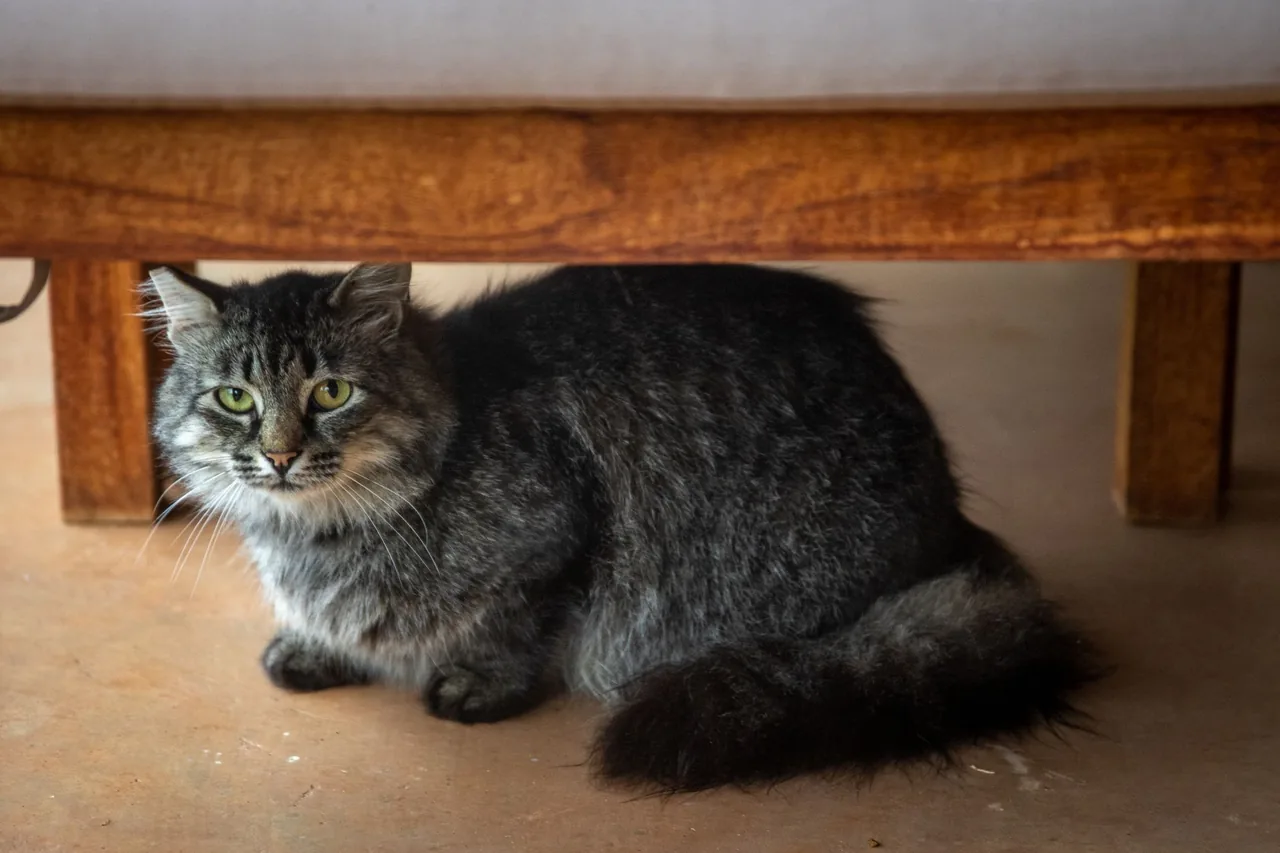
Start with one quiet room
The ASPCA suggests a small, quiet room such as a spare bedroom or bathroom, with hiding spots both at floor level and up high. International Cat Care recommends starting adult cats in one room too, especially if another cat already lives in the home. Before your cat arrives:
- Remove hazards: cables, toxic plants, medicines, cleaners and breakables. Keep the windows shut.
- Make a den. Leave the carrier open in the room, or turn a box on its side with a fleece inside.
- Keep what’s familiar. International Cat Care suggests using the same litter and food the cat had before for the first one to two weeks, and bringing familiar bedding if you can.
- Set the layout: the litter box in a discreet corner, food on the opposite side, and water a few feet from the food.
Adult cats should stay indoors for at least two to three weeks after a move, International Cat Care advises.
Let it hide, and let it choose
Hiding is a normal coping strategy, according to the 2022 AAFP/ISFM Cat Friendly Veterinary Interaction Guidelines, and the cat should always have a place to go. So the first rule is simple: don’t pull or coax a hiding cat out, and let it leave the carrier in its own time (International Cat Care).
What helps instead is being boring and present. Sit quietly in the room at floor level and read, work or watch TV. Offer a hand for the cat to sniff, then let it decide whether to come closer. The ASPCA notes that ignoring a shy cat for a while shows you aren’t a threat, and that treats help build good associations with you.
How to build trust
The cat-handling guidelines describe what most cats find comfortable:
- Move slowly, speak softly, and avoid staring. Skip strong perfume.
- Try slow blinks. Many cats welcome them. In a 2020 study, cats were more likely to approach an unfamiliar person after slow blinks than after a neutral face, and a follow-up in a shelter found that cats who responded more to a person’s slow blinks were adopted sooner.
- Pet where cats like it: most cats prefer the cheeks, chin and head, and dislike touch at the base of the tail, the belly and the feet.
The free shy cat trust-building log gives you a daily record of eating, litter use and how close your cat came, which makes small progress easier to see.
Reading fear
International Cat Care lists the signs of a frightened cat: freezing, crouching, a tucked tail, flattened ears, wide pupils, hissing or growling, and trying to escape. The handling guidelines add a subtle one: a very scared cat may simply freeze with half-closed eyes and ears turned sideways, which is easy to mistake for calm. If you see these, give the cat more space and slow down.
How long it takes: the 3-3-3 rule
VCA and the ASPCA describe the 3-3-3 rule as a rough guide: about three days of feeling overwhelmed, when hiding and skipping meals are common; about three weeks of settling in; and about three months to feel at home. International Cat Care notes that some cats need several weeks just to feel safe, and the ASPCA points out that some cats stay a little shy for life while others become outgoing. Measure progress against your own cat, not the calendar.
What about calming diffusers?
The research is mixed. A 2010 systematic review found insufficient evidence for most uses of pheromone products, and a 2017 randomized trial with 336 shelter cats found no effect on stress scores. A 2023 review found moderate evidence that a facial pheromone may reduce short-term stress at the vet. Merck says such products “might” help. In practice: they may help some cats, and they never replace a safe room and time.
When hiding is a medical problem
A cat that was friendly and suddenly starts hiding or withdrawing may be in pain or ill, the handling guidelines note; arthritis and dental disease are common culprits. Call your vet the same day if your cat:
- has eaten nothing for 24 hours (VCA). Cornell warns that a cat that nearly stops eating can develop hepatic lipidosis, a liver condition that can be fatal without treatment;
- strains in the litter box or passes little or no urine;
- has trouble breathing.
And if fear or lashing out continues after the settling-in period, talk to your veterinary team, because illness or pain can be behind it (International Cat Care).
Frequently asked questions
- How long will my rescue cat hide?
- It varies widely. Some cats come out in a few days and others need several weeks to feel safe, according to International Cat Care. The 3-3-3 rule used by VCA and the ASPCA is a rough guide: about three days overwhelmed, three weeks settling in and three months feeling at home.
- Should I take my cat out from under the bed?
- No. Hiding is a normal coping strategy, according to the AAFP/ISFM cat-handling guidelines, and International Cat Care advises against pulling or coaxing a hiding cat out. Let it come out in its own time, and make sure there is always somewhere to hide.
- Does slow blinking at a cat really work?
- There is some evidence for it. In a 2020 study in Scientific Reports, cats were more likely to approach an unfamiliar person after that person gave slow blinks than after a neutral face, and owners’ slow blinks drew more eye-narrowing back from their cats.
- Do calming pheromone diffusers help?
- The evidence is mixed. A 2017 randomized trial with 336 shelter cats found no effect on stress scores, while a 2023 review found moderate evidence that a facial pheromone may reduce short-term stress at the vet. They may help some cats, but they are never a fix on their own.
- When is a hiding cat a medical problem?
- When a friendly cat suddenly starts hiding, it may be in pain or ill, the AAFP/ISFM guidelines note. A cat that has eaten nothing for 24 hours, strains in the litter box or passes little urine needs a vet right away; a cat that stops eating can develop a serious liver condition, Cornell warns.
Educational content only — not veterinary or professional behavior advice. Consult your vet, or a certified trainer or behaviorist, for your pet. Read the full disclaimer →