
Is a Beagle Right for You?
Beagles are cheerful, curious, and deeply social. Bred to hunt in packs, they crave company and often struggle when left alone for long stretches, sometimes howling or chewing out of boredom. They love people and usually get along with other dogs, which makes them a warm family companion.
The downsides are real. A Beagle follows its nose first and your voice second, so off-leash recall is unreliable and escapes happen fast. They are vocal by design, producing a distinctive bay and howl that carries. They are relentlessly food-motivated, which helps training but also drives counter-surfing, garbage-raiding, and weight gain. This is not a low-maintenance dog. It is a scent hound with opinions, an appetite, and stamina. If you can offer a secure yard, leashed adventures, daily engagement, and firm food rules, a Beagle rewards you with a joyful, affectionate personality.
Exercise, Energy, and Daily Life
Beagles are stamina athletes bred to trail for hours, so a quick spin around the block won't cut it. Aim for a solid hour or more of daily activity, split into walks, play, and mental work. Because their nose rules them, the walk itself is enrichment: let them sniff, and treat the outing as a scenting job rather than a march.
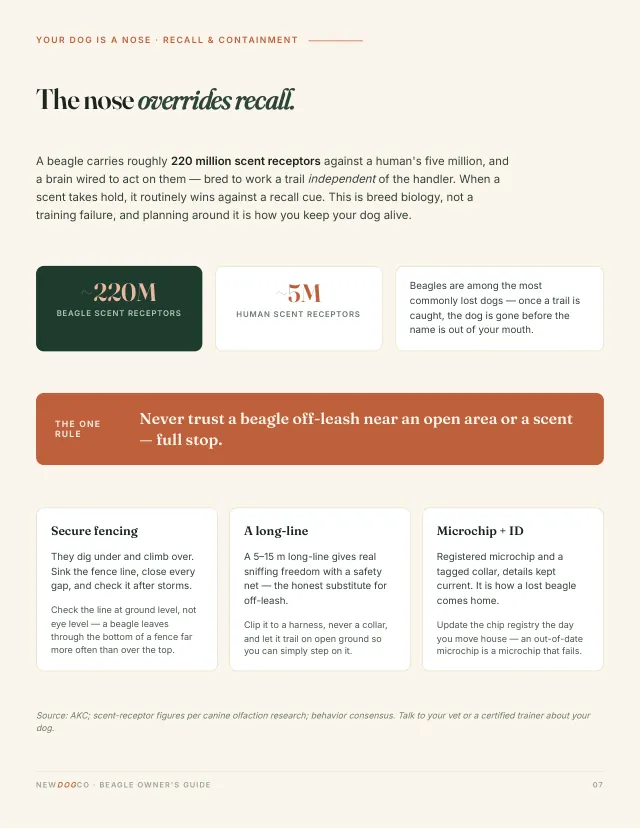
Keep them leashed or securely fenced at all times. A Beagle on a fresh scent will ignore recall and cover ground surprisingly fast, and they are talented at slipping under fences or through gaps. Check your fence line for weak points and keep gate latches secure.
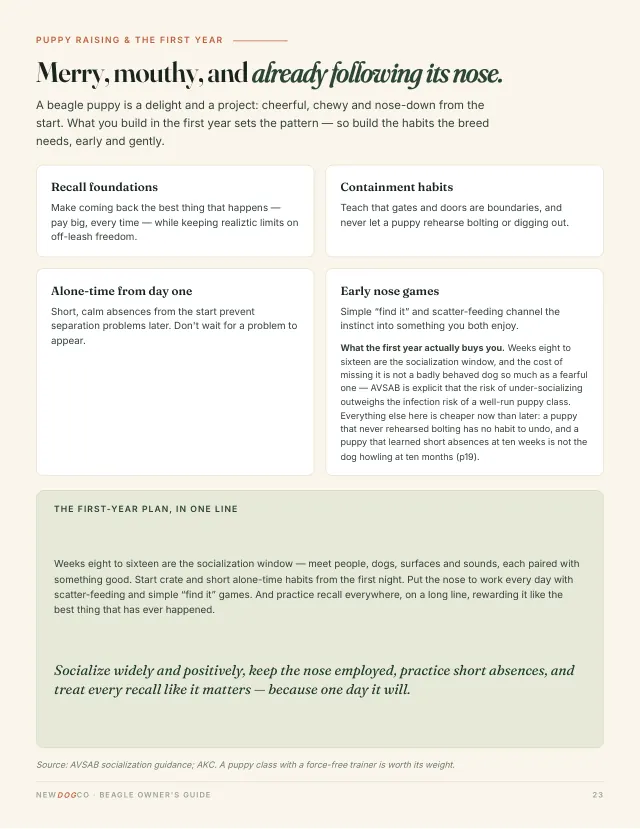
Scent games are the single best way to tire a Beagle's brain. Scatter kibble in grass, hide treats around the house, or teach a simple find-it game. A tired scent hound is a calmer, quieter housemate. Without enough outlet, boredom shows up as howling, digging, and destruction.
Grooming and Coat Care
Beagles have a short, dense double coat that is easy to maintain but far from non-shedding. Expect steady shedding year-round and heavier seasonal blowouts. A weekly once-over with a rubber curry brush or grooming mitt removes loose hair and keeps the coat healthy; bump it up during shedding season. Baths are occasional, only when they've rolled in something, which as a scent hound they eventually will.
The ears deserve special attention. Those long, low-hanging ears trap moisture and reduce airflow, making ear infections a common Beagle problem. Check them weekly for redness, odor, or discharge, and clean with a veterinary ear solution as your vet advises. Don't forget the basics that apply to every dog: trim nails regularly, brush teeth, and keep an eye on the eyes, since Beagles are prone to cherry eye. Building a calm grooming routine early makes ear checks and nail trims far easier for life.
Beagle Health: What to Watch For
Beagles are generally hardy, but the breed has known predispositions worth understanding. Sources such as the AVMA, OFA, ACVIM, and the National Beagle Club, along with peer-reviewed veterinary literature, describe several conditions to watch.
- Obesity: Beagles gain weight easily and it worsens nearly everything else. Body-condition scoring and portion control are your most powerful health tools.
- Ear infections: Long, floppy ears trap moisture; routine cleaning and monitoring help prevent recurrent problems.
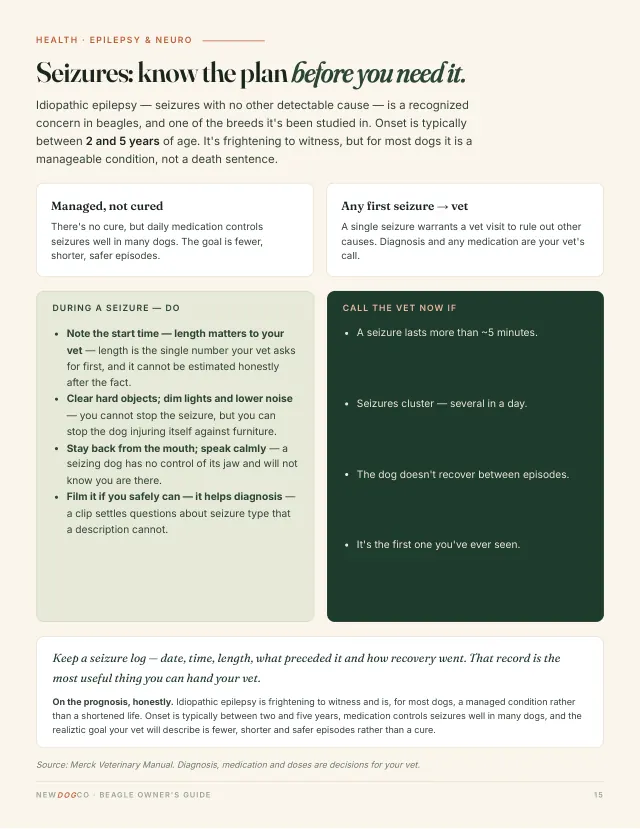
- Epilepsy: Idiopathic epilepsy occurs in the breed; report any seizure activity to your vet promptly.
- Hypothyroidism: An underactive thyroid can cause weight gain, coat changes, and lethargy, and is diagnosed by blood test.
- Cherry eye: Prolapse of the third-eyelid gland is seen in young Beagles and is treated surgically.
- IVDD: Intervertebral disc disease can cause back pain or weakness; keeping weight down reduces spinal strain.
Ask your veterinarian about appropriate screening. This guide supports, but never replaces, professional veterinary care.
Training Your Beagle
Beagles are smart and eager, but they are independent thinkers who were bred to follow a scent without waiting for instructions. That means training works best when you make the right choice more rewarding than wandering off. Use reward-based, force-free methods only. Their food drive is your greatest ally, so pay generously with small, tasty treats and keep sessions short, upbeat, and frequent.
Recall is the hardest and most important skill. Start on a long line in low-distraction areas, reward every check-in lavishly, and never punish a dog that returns slowly, or it will stop coming back. Accept that a rock-solid off-leash recall may never be fully reliable against a strong scent, and plan your management around that reality.
Channel the nose instead of fighting it. Scent-based games, nosework, and find-it exercises give a Beagle a job it loves and build focus you can redirect. Harsh corrections backfire with this sensitive, sociable breed and erode the trust that makes training work.
The Beagle Nose and the Food Obsession
Two Beagle traits deserve their own plan: the extraordinary nose and the bottomless appetite. Together they create a dog that will find, reach, and eat things it shouldn't. Counter-surfing, trash-raiding, and scavenging on walks are normal Beagle behaviors, not stubbornness, so manage the environment rather than expecting willpower.
Keep food and trash secured and out of reach, and teach a reliable leave it and drop it using rewards. This matters for safety, not just tidiness: scavenging exposes Beagles to seriously dangerous foods. Keep a toxic-food list handy, chocolate, grapes and raisins, xylitol, onions and garlic among them, and program your vet and a poison-control number into your phone.
On the enrichment side, that same nose is a gift. Puzzle feeders, snuffle mats, and hidden-treat hunts turn mealtime into mental exercise, slow down fast eaters, and satisfy the hunting instinct in a way that leaves your Beagle content instead of scheming for the next snack.