Is a Dachshund Right for You?
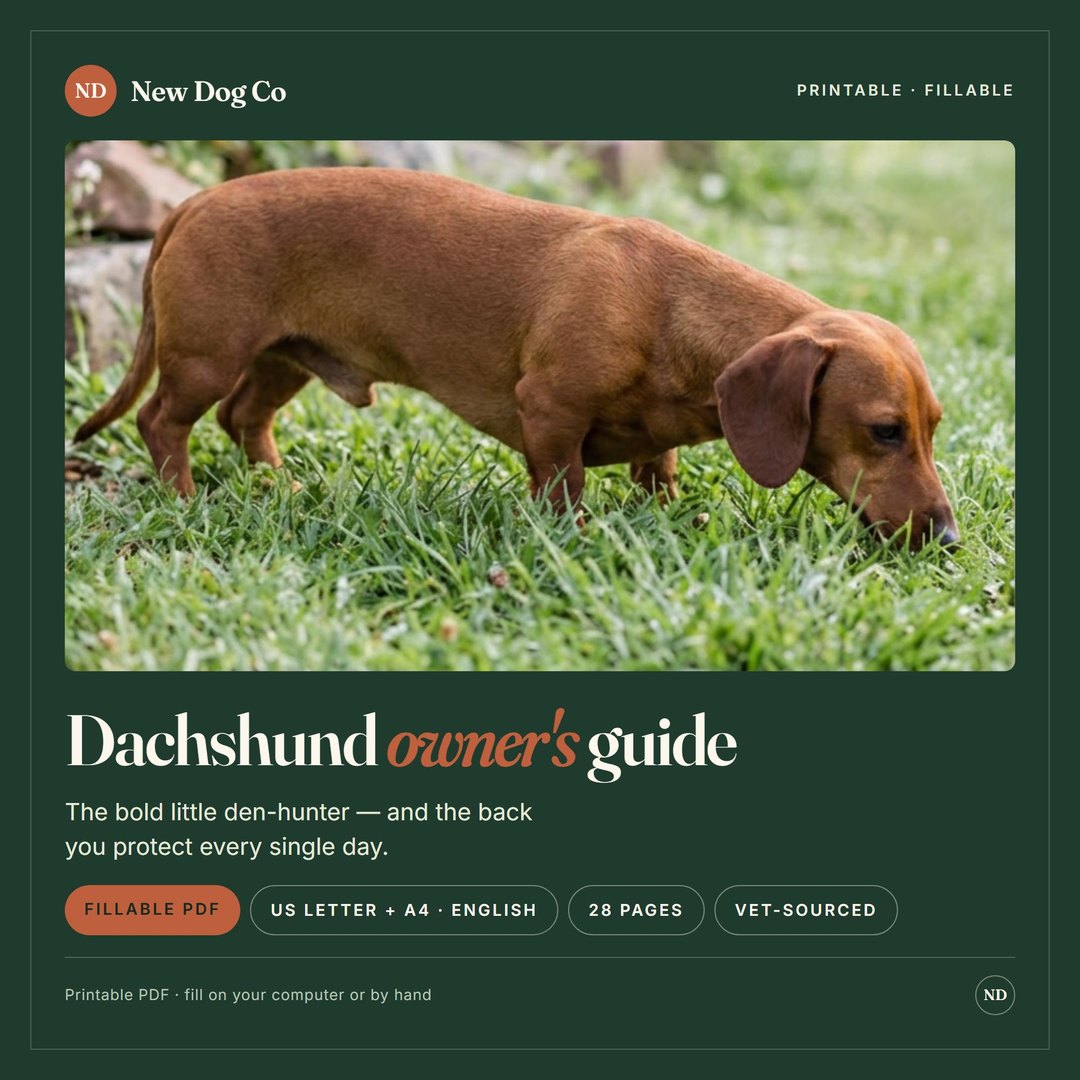
The Dachshund was bred to go underground after badgers, and that origin story explains almost everything about the modern dog. It is bold, tenacious, and independent: a hound that thinks for itself rather than looking to you for permission. That makes them enormously entertaining and deeply loyal, but also stubborn in a way that surprises first-time owners.
They are vocal. A Dachshund will bark at the mail carrier, the doorbell, and things only it can hear, so households needing silence should think twice. They love to dig, whether that is your garden or a pile of blankets. They bond hard to their people and can be wary of strangers.
The honest downsides: the long back means real, lifelong physical restrictions, the digging and barking need managing, and housetraining a stubborn small hound takes patience. If you want a bold badger-hound in a compact body and you will commit to spine-safe habits, few breeds are more rewarding.
Exercise, Energy, and Daily Life
Dachshunds are more athletic than their shape suggests. They need real daily exercise (typically two moderate walks plus sniffing time and play), but that activity must be spine-friendly. Walking on the flat, gentle exploration, and nose games are ideal. Repeated jumping, twisting leaps off the sofa, and pounding up and down stairs are not.
Because they were bred to hunt, mental work matters as much as physical. A bored Dachshund digs, barks, and invents mischief. Scent games, snuffle mats, food puzzles, and short training sessions give that busy brain a legitimate outlet and tire the dog more than a long march would.
Practical daily-life adjustments protect the back: place ramps or steps at the couch and bed, block staircases or carry the dog, and use a harness rather than a neck collar so leash pressure never loads the neck and spine. Keep games low to the ground: roll toys rather than throwing them high. These small habits are the single biggest thing you control.
Grooming and Coat Care
Dachshunds come in three coat types, and grooming depends on which you have. Smooth-coated dogs are the easiest: a weekly wipe or soft brush keeps the short coat glossy, and they shed modestly year-round. Longhaired Dachshunds have silky feathering on the ears, chest, legs, and tail that mats if ignored, so they need brushing several times a week and attention behind the ears and under the legs.
Wirehaired coats have a harsh outer layer and softer undercoat, plus a beard and eyebrows; many need occasional hand-stripping or trimming to keep the texture correct. All three types benefit from routine ear checks, since low-hanging ears trap moisture, and from regular nail trims, since long nails change how a dog stands and add strain.
Do not overlook the mouth. Small breeds are prone to dental disease, so daily or near-daily tooth brushing and professional cleanings as your veterinarian advises should be part of the grooming routine, not an afterthought.
Dachshund Health: What to Watch For
The defining health concern is intervertebral disc disease (IVDD). Dachshunds carry a gene for early disc degeneration, and veterinary literature and the American College of Veterinary Internal Medicine describe them as the breed most affected — estimates commonly cite that roughly a quarter of Dachshunds show signs of disc disease in their lifetime. Warning signs include reluctance to jump, a hunched back, yelping when touched or lifted, wobbly or dragging back legs, and sudden weakness. Any of these is an emergency — call your veterinarian immediately.
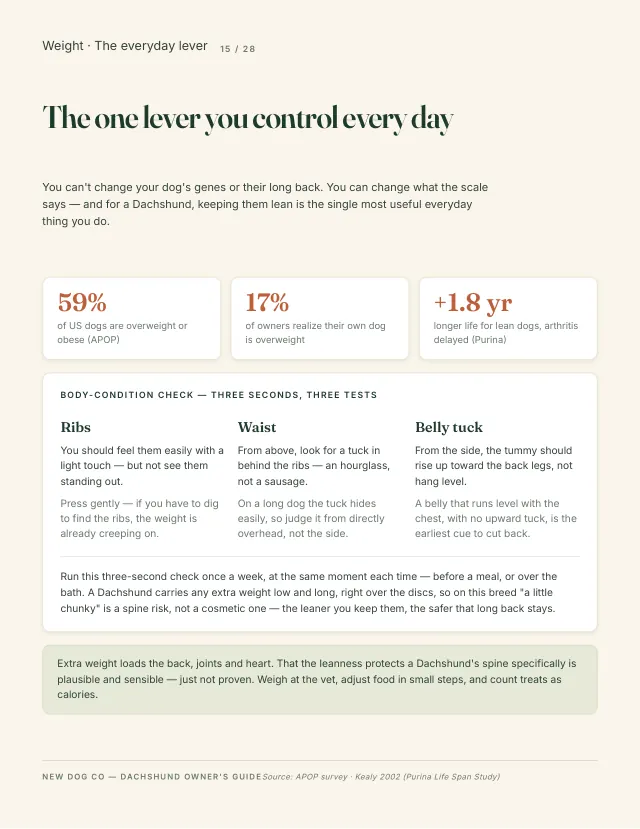
Prevention is largely lifestyle: keep the dog lean, ban the jumping, use ramps, support the whole body when lifting, and use a harness. Obesity is the biggest modifiable risk factor because extra weight directly loads the discs.
Other conditions to know, per sources like the AVMA, OFA, and the breed parent club, include patellar luxation, dental disease, and eye issues in some lines. Keep up with dental care, weight checks, and regular veterinary exams. None of this replaces your own vet's advice for your individual dog.
Training This Breed
Training a Dachshund is an exercise in patience and creativity, never force. This is an independent hound bred to make decisions alone underground, so harsh or dominance-based methods backfire: they make a stubborn dog more defensive and damage trust. Reward-based training is the only approach that works reliably with this breed.
Find what your dog values most (usually food, sometimes a favorite toy) and pay generously for the behaviors you want. Keep sessions short and upbeat; a Dachshund tunes out drills. Recall deserves special attention because a scent hound that catches an interesting smell may simply stop listening, so practice it as a rewarding game and keep the dog on lead or in safe areas.
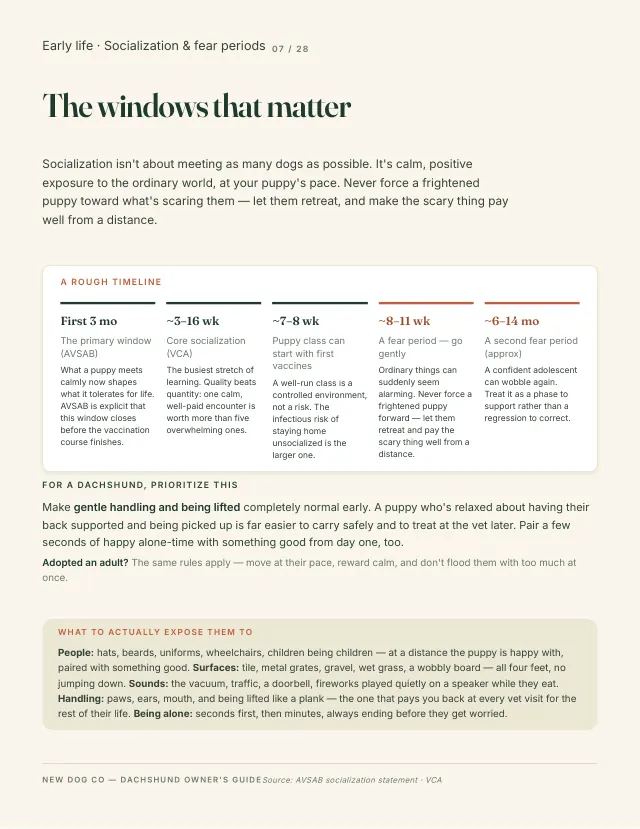
Housetraining often takes longer than with other breeds; stay consistent, reward every success outdoors, and never punish accidents. For the barking and digging, redirect rather than suppress: give a dig box, use enrichment, and reward calm. Early, positive socialization to people, dogs, and sounds pays off for years.
Setting Up a Spine-Safe Home
Because IVDD is largely about mechanical load over a lifetime, the home you build around a Dachshund is part of its medical care. Start with ramps or padded steps at every spot the dog wants to reach: the sofa, your bed, the car. A Dachshund will keep trying to jump; the ramp only helps if it is easier and more rewarding than leaping, so train the dog to use it with treats.
Manage stairs deliberately. Baby gates at the top and bottom prevent the daily pounding that stresses discs; carry the dog or supervise slow, controlled climbs. When you pick the dog up, support the chest and hindquarters together so the spine stays level — never let the back end dangle.
Add traction on slippery floors with rugs or runners, since scrambling for grip twists the back. Keep the dog at a lean body condition you can confirm by feel. These arrangements are unglamorous, but they are the everyday habits that most protect this breed's health.