Is a French Bulldog Right for You?
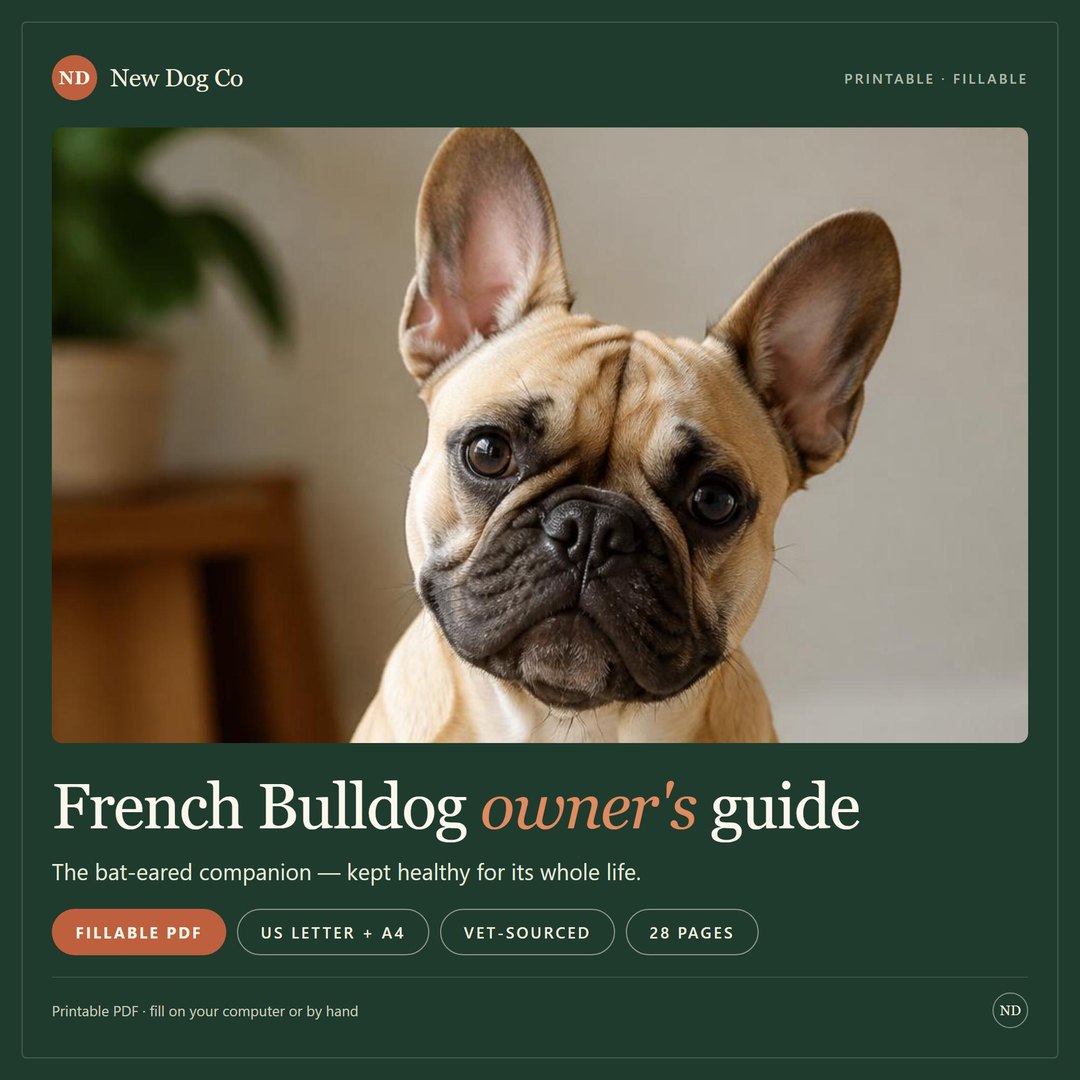
French Bulldogs are small, sturdy, deeply people-focused companions. They are playful in short bursts, quiet enough for apartments, and content to spend most of the day near you. That affection is the whole point of the breed, and it is also the honest catch: a Frenchie left alone for long workdays is a stressed Frenchie.
Be clear-eyed about the downsides before you commit. Their flat face means many snore, snort, and struggle in heat, and some need airway surgery. They are prone to spinal problems and should not jump on and off furniture. Many are born by C-section, and vet bills tend to run higher than for a typical small dog.
If you want a mellow indoor companion and can budget for care, a French Bulldog can be a wonderful fit. If you want a jogging, hiking, or swimming partner, or a low-maintenance budget dog, this is not your breed.
Exercise, Energy, and Daily Life
Exercise needs in this breed are modest, which is one reason they suit apartments and busy homes. A couple of short walks and some indoor play usually cover them. The goal is steady, gentle movement to keep weight off their joints and airway, not distance or intensity.
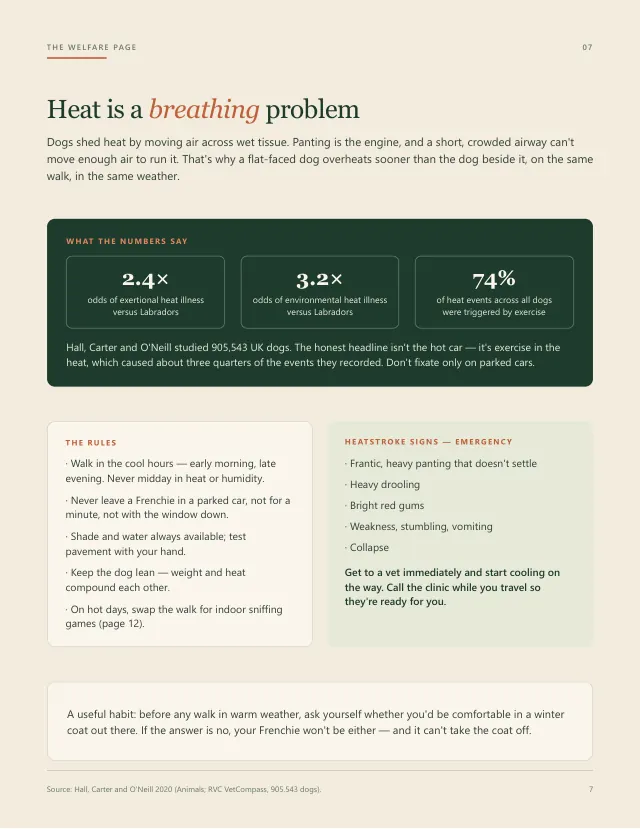
The critical rule is heat. Because of their flat face, Frenchies cool themselves poorly and can overheat fast. Walk in the cool of early morning or evening, skip midday sun, and stop at the first sign of heavy panting or noisy breathing. On hot days, exercise indoors with air conditioning instead.
Two more safety points: most French Bulldogs cannot swim and can drown quickly, so never leave one unattended near a pool or bath. And protect the spine by discouraging big jumps off couches and beds. Keep sessions short, keep them cool, and let rest be part of the routine.
Grooming and Coat Care
The French Bulldog's short, single coat is easy on the grooming front. A weekly brush with a rubber curry or soft bristle brush removes loose hair and keeps the coat healthy. They shed modestly year-round rather than in heavy seasonal blowouts, and they do not need clipping or elaborate trims.
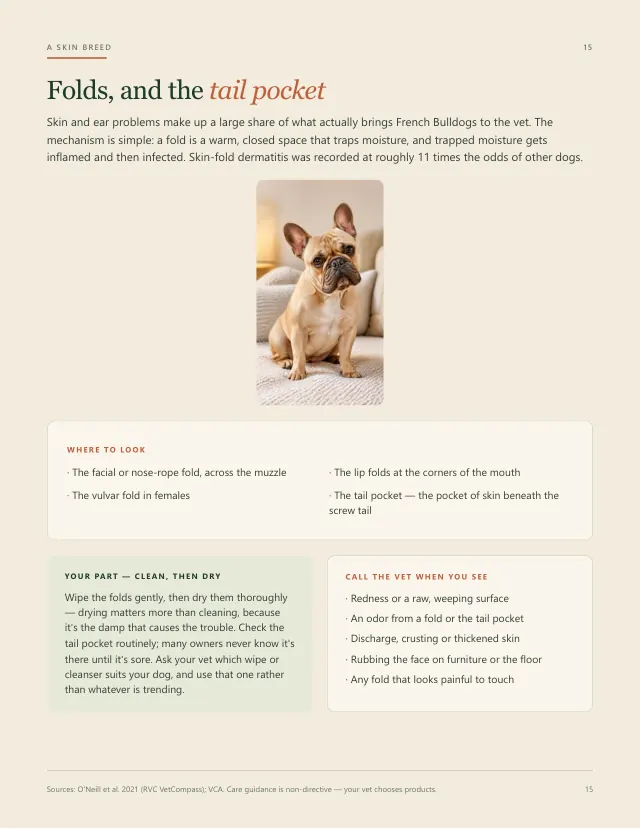
The real work is the face and folds. The wrinkles above the nose and around the muzzle trap moisture, food, and debris, which can lead to skin-fold dermatitis if left dirty. Wipe the folds with a soft, damp cloth and dry them thoroughly several times a week, and check for redness, odor, or irritation.
Round out grooming with routine basics: trim nails before they click on the floor, brush teeth regularly, and keep ears clean and dry. Because many Frenchies also have skin allergies, watch for itching or recurring hot spots and loop in your veterinarian rather than guessing at products.
French Bulldog Health: What to Watch For
Lovable as they are, French Bulldogs come with real, well-documented health considerations. Know them so you can partner effectively with your veterinarian.
- Brachycephalic obstructive airway syndrome (BOAS): the flat-faced build narrows the airway, causing snorting, snoring, exercise intolerance, and breathing distress. The AVMA and veterinary specialists (ACVS/ACVIM) recognize BOAS as a serious welfare issue; some dogs need surgical correction.
- Heat stroke: because they cool poorly, brachycephalic dogs face elevated heat-related risk, a point emphasized in peer-reviewed veterinary literature and by the AVMA.
- IVDD and hemivertebrae: the breed's short back and screw tail are linked to spinal disc disease and vertebral malformation, noted by orthopedic and neurology specialists.
- Skin-fold dermatitis and allergies: facial folds and allergic skin disease are common dermatologic issues in the breed.
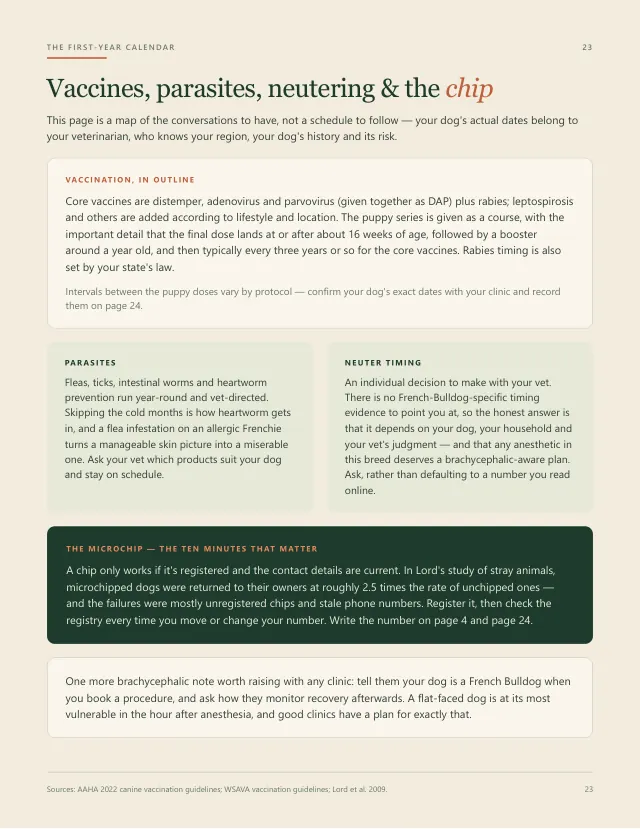
Ask your vet about BOAS assessment, keep your dog lean, and follow AAHA-guided preventive care. This is general information, not a diagnosis.
Training Your French Bulldog
French Bulldogs are smart, food-motivated, and eager to please the person they love, which makes reward-based training a natural fit. Use small treats, praise, and play to mark the behavior you want, and keep sessions short and upbeat. They can be a little stubborn, so consistency and patience beat pressure every time. Never use dominance, alpha rollovers, or aversive tools; they damage trust and can worsen a sensitive dog's behavior.
Prioritize a few breed-specific goals. Teach an off and wait to discourage jumping down from furniture, protecting the spine. Reward calm greetings so excitement does not spike their breathing. Build easy, positive handling for fold cleaning, nail trims, and vet exams from day one.
Socialize early and gently, exposing your puppy to new people, sounds, and gentle dogs at their own pace. House training goes smoothly with a consistent schedule and generous praise. Keep it fun, and this companion breed will happily work with you.
Heat, Airway, and Everyday Safety
Everything about living well with a French Bulldog comes back to protecting the airway and avoiding overheating, so it is worth its own plan. Learn what your dog's normal breathing sounds like at rest, and treat any change toward labored, raspy, or open-mouthed distress as a reason to cool them and call your vet.
Build heat habits into your calendar. Walk early or late, carry water, and never leave a Frenchie in a warm car or a hot yard, even briefly. Indoors, keep them in air conditioning or in front of a fan on hot days, and watch closely during travel and excitement, which can also spike breathing.
Keep a light body condition, because extra weight worsens both airway function and joint strain. Use a harness rather than a neck collar to avoid pressure on the throat. Small, consistent choices, cool air, short exertion, and no swimming, keep this sweet companion safe and comfortable.